
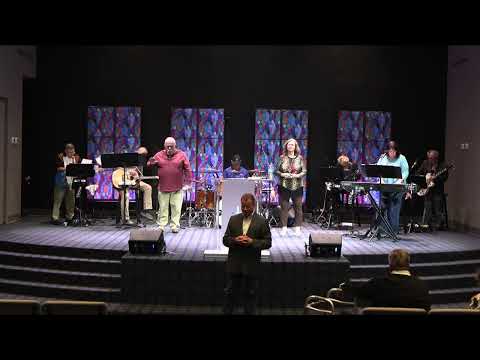
This small group discussion guide draws directly from Amanullah Shohag's sermon “The Believer in the Wilderness, pt 1 (David-Leadership and Calling) - 2026-04-19” so you can keep engaging with the message all week. Read, reflect, and share it with your small group or friends.
Small Group Discussion Guide
"The Believer in the Wilderness: Formed in the Hidden Place"
Based on the Sermon Series: The Believer in the Wilderness Key Texts: 1 Samuel 22:1-2 | Psalm 142 | Psalm 57
A NOTE TO YOUR FACILITATOR
Welcome! This guide is designed to help your group have a genuine, meaningful conversation — not just cover material. You don't need to ask every question. Read through the guide before your meeting, choose the questions that feel right for your group, and trust the Holy Spirit to lead the conversation. Your job is to create a safe space for honest sharing, not to have all the answers. The best small group leaders are curious listeners, not expert teachers.
Estimated Total Time: 60–90 minutes Suggested Group Size: 4–12 people
OVERVIEW
(For the Facilitator — Read or paraphrase to open the session)
This week's sermon launched a new series called The Believer in the Wilderness, shifting from studying biblical wilderness experiences as history to examining them as present-day reality. Using the life of David — specifically his time hiding in the Cave of Adullam — the message explored four key truths: the wilderness reveals who you really are, attracts the right people, proves your integrity, and trains you to trust God's timing. The central theme is this: God does not waste wilderness seasons. He uses them to develop our character before He reveals our calling, and hidden is not the same as forgotten — it is the place where we are being formed.
ICEBREAKER
(5–10 minutes)
Choose one of the following to open your time together:
Option A (lighter, good for new groups):
"If you had to describe your current season of life as a type of weather, what would it be and why? (For example: sunny, stormy, foggy, or somewhere in between?)"
Option B (slightly deeper, good for established groups):
"Think of a time in your life when something felt like a setback but later turned out to be a setup. Without going too deep yet, what was that season like?"
[Leader Tip]: Keep this light and fun. Don't let anyone feel pressured to share something vulnerable right away. This is just a warm-up to get people talking. Aim for 1–2 minutes per person and gently move on when the energy is right.
SCRIPTURE READING
(5 minutes)
Ask a volunteer to read each passage aloud. Invite the group to listen for a word or phrase that stands out to them.
1 Samuel 22:1-2 (ESV)
"David departed from there and escaped to the cave of Adullam. And when his brothers and all his father's house heard it, they went down there to him. And everyone who was in distress, and everyone who was in debt, and everyone who was bitter in soul, gathered to him. And he became commander over them, and there were with him about four hundred men."
Psalm 142:1-7 (ESV)
"With my voice I cry out to the LORD; with my voice I plead for mercy to the LORD. I pour out my complaint before him; I tell my trouble before him. When my spirit faints within me, you know my way! In the path where I walk they have hidden a trap for me. Look to the right and see: there is none who takes notice of me; no refuge remains to me; no one cares for my soul. I cry to you, O LORD; I say, 'You are my refuge, my portion in the land of the living.' Attend to my cry, for I am brought very low! Deliver me from my persecutors, for they are too strong for me! Bring me out of prison, that I may give thanks to your name! The righteous will surround me, for you will deal bountifully with me."
Psalm 57:1-3, 6-11 (ESV)
"Be merciful to me, O God, be merciful to me, for in you my soul takes refuge; in the shadow of your wings I will take refuge, till the storms of destruction pass by. I cry out to God Most High, to God who fulfills his purpose for me. He will send from heaven and save me; he will put to shame him who tramples on me. Selah. God will send out his steadfast love and his faithfulness... They set a net for my steps; my soul was bowed down. They dug a pit in my way, but they have fallen into it themselves. Selah. My heart is steadfast, O God, my heart is steadfast! I will sing and make melody! Awake, my glory! Awake, O harp and lyre! I will awake the dawn! I will give thanks to you, O Lord, among the peoples; I will sing praises to you among the nations. For your steadfast love is great to the heavens, your faithfulness to the clouds. Be exalted, O God, above the heavens! Let your glory be over all the earth!"
Quick Context Note for Facilitators: David wrote both of these psalms while hiding in the Cave of Adullam, fleeing from King Saul who wanted him dead — even though David had done nothing wrong and had already been anointed as the future king of Israel. These two psalms, written in the same season, show us two very different emotional and spiritual registers — and both are honest, valid, and important.
DISCUSSION QUESTIONS
(30–45 minutes)
Work through these questions in order. You don't need to cover all of them — choose 5–7 that feel most relevant to your group. Questions are organized from observational (easier) to applicational (deeper).
SECTION 1: ENTERING THE CAVE — What the Wilderness Looks Like
(Observational Questions — 8–10 minutes)
Question 1:
"The pastor described David arriving at the cave of Adullam with a bag of bread he wasn't supposed to have and a sword that was probably too big for him — sitting there alone, asking, 'How did I end up here?' Have you ever had a moment like that — where you looked around at your circumstances and couldn't quite understand how you got there? What did that feel like?"
[Leader Tip]: This is a great opening question because almost everyone has a story here. If the group is quiet, share your own brief example first to lower the barrier. Keep responses to 2–3 minutes each and affirm people for sharing honestly.
Question 2:
"The sermon pointed out that David had done everything right — served faithfully, protected others, honored the king — and still ended up in a cave. What does that tell us about the relationship between faithfulness and comfort? Does doing the right thing guarantee a smooth road? What has your experience taught you about this?"
Question 3:
"Compare Psalm 142 and Psalm 57 side by side. Both were written by the same man in the same season. How would you describe the difference in tone between the two psalms? What do you think happened between writing the first one and writing the second?"
[Leader Tip]: Encourage people to look at the actual text. You might ask: "What specific words or phrases show you the shift in David's perspective?" This helps ground the conversation in Scripture rather than just feelings.
SECTION 2: WHAT THE WILDERNESS REVEALS — Character, Identity, and God's Classroom
(Interpretive Questions — 10–12 minutes)
Question 4:
"The sermon used the image of a young apprentice who spent his first days just sanding wood — frustrated because he thought he was wasting time. The master craftsman told him, 'If you can't be trusted with what nobody sees, how can you be trusted with what everybody sees?' What does that story reveal about how God operates? Where do you see that principle at work in David's life — or in your own?"
Question 5:
"The pastor said: 'The wilderness strips away titles, comfort, and applause — and what it leaves you with is your faith, your character, and your dependence on God.' In your experience, what has a difficult season stripped away from you? Looking back, was there anything valuable that got stripped away alongside the painful things? What was left when it was over?"
[Leader Tip]: This question can go deep quickly. Be attentive to anyone who may be in an active wilderness right now — they may need pastoral care more than a theological discussion. It's okay to pause and pray for someone mid-conversation if the Spirit leads.
Question 6:
"The sermon described the group of 400 men who showed up at David's cave as people who were distressed, in debt, and bitter — not warriors, not leaders, not royalty. Yet from that unlikely group, David's 37 mighty men eventually emerged. What does that tell us about how God tends to build His kingdom? How does that challenge the way we sometimes evaluate the people or resources around us?"
SECTION 3: INTEGRITY IN OBSCURITY — Doing Right When No One Is Watching
(Application Questions — 8–10 minutes)
Question 7:
"David had multiple opportunities to kill Saul — who was actively trying to kill him — and could have justified it as self-defense. Instead, he chose to wait on God. The sermon offered this principle: 'You don't take by force what God has promised by grace.' What are some modern-day equivalents of 'taking by force what God has promised by grace'? What shortcuts or compromises are we most tempted to take when we're in a difficult season?"
[Leader Tip]: Encourage specific, practical examples here — not just abstract answers. This might include things like cutting corners at work, forcing a relationship, making a financial decision out of fear, or manipulating a situation to get a desired outcome. Keep it honest and grace-filled.
Question 8:
"Dr. Martin Lloyd-Jones was quoted in the sermon: 'There is nothing more insulting to the holy name of God than to profess Him with your lips and deny Him with your life.' That's a strong statement. How do you think our behavior during difficult seasons either confirms or contradicts what we say we believe about God? What does integrity look like when no one is applauding?"
SECTION 4: TRUSTING GOD'S TIMING — The Hardest Lesson
(Deeper Application Questions — 8–10 minutes)
Question 9:
"The sermon made this distinction: 'Delay is not divine neglect. It is divine strategy.' And then: 'If God gave you what He promised before you were ready, it wouldn't bless you — it would break you.' How do you personally wrestle with God's timing? What helps you hold on to His promises when the wait feels too long?"
Question 10:
"The pastor closed with this question: 'Before David wore the crown, he survived the cave. Triumph in the wilderness is not getting out quickly — it's becoming who God called you to be while you're in it.' What do you think God might be trying to develop in you right now — not just what He's trying to get you through, but who He's trying to form you into?"
[Leader Tip]: This is a great question to end the main discussion on. Give people a moment of silence to think before they answer. Some may not be ready to share aloud, and that's okay — it can become a personal reflection question instead.
PERSONAL APPLICATION
(10–15 minutes)
These questions are more personal and reflective. You can invite people to share with the full group, with a partner, or to simply journal their answers privately. Let your group decide what feels right.
Reflection Question 1:
"The pastor asked: 'What cave are you sitting in that God is actually using?' Take a moment to honestly identify one area of your life right now that feels like a wilderness — a place that feels dry, hidden, or uncertain. Without necessarily sharing the details, what would it look like to begin trusting God in that space this week?"
Reflection Question 2:
"David processed his wilderness experience by writing it down — first Psalm 142, then Psalm 57. The pastor encouraged us to do the same. Is journaling or writing something you've tried? What might it look like for you to write down an honest 'Psalm 142 prayer' this week — and then, over time, let God move you toward a 'Psalm 57 praise'?"
Reflection Question 3:
"The sermon asked: 'When you take off the fancy clothes, go home, and sit in your living room — who are you then?' Are there any gaps between who you are in public (including at church) and who you are in private? What is one small, honest step you could take this week to close that gap?"
Reflection Question 4:
"The pastor said that God often brings the most unlikely people to walk alongside us in our wilderness seasons — just like He sent 400 broken people to David. Who has God placed in your life right now who might be there for a reason you haven't fully recognized yet? How might you invest in those relationships this week?"
THIS WEEK'S CHALLENGE
Choose one (or more) of the following:
📖 Read: Spend time this week reading both Psalm 142 and Psalm 57 in full. Read them slowly, as if David is writing them to you personally. Notice where you feel the most connection.
✍️ Write: Write your own honest "cave prayer" — pour out what's really on your heart to God. Then, after you've written it, read Psalm 57 aloud as a response. Let David's words of praise become your own.
🪞 Reflect: Each morning this week, ask yourself the three questions the pastor raised: Am I going to trust God today? Am I going to love God today more than yesterday? Am I going to be more devoted to God today than I was yesterday?
👥 Connect: Reach out to one person in your group or church family this week who may be in a wilderness season. Don't try to fix anything — just let them know they're not forgotten. Pray with them if they're willing.
PRAYER FOCUS
(5–10 minutes)
Close your time together in prayer. Here are suggested prayer topics drawn from the sermon:
Pray Together For:
Those in active wilderness seasons — members of your group or church family walking through difficulty, illness, financial pressure, relational pain, or uncertainty. Ask God to make His presence known and His purposes clear.
Integrity in the hidden places — courage to live consistently whether or not anyone is watching. Ask God to align your private life with your public faith.
Trust in God's timing — for those who are frustrated with waiting, confused by delay, or tempted to force their own solutions. Ask God to build patience and faith in the waiting.
Eyes to see the people around you — like David's 400, God may be placing people in your life for a reason. Ask for wisdom to recognize and invest in those relationships.
Gratitude for the cave — this one might be hard, but ask God to help you genuinely thank Him for the difficult seasons that are forming you, even before you can see how.
Suggested Closing Prayer: (The facilitator can pray this or invite someone else to close)
"Lord, we come to you honestly today — some of us feeling more like Psalm 142, and some of us closer to Psalm 57. But wherever we are, we trust that you are at work. You are not absent in our wilderness — you are active in it. Help us to stop talking long enough to hear your still, small voice. Help us to trust your timing, protect our integrity, and see the people you've placed around us. Form us into who you've called us to be — not just get us through what we're going through. In Jesus' name, Amen."
OPTIONAL DEEP DIVE
(For groups that want to go further — 15–20 additional minutes)
These bonus questions are for groups with more time or a desire to dig deeper into the biblical and theological themes of the sermon.
Deep Dive Question 1 — The Two Voices:
"The sermon made a distinction between listening to the 'old man' and listening to the 'new man.' Read Romans 8:5-8 and Galatians 5:16-17. According to Paul, what is the practical difference between living by the flesh and living by the Spirit? What does that look like in the specific context of a wilderness experience — when you're tired, discouraged, or tempted to give up or take shortcuts?"
Romans 8:5-8 (ESV): "For those who live according to the flesh set their minds on the things of the flesh, but those who live according to the Spirit set their minds on the things of the Spirit. For to set the mind on the flesh is death, but to set the mind on the Spirit is life and peace. For the mind that is set on the flesh is hostile to God, for it does not submit to God's law; indeed, it cannot. Those who are in the flesh cannot please God."
Deep Dive Question 2 — Character Before Calling:
"The sermon's central principle was: 'God develops your character before He reveals your calling.' Look at a few other biblical figures: Joseph (Genesis 37–50), Moses (Exodus 2–3), or even the Apostle Paul (Galatians 1:15-18). What wilderness or hidden season did each of them experience before their calling was publicly revealed? What character qualities do you think God was developing in each of them? What does that pattern suggest about how God tends to work?"
Deep Dive Question 3 — The Selah Moment:
"The sermon highlighted the word 'Selah' in Psalm 57 — a musical or liturgical term that scholars believe was a prompt to stop, pause, and reflect on what was just read or sung. In our culture of constant noise and distraction, what does it look like to practice 'Selah' — intentional pausing to sit with God? What rhythms or practices help you create space to actually hear from God rather than just talk at Him? What gets in the way most often?"
RELATED SCRIPTURES FOR FURTHER STUDY
For personal reading during the week:
| Passage | Theme |
|---|---|
| Genesis 39–41 | Joseph's wilderness: character formed in prison |
| Exodus 2:11–3:12 | Moses in the desert: 40 years of preparation |
| Romans 5:3-5 | Suffering produces character, character produces hope |
| James 1:2-4 | The purpose of trials: producing patience and maturity |
| Isaiah 43:1-3 | God's presence in the wilderness: "I will be with you" |
| Hebrews 11:1-6 | Faith defined: trusting what we cannot yet see |
FACILITATOR CHECKLIST
Before your group meets:
- Read through the entire guide and mark the questions you plan to use
- Read 1 Samuel 22:1-2, Psalm 142, and Psalm 57 in full
- Pray for each member of your group by name
- Prepare a brief, honest personal example for the icebreaker or Question 1
- Have extra Bibles or a Bible app available for those who need one
- Decide in advance how you'll handle sensitive sharing (offer to pray, follow up privately)
- Remind the group: what's shared in the group stays in the group
"Before David wore the crown, he survived the cave. Triumph in the wilderness is not getting out quickly — it's becoming who God called you to be while you're in it."
God bless your group this week. You are not alone in the cave.
New Harvest Church | Small Group Discussion Guide | The Believer in the Wilderness Series