
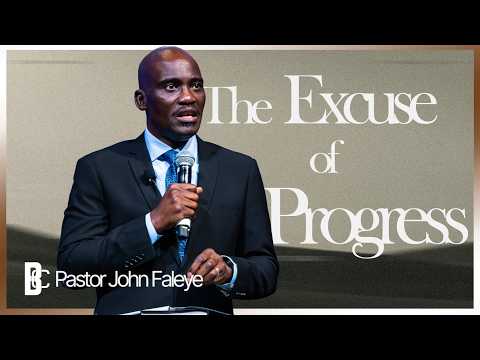
This guest blog post draws directly from Braeswood Church's sermon “Better, But Not Whole” so you can keep engaging with the message all week. Read, reflect, and share it with your small group or friends.
When "Better Than Before" Isn't Good Enough: The Danger of Partial Obedience
Meta Description: Pastor [Name] unpacks King Saul's costly mistake and challenges us to stop using progress as an excuse for disobedience. A message we needed to hear.
URL Slug: danger-of-partial-obedience-better-than-before
Featured Image: A split image or close-up of an open Bible with soft, natural light — conveying both the weight and the warmth of God's Word. Alternatively, a single figure kneeling in posture of surrender.
There's a question most of us have asked ourselves at some point: Am I doing enough for God? And for many of us, the honest answer has been something like, "Well, I'm doing better than I used to." This Sunday, Pastor [Name] helped us see why that answer — as sincere as it might be — can be one of the most spiritually dangerous places we settle into.
Drawing from the story of King Saul in 1 Samuel 15, Pastor [Name] continued the church's current series, Better But Not Whole, with a message that was both challenging and deeply freeing. The central truth? God did not send Jesus to make us better. He sent Jesus to make us new.
The Wrong Standard Can Ruin Everything
Pastor [Name] opened with a striking illustration about a NASA spacecraft launched in 1999 at a cost of $125 million. The mission to Mars appeared successful by every outward measure — until the spacecraft crashed. The investigation revealed a simple but catastrophic error: two engineering teams had been using two different units of measurement. Everything looked right on paper. The numbers seemed to add up. But because the teams were working from different standards, the mission was doomed from the start.
"The same thing that happened with this ill-fated mission can happen to you and I spiritually," Pastor [Name] said, "where you and I can sincerely believe we're doing well — and yet all the while be measuring our walk with Christ by a very different standard than the one God has used."
That framing set the stage for everything that followed.
Partial Obedience Is Still Disobedience
In 1 Samuel 15, God gave King Saul one clear assignment: completely destroy the Amalekites. Saul went, fought, and won — but he kept the best livestock and spared the Amalekite king. When the prophet Samuel arrived, Saul confidently declared, "I have carried out the Lord's instructions." It was only the sound of bleating sheep and lowing cattle that exposed the truth.
Pastor [Name] was careful to help us see ourselves in Saul before we judged him. "If we are honest with ourselves," he said, "we will agree that there's been a time or two in our lives where we have pointed out the right things we have done in an attempt to deflect from being held accountable for the wrong things we are doing."
The point landed clearly: God has never measured obedience by how much we have done. He measures it by how willing we are to trust Him enough to do everything He has asked. As Pastor [Name] put it, "God is not asking you and I to balance obedience like a bank account." Progress in one area does not give us a pass in another.
We Can't Negotiate With God
One of the most convicting moments in the message came when Pastor [Name] addressed Saul's attempt to spiritualize his disobedience. When confronted, Saul shifted blame to the soldiers and then offered a religious justification — they kept the animals to sacrifice to God. It sounded reasonable. It even sounded devout.
But Samuel's response cuts through every well-intentioned excuse we've ever made:
"Does the Lord delight in burnt offerings and sacrifices as much as in obeying the voice of the Lord? To obey is better than sacrifice, and to heed is better than the fat of rams." — 1 Samuel 15:22
Pastor [Name] drew this truth into our everyday lives with refreshing honesty. He shared that there was a season in his own life when he avoided his doctor for three years — canceling appointments, dodging check-ins — because he knew he hadn't been following her instructions. "Your doctor tells you to take medicine," he said. "You decide to just exercise instead. When you go back, they're not going to ask if you exercised. They're going to ask if you took the medicine."
The application was plain: good intentions cannot replace God's commands. We don't get to rewrite what God has asked of us and expect His blessing on our revised version.
Obedience Is Always About Lordship
The message built to a powerful conclusion rooted in a question Jesus himself asked in Luke 6:46:
"Why do you call me 'Lord, Lord,' and do not do what I say?"
Pastor [Name] reminded us that obedience to God has never been merely about behavior — it's always been about lordship. "Every act of obedience answers the question: who is truly Lord of your life?" he said. "Every time we obey God, we are saying, 'Jesus is Lord.' Every time we knowingly choose our own way, we are saying, 'God, I know better than you.'"
He closed by painting a picture of what Saul's story could have looked like had he chosen differently — running to Samuel not with excuses, but with repentance. Throwing himself down and saying, "I know what God said. I did not do it. Help me find mercy." That image of surrender, Pastor [Name] said, is the invitation extended to every one of us.
"What is God asking you to give up? What is God asking you to walk away from? What is God asking you to surrender that you keep hoping He will eventually take His mind off of?"
The greatest danger for believers, he warned, is not open rebellion — it's quiet negotiation. Telling God, I'll obey you here, but not there. And mistaking our progress for permission.
A Word for All of Us
What made this message resonate so deeply was Pastor [Name]'s transparency — including himself in the challenge. "Even for me as I was preparing this message," he shared, "I'm saying, 'Lord, search my own heart. If there's any area of my own life where I'm walking in disobedience, God, reveal it to me.'"
That kind of pastoral honesty made the call to surrender feel less like a rebuke and more like an invitation — one extended to every person in the room.
If you weren't able to join us this Sunday, we encourage you to watch the full message online. And wherever you are this week, consider sitting quietly with this question: Is there an area of my life where I've been measuring myself by my own standard instead of God's?
Don't explain it. Don't negotiate it. Simply surrender it.
Social Media Excerpt (Facebook/Instagram): Progress is a gift — but it can become dangerous when we use it as permission to stay disobedient in other areas. This Sunday, Pastor [Name] unpacked the story of King Saul and delivered a message that challenged all of us to stop negotiating with God and start surrendering fully. If you missed it, you don't want to skip this one. 🙏
Hashtags: #BetterButNotWhole #PartialObedience #SundaySermon #TrueObedience #NewCreation