
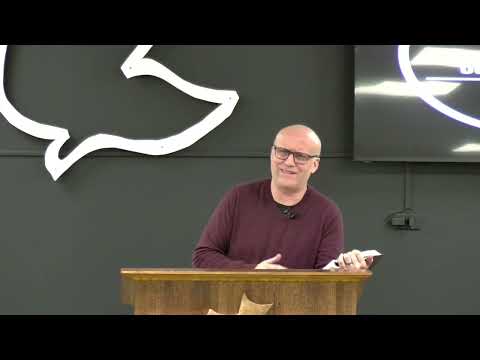
This pastor's blog post draws directly from Calvary Chapel Berkshires's sermon “Follow-Up Materials - Initial Analysis” so you can keep engaging with the message all week. Read, reflect, and share it with your small group or friends.
Every Day Can Be Extraordinary: Four Principles from Palm Sunday
Meta Description: Palm Sunday is more than a guy on a donkey. Discover four principles from the disciples that can transform your ordinary days into something extraordinary.
Let me be honest with you about something. Palm Sunday has always been a little hard to sell.
Think about it. The death of Jesus? Significant. The resurrection? Life-changing. But a guy riding into Jerusalem on a donkey? I mean, people had been doing that for hundreds of years before Jesus did it. So what's the big deal?
Here's what I've come to understand: the big deal isn't just what happened that day — it's what we can learn from the people who were there. Specifically, the disciples. Because the principles they demonstrated on that seemingly ordinary Sunday have everything to do with how you and I can live every single day.
The Setup: What Actually Happened
In Matthew 21:1-11, we read the familiar account:
"Now when they drew near Jerusalem, and came to Bethphage, at the Mount of Olives, then Jesus sent two disciples, saying to them, 'Go into the village opposite you, and immediately you will find a donkey tied, and a colt with her. Loose them and bring them to Me. And if anyone says anything to you, you shall say, "The Lord has need of them," and immediately he will send them.'" (Matthew 21:1-3)
"And a very great multitude spread their clothes on the road; others cut down branches from the trees and spread them on the road. Then the multitudes who went before and those who followed cried out, saying: 'Hosanna to the Son of David! Blessed is He who comes in the name of the Lord! Hosanna in the highest!'" (Matthew 21:8-9)
Here's something that blew my mind when I studied this again: John's gospel tells us the disciples didn't even fully understand the significance of what they were doing. It wasn't until after Jesus was glorified that they looked back and thought, "Wait — we were part of something enormous and we didn't even realize it."
That's the point. And it applies directly to your Tuesday afternoon, your Thursday morning, and every day in between.
Principle #1: Be Informed
The disciples responded the way they did because they knew who Jesus was. They were informed — both through the scriptures and through their personal relationship with him.
Scripture had been pointing to Jesus for thousands of years. All the way back in Genesis 3:15, God promised a seed of the woman who would crush the enemy's head. David wrote in Psalm 89:3, "I have made a covenant with My chosen, I have sworn to My servant David: 'Your seed I will establish forever, and build up your throne to all generations.'" Every prophet, in some way, pointed toward him.
But the disciples were also informed by simply spending time with Jesus. Peter said it best in John 6:68-69: "Lord, to whom shall we go? You have the words of eternal life. Also we have come to believe and know that You are the Christ, the Son of the living God."
That kind of conviction comes from proximity. And here's the good news — Jesus himself said in John 16:7: "It is to your advantage that I go away; for if I do not go away, the Helper will not come to you; but if I depart, I will send Him to you."
We have the Holy Spirit living inside us. Our access to Jesus isn't limited — in some ways, it's better. So get in the Word. Pray. Prioritize intimacy with him. An informed believer is a dangerous believer — in the best possible way.
Principle #2: Be Willing and Obedient
Information without action is just knowledge. The disciples didn't debate Jesus' instructions or ask for a detailed explanation. They went. They did it.
Jesus asked them to go get a donkey that didn't belong to them, tell the owner "the Lord has need of them," and trust that it would work out. That's a real step of faith. And it did work out — exactly as Jesus said it would.
Jesus asked a pointed question in Luke 6:46: "But why do you call Me 'Lord, Lord,' and not do the things which I say?"
That question still stings. If we're going to call him Lord, that title means something. Obedience is how faith becomes visible. James reminds us that faith without works is dead — not because works save us, but because real faith looks like something.
Here's a practical word: when you're not sure what God is asking of you in a specific situation, do what you do know. Be kind. Forgive. Serve. Be generous. You can almost always find the next right step in what scripture already clearly says.
Principle #3: Be Passionate and Excited
The crowd's response to Jesus entering Jerusalem was electric. Matthew records it with exclamation points for a reason — "Hosanna to the Son of David! Blessed is He who comes in the name of the Lord! Hosanna in the highest!"
And Matthew 21:10 tells us something remarkable happened as a result: "And when He had come into Jerusalem, all the city was moved, saying, 'Who is this?'"
Their genuine excitement made people ask the most important question they could ever ask. That's still true today. When we live with real, Spirit-filled joy about who Jesus is and what he's done, people notice. They get curious. They start asking questions we should be ready and eager to answer.
We serve the King who defeated sin and death. That's worth being excited about — not in a performance or a show, but in a deep, settled, overflowing kind of joy that shows up in how we live.
Principle #4: Be Patient
This one is perhaps the hardest. The disciples were expecting a political king who would establish his kingdom immediately. Instead, the triumphal entry led to a crucifixion. Imagine how confusing and devastating that must have been.
But God had a bigger plan than they could see in that moment. The resurrection changed everything. And through it, they began to understand that before a king can establish his kingdom, there must first be people transformed enough to belong in it — people born again by the Spirit of God.
We're still in that in-between time. We still wait for the promise they were waiting for on that Palm Sunday. And the temptation — especially when the world feels increasingly upside down — is to grow weary.
Don't.
Matthew 24 warns that in the last days, "because lawlessness will abound, the love of many will grow cold." We've seen it. People who were once passionate for Jesus, growing tired, drifting, walking away. I'm not saying that without compassion — I understand the weariness. But the answer to weariness is not abandonment. It's patience rooted in the promises of a God who has never broken one.
The Question I'll Leave You With
That Palm Sunday was anything but ordinary — even though the disciples didn't fully know it at the time.
So here's my question for you this week: Will tomorrow be ordinary for you?
It doesn't have to be. If we'll be informed about who Jesus is, willing and obedient to what he asks, passionate and excited about what he's done, and patient enough to trust his plan — our days stop being ordinary. They become exactly what God intended them to be.
Good morning, Lord. Where are we going today?
Want to go deeper? Watch the full sermon on our YouTube channel. And if this encouraged you, share it with someone who needs the reminder that their days don't have to be ordinary either.
Key Scriptures Referenced: Genesis 3:15 | Psalm 89:3 | Matthew 21:1-11 | Luke 6:46 | John 6:68-69 | John 16:7 | Matthew 24
Hashtags for Social Media:
#PalmSunday #PassionWeek #EverydayFaith #NotOrdinary #FollowingJesus