
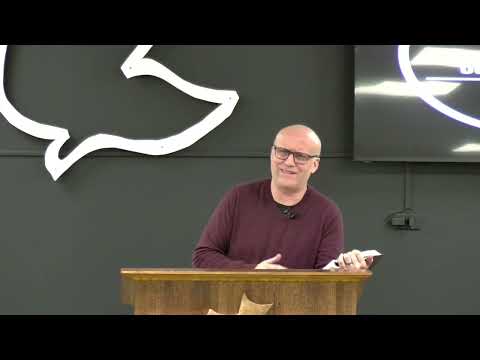
This small group discussion guide draws directly from Calvary Chapel Berkshires's sermon “Follow-Up Materials - Initial Analysis” so you can keep engaging with the message all week. Read, reflect, and share it with your small group or friends.
Small Group Discussion Guide
Palm Sunday: Making Every Day Extraordinary
Based on Matthew 21:1-11
A Note to Facilitators Welcome, and thank you for leading your group this week! This guide is designed to be flexible — you don't need to cover every question. Read through the guide beforehand, pick the questions that feel right for your group, and trust the Holy Spirit to lead the conversation. Your job isn't to have all the answers; it's to create space for honest, meaningful dialogue. You've got this.
OVERVIEW
This Palm Sunday message takes a fresh look at a familiar story — not by focusing on the crowd or the donkey, but by zeroing in on the disciples and the principles their actions reveal. The sermon unpacks four qualities that transformed an ordinary day into an extraordinary one: being informed, being willing and obedient, being excited and passionate, and being patient. The central challenge is this: if these principles made Palm Sunday significant, what would happen if we applied them to every single day of our lives?
SECTION 1 — ICEBREAKER
(5–10 minutes)
Choose one of the following to open your time together:
Option A (lighter, fun)
"Think about a moment in your life when something that seemed totally ordinary turned out to be surprisingly significant — maybe a random conversation, a detour, or an unexpected decision. What happened?"
Option B (more reflective)
"How do you typically start your mornings? Do you tend to approach the day with expectation, or does it feel more like 'oh good Lord, it's morning'? Be honest!"
[Leader Tip] Don't overthink the icebreaker — its only job is to get people talking and relaxed. Laugh with your group. Share your own answer first if people seem hesitant. Keep it to 5–10 minutes so you have plenty of time for the deeper discussion.
SECTION 2 — SCRIPTURE READING
(5 minutes)
Ask a volunteer to read the following passage aloud. Invite the group to listen for anything that stands out, surprises them, or raises a question.
Matthew 21:1–11 (NKJV)
"Now when they drew near Jerusalem and came to Bethpage, at the Mount of Olives, then Jesus sent two disciples, saying to them, 'Go into the village opposite you, and immediately you will find a donkey tied, and a colt with her. Loose them and bring them to Me. And if anyone says anything to you, you shall say, "The Lord has need of them," and immediately he will send them.'
All this was done that it might be fulfilled which was spoken by the prophet, saying: 'Tell the daughter of Zion, "Behold, your King is coming to you, lowly, and sitting on a donkey, a colt, the foal of a donkey."'
So the disciples went and did as Jesus commanded them. They brought the donkey and the colt, laid their clothes on them, and set Him on them. And a very great multitude spread their clothes on the road; others cut down branches from the trees and spread them on the road. Then the multitudes who went before and those who followed cried out, saying: 'Hosanna to the Son of David! Blessed is He who comes in the name of the Lord! Hosanna in the highest!'
And when He had come into Jerusalem, all the city was moved, saying, 'Who is this?' So the multitudes said, 'This is Jesus, the prophet from Nazareth of Galilee.'"
Related Prophecy Referenced in the Sermon:
Zechariah 9:9 — "Rejoice greatly, O daughter of Zion! Shout, O daughter of Jerusalem! Behold, your King is coming to you; He is just and having salvation, lowly and riding on a donkey, a colt, the foal of a donkey."
Genesis 3:15 — "And I will put enmity between you and the woman, and between your seed and her seed; He shall bruise your head, and you shall bruise His heel."
A Quick Note for Context: The disciples retrieved a donkey for Jesus in fulfillment of a prophecy written over 500 years earlier in the book of Zechariah. John's Gospel tells us the disciples didn't fully understand the significance of what they were doing until after Jesus rose from the dead. That detail — that they were faithful without fully understanding — is central to everything this message is about.
SECTION 3 — DISCUSSION QUESTIONS
(30–45 minutes)
Work through as many questions as time allows. Questions are organized around the sermon's four principles. Feel free to linger where the conversation is rich and skip questions that don't fit your group.
🔹 THEME 1: Be Informed
Knowing Jesus — through His Word and through relationship
1. What stood out to you most from Sunday's message — something that was new, surprising, or that hit differently than you expected?
[Leader Tip] This is your warm-up discussion question. It invites people in gently and helps you gauge where the group is. There are no wrong answers here. If the room is quiet, share something that stood out to you first.
2. The sermon described being "informed" in two ways: knowing the truth of Scripture, and spending time with Jesus personally. How would you describe the difference between those two things? Can you have one without the other?
3. Peter's response in John 6:68–69 is a powerful example of what it looks like to know Jesus, not just know about Him. He said:
"Lord, to whom shall we go? You have the words of eternal life. Also we have come to believe and know that You are the Christ, the Son of the living God."
What do you think brought Peter to a place where he could say something like this with such confidence? What has shaped your own understanding of who Jesus is?
4. The sermon mentioned that Jesus said in John 16:7:
"Nevertheless I tell you the truth. It is to your advantage that I go away; for if I do not go away, the Helper will not come to you; but if I depart, I will send Him to you."
That's a surprising claim — that it's actually better for us to have the Holy Spirit than to have had Jesus physically present. What do you think Jesus meant by that? Does that feel true in your own experience of walking with God?
[Leader Tip] This question can spark great conversation but might also feel abstract. If people seem unsure, try this follow-up: "What's one way the Holy Spirit has guided, comforted, or convicted you that you couldn't have gotten from just reading a book about Jesus?"
🔹 THEME 2: Be Willing and Obedient
Letting what we know move us to action
5. The disciples were asked to go into a village, untie someone else's donkey, and bring it back — with only the explanation "The Lord has need of them." That's a lot to ask. What do you think made them willing to do it? What does their response reveal about their relationship with Jesus?
6. The sermon referenced Luke 6:46, where Jesus asks:
"But why do you call Me 'Lord, Lord,' and not do the things which I say?"
That's a pretty direct challenge. Without getting too personal or making anyone feel put on the spot — what do you think are the most common reasons people in general struggle to obey what they already know God is asking of them?
[Leader Tip] Framing this as "people in general" first gives people permission to be honest without feeling exposed. Most will naturally move toward personal reflection on their own. If the group is comfortable and trust is high, you can follow up with: "Is any of that true for you personally right now?"
7. The sermon made an interesting point: when you're not sure exactly what God wants in a specific situation, you can still do what you do know — things like being kind, forgiving, or honest. Can you think of a time when doing the "general" thing God asks of you ended up being exactly the right move, even when you didn't have a clear specific direction?
🔹 THEME 3: Be Excited and Passionate
Living like the good news is actually good news
8. The crowd's excitement over Jesus entering Jerusalem made onlookers stop and ask, "Who is this?" (Matthew 21:10). What is it about genuine, authentic enthusiasm that draws people in? And what's the difference between that kind of excitement and something that pushes people away?
9. The sermon was honest that passion and excitement for the Lord can sometimes feel hard to maintain — especially on ordinary days or in difficult seasons. What has helped you stay genuinely excited about your faith when life feels routine or hard? What tends to drain that excitement?
[Leader Tip] This question invites vulnerability. Be ready for honest answers — people may share real spiritual dryness or discouragement. Resist the urge to immediately "fix" or offer solutions. Sometimes the most powerful thing a leader can do is say, "Thank you for being honest about that. Anyone else relate?"
🔹 THEME 4: Be Patient
Trusting God's plan even when you can't see the whole picture
10. The disciples were hoping for a political king who would restore Israel's national glory. Instead, Jesus rode in on a donkey and was crucified less than a week later. Imagine being in their shoes — how do you think you would have responded when things didn't unfold the way you expected?
11. The sermon warned against growing weary and losing patience with God's timing, and mentioned that Scripture actually predicts a "falling away" in the last days. Without naming names, have you witnessed someone lose their faith or walk away from the Lord over time? What do you think contributed to that? What has kept you anchored?
[Leader Tip] Handle this question with care. Some in your group may have prodigal children, friends who've walked away, or their own seasons of doubt. Acknowledge the weight of it. This isn't a question about judgment — it's about understanding and perseverance. If the room gets heavy, that's okay. Let it breathe.
SECTION 4 — PERSONAL APPLICATION
(10–15 minutes)
These questions are for individual reflection. You can invite people to share, but make it clear that these are personal — no pressure to respond out loud.
Invite the group to take 2–3 minutes of quiet reflection before sharing. You might say: "Let's slow down for a moment and let these land personally."
1. Of the four principles — being informed, willing and obedient, excited and passionate, and patient — which one feels most alive in your life right now? Which one feels most like a growing edge for you?
2. The sermon asked: "Will tomorrow be ordinary or extraordinary?" What would need to change about how you approach your day — your morning routine, your mindset, your habits — for tomorrow to feel less ordinary and more like a day lived on purpose with God?
3. Is there something you already know God has been asking you to do — something you've been putting off, arguing with, or avoiding? What would one small step of obedience look like this week?
4. Where in your life right now do you most need patience? What promise from God are you holding onto in that area — or what promise do you need to find and hold onto?
✅ THIS WEEK'S CHALLENGE
Choose one (or more) that fits where you are:
For the Informed: Spend at least 10 minutes each morning this week reading a passage of Scripture before you look at your phone. Notice how it shapes the rest of your day.
For the Obedient: Identify one specific thing you know God has been prompting you to do. Write it down. Do it this week — even if it's just the first step.
For the Passionate: Find one way to express your faith out loud this week — whether that's telling someone what God has been doing in your life, writing in a journal, or simply saying a genuine prayer of praise out loud.
For the Patient: Find one promise in Scripture that speaks to an area where you're waiting on God. Write it on a card or set it as a phone reminder. Return to it every day this week.
For the Whole Group: Try starting each morning this week with "Good morning, Lord" — a simple, intentional acknowledgment that the day belongs to Him — and see what shifts.
SECTION 5 — PRAYER FOCUS
(5–10 minutes)
Close your time together in prayer. You can pray as a group, in pairs, or have one person close on behalf of the group. Use the following prompts to guide your prayer time:
Suggested Prayer Topics:
🙏 Gratitude — Thank God for the significance of Palm Sunday and what it set in motion: the cross, the resurrection, and our salvation.
🙏 Being Informed — Ask for a deeper hunger for God's Word and a more consistent, intimate prayer life — individually and as a group.
🙏 Obedience — Pray for the courage to say "yes" to whatever God is asking, even when it doesn't fully make sense yet.
🙏 Passion — Ask God to renew genuine excitement for who He is and what He's doing — not a performance, but a real, Spirit-filled joy.
🙏 Patience — Pray for those who are weary, discouraged, or tempted to walk away. Ask God to anchor their hope in His promises.
🙏 Each Other — Take a moment to pray specifically for the person to your left or right — for whatever they're carrying this week.
[Leader Tip] If your group isn't comfortable praying aloud together yet, that's completely okay. You can close in prayer yourself, covering the themes above. If you want to invite participation without pressure, try: "I'm going to close us in prayer. If anyone wants to add something out loud, feel free — but silence is welcome too."
SECTION 6 — OPTIONAL DEEP DIVE
For groups that want to go further — great for groups with more biblical background or extra time
Deep Dive 1: The Prophecy Connection
Matthew quotes Zechariah 9:9 to show that Jesus' entry into Jerusalem was the fulfillment of a prophecy written centuries earlier. The sermon also pointed to Genesis 3:15 as an early pointer to the Messiah.
Read Zechariah 9:9–10 together. What does this passage reveal about what kind of king the Messiah would be? How does Jesus' entry on a donkey fulfill both the letter and the spirit of this prophecy? What does it tell you about how God works through history?
Deep Dive 2: The Disciples Didn't Know What They Were Doing
John 12:16 tells us: "His disciples did not understand these things at first; but when Jesus was glorified, then they remembered that these things were written about Him and that they had done these things to Him."
The disciples were obedient before they understood. How does that challenge our tendency to wait for clarity before we act? What does this suggest about the relationship between faith and understanding? Can you think of a time you obeyed first and understood later?
Deep Dive 3: Patience and the Kingdom
The sermon touched on the fact that the disciples were expecting a political, national kingdom — and that expectation wasn't wrong, just premature. Scripture does promise a future, literal reign of Christ.
Read Revelation 19:11–16, which describes Jesus returning not on a donkey but on a white horse as King of Kings. How does holding this future hope in view change the way you think about living faithfully in the present? What does "patient endurance" look like for a Christian who genuinely believes this is coming?
QUICK REFERENCE — SERMON'S FOUR PRINCIPLES
| Principle | Core Idea | Key Scripture |
|---|---|---|
| Be Informed | Know the truth of Scripture; spend time with Jesus | John 6:68–69; John 16:7 |
| Be Willing & Obedient | Let what you know move you to action | Matthew 21:6; Luke 6:46 |
| Be Excited & Passionate | Live like the good news is actually good news | Matthew 21:9–10 |
| Be Patient | Trust God's plan even when you can't see it all | Matthew 24; Revelation 19 |
ADDITIONAL SCRIPTURES FOR FURTHER STUDY
- Psalm 89:3–4 — God's covenant promise pointing to the Messiah
- John 12:12–19 — John's account of the Triumphal Entry
- James 2:14–26 — Faith that is demonstrated through action
- Hebrews 10:35–36 — Don't throw away your confidence; you need patience
- Galatians 6:9 — "Let us not grow weary in doing good"
- Revelation 19:11–16 — The return of the King on a white horse
This guide was prepared for small group use based on the Palm Sunday sermon preached at our church. It is intended to supplement — not replace — your own prayerful preparation as a facilitator. May God use your group's time together to encourage, challenge, and build one another up in the faith.
End of Guide