
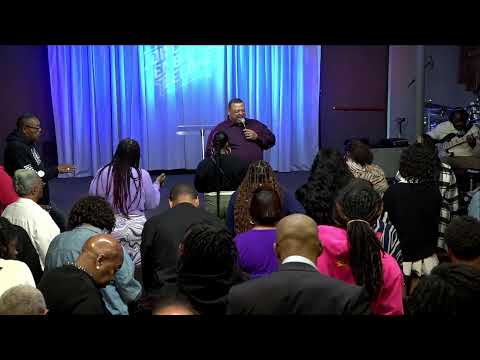
This individual study guide draws directly from Calvary Hawthorne's sermon “Follow-Up Materials - Initial Analysis” so you can keep engaging with the message all week. Read, reflect, and share it with your small group or friends.
In-Depth Bible Study Guide
Six Cloudy Days: Waiting in the Glory Cloud
Primary Text: Exodus 24:8–18
1. Introduction & Overview
This sermon, delivered by Evangelist Gay Nell Dawson, draws on the dramatic account of Moses ascending Mount Sinai and waiting six days in the glory cloud before God spoke — using this narrative as a lens for understanding the spiritual purpose of seasons of divine silence, delay, and suffering. The central claim is both theologically rich and personally urgent: the cloudy days of our lives are not accidents or punishments, but divinely orchestrated seasons of preparation, formation, and encounter. The seventh day — the day of God's speaking — is coming, and the call is to hold on.
Key Biblical Passages: Exodus 24:8–18 (primary); Matthew 26:36–44 (Mount of Olives parallel); Isaiah 52:12; Psalm 23; Philippians 1:6
Study Objectives: By working through this guide, you will (1) understand the literary and theological significance of Exodus 24 within the Sinai narrative, (2) explore the biblical theology of divine silence and the "glory cloud," (3) examine how Moses' mountain experience prefigures Christ's own agonizing wait in Gethsemane, (4) develop a theologically grounded framework for enduring seasons of waiting, and (5) consider how the pattern of six-then-seven shapes the whole biblical story.
Estimated Study Time: 2.5–3 hours
Why This Passage Matters: Exodus 24 is one of the most theologically dense chapters in the entire Old Testament — a covenant ratification ceremony, a theophany, and a commissioning narrative all compressed into eighteen verses. Most readers rush past it to get to the golden calf disaster of Exodus 32, but the six days of waiting between Moses' ascent and God's speaking contain a theology of patient formation that echoes throughout all of Scripture.
How This Guide Builds on the Sermon: Evangelist Dawson drew powerfully from this text in a preached, narrative style. This guide now provides the exegetical, historical, and theological scaffolding that gives that message even deeper roots.
2. Exegetical Analysis
Literary Structure and Genre
Exodus 24 functions as a covenant ratification ceremony — the formal sealing of the relationship established at Sinai between Yahweh and Israel. Scholars identify two distinct literary units within the chapter: verses 1–11 (the covenant meal and communal theophany) and verses 12–18 (Moses' individual ascent into the glory cloud). The sermon focused primarily on the second unit, which serves as the hinge between the giving of the law (Exodus 20–23) and the detailed instructions for the tabernacle (Exodus 25–31).
The Passage's Place in Exodus
The book of Exodus moves in a deliberate theological arc: bondage → deliverance → covenant → presence. Chapter 24 represents the covenant climax — Israel has received the law and now formally ratifies their relationship with Yahweh through blood, a shared meal, and Moses' ascent. The six days of waiting in verses 15–16 are not narrative filler; they are a theological statement about the nature of encounter with the holy God.
Verse-by-Verse Analysis
Verses 8–11: Moses takes the blood of the covenant and sprinkles it on the people — a shocking act of sacred solidarity. The seventy elders, Aaron, Nadab, and Abihu ascend partially and see God. The text notes with careful restraint that "under his feet was something like pavement made of lapis lazuli, as bright as the sky" (v. 10, NIV). Crucially, verse 11 states God "did not raise his hand against these leaders of the Israelites; they saw God, and they ate and drank." Seeing God and surviving is presented as exceptional, even miraculous.
Verses 12–14: God calls Moses higher — "Come up to me on the mountain and stay here." This is a summons to a more intimate encounter than the elders received. Moses instructs the elders to wait and delegates dispute resolution to Aaron and Hur. The language of waiting here is not passive — it is an assigned posture of trust.
Verses 15–16: Moses ascends and the cloud covers the mountain. Then the text slows dramatically: "the glory of the LORD settled on Mount Sinai. For six days the cloud covered the mountain." Six days of silence. Six days before God speaks. The Hebrew verb for "settled" (shākan) is the same root from which Shekinah — the dwelling presence of God — derives. This is not an empty cloud. It is the very presence of God, dense and weighty.
Verses 17–18: The appearance of the glory is described as "a consuming fire on top of the mountain" — terrifying to all observers. Yet Moses enters the cloud and remains for forty days and forty nights. What looked like consuming fire from the outside was, for Moses, the place of intimate instruction.
Key Theological Concept: The Six-Then-Seven Pattern
The six days before God speaks is not arbitrary. The seven-day pattern is structurally embedded in Hebrew theology from Genesis 1 onward. Six is the number of human labor, incompleteness, and waiting; seven is the number of divine completion and rest. Moses' six days in the cloud before God speaks on the seventh day mirrors the creation week and anticipates the Sabbath theology woven throughout Scripture.
3. Historical & Cultural Context
The Sinai Setting
Mount Sinai (also called Horeb in the Deuteronomic tradition) was understood in ancient Israel as the mountain of divine encounter — the axis mundi, the place where heaven and earth met. The precise geographical identification of Sinai remains debated among scholars, with candidates ranging from Jebel Musa in the southern Sinai Peninsula to sites in northwestern Arabia. What is theologically certain is its function: it is the place where Yahweh, the God of Israel, chose to make himself known in a concentrated, national theophany.
Covenant Ratification in the Ancient Near East
The covenant ceremony of Exodus 24 follows patterns well-attested in ancient Near Eastern treaty documents, particularly the Hittite suzerainty treaties of the second millennium B.C. These treaties included: a preamble identifying the great king, a historical prologue recounting his acts of kindness, stipulations (the law), provision for deposit and regular reading of the document, lists of witnesses (typically divine), and blessings and curses. Scholars like Meredith Kline (Treaty of the Great King, 1963) have demonstrated how the Sinai covenant follows this structure almost exactly, with Yahweh as the suzerain and Israel as the vassal nation.
The blood-sprinkling of verse 8 is particularly significant. In ancient covenant ceremonies, blood ratified agreements with the gravity of life and death — "we are bound to this covenant by our very lives." Moses' declaration, "This is the blood of the covenant that the LORD has made with you," is quoted directly by Jesus at the Last Supper (Matthew 26:28), establishing an explicit typological connection.
The Covenant Meal (vv. 9–11)
The eating and drinking in the presence of God by the seventy elders is extraordinary. In ancient Near Eastern culture, sharing a meal with a superior was a formal act of relationship and peace. The fact that God "did not raise his hand against them" suggests the text is aware of how dangerous this proximity to holiness should have been (cf. Exodus 33:20). This meal anticipates the eschatological banquet of Isaiah 25:6–8 and the Lord's Supper.
Lapis Lazuli
The description of the pavement under God's feet as "lapis lazuli" (Hebrew: sappîr, traditionally translated "sapphire") is culturally significant. Lapis lazuli was among the most precious and rare stones in the ancient world, imported to Egypt and Canaan from Afghanistan. Its deep sky-blue color made it a symbol of heaven and divine royalty throughout Mesopotamia and Egypt. The vision communicates: the God of Israel dwells in surpassing splendor beyond anything earthly wealth can approximate.
4. Word Studies
"Glory" (Hebrew: כָּבוֹד, kābôd)
- Meaning: The primary meaning is "weight" or "heaviness," with the derived meaning of "honor," "splendor," and "reputation." When used of God, it refers to the tangible, weighty, manifest presence of the divine.
- Etymology: From the root kbd, meaning "to be heavy." The same root produces the word for "liver" (kābēd), the heaviest organ, used in divination.
- Biblical Usage: The kābôd of Yahweh fills the tabernacle (Exodus 40:34–35), fills the temple (1 Kings 8:11), departs from the temple in Ezekiel's vision (Ezekiel 10), and returns in Ezekiel 43. In the New Testament, John declares that "the Word became flesh and dwelt among us, and we have seen his glory" (John 1:14) — using the Greek doxa to render the Hebrew concept.
- Theological Significance: The glory cloud of Exodus 24 is not metaphorical. It is the concentrated, manifest weight of divine presence — real, dangerous, and transforming. Moses' six days within this cloud represent immersion in the very being of God.
- Translation Considerations: The NIV, ESV, and NASB all render kābôd as "glory." The LXX (Greek Old Testament) uses doxa, which in classical Greek meant "opinion" or "reputation" but took on the full weight of the Hebrew in the Septuagint.
"Settled" (Hebrew: שָׁכַן, shākan)
- Meaning: "To dwell," "to settle," "to take up residence." The noun form mishkān means "tabernacle" or "dwelling place."
- Etymology: The root škn conveys the idea of residing or camping — a semi-permanent settling, not a permanent fixed structure. This is significant: God's glory camps among his people.
- Biblical Usage: Used of God's presence in the tabernacle (Exodus 25:8; 29:45–46), in the temple (1 Kings 6:13), and prophetically of the messianic age (Ezekiel 37:27). The noun mishkān (tabernacle) appears over 100 times in Exodus–Numbers.
- Theological Significance: Evangelist Dawson's imagery of God's presence resting "like the dew in the morning" connects beautifully to this word. The shākan of God's glory on Sinai is the same divine impulse that drives the entire tabernacle project — God wants to dwell among his people, not merely visit.
"Cloud" (Hebrew: עָנָן, ʿānān)
- Meaning: Simply "cloud," but in theological contexts always refers to the divine presence-cloud — the visible medium through which God manifests himself while remaining hidden.
- Biblical Usage: The pillar of cloud guides Israel in the wilderness (Exodus 13:21–22), descends on the tabernacle (Exodus 40:34), covers Sinai (Exodus 24:15–16), and appears at the Transfiguration (Matthew 17:5). The cloud is the divine "hiding while revealing" — God present but not fully visible.
- Theological Significance: The cloud is not obscuring God — it is God's chosen mode of presence for creatures who cannot survive full exposure to divine holiness. Evangelist Dawson made the profound observation that "you don't see much in the cloud" — but this is precisely the point. Faith is required precisely because the cloud limits vision. As John Calvin observed, God "accommodates" himself to human capacity in his self-revelation.
"Consuming Fire" (Hebrew: אֵשׁ אֹכֶלֶת, ʾēsh ʾōkelet)
- Meaning: Literally "devouring fire" — fire that consumes what it touches.
- Biblical Usage: Deuteronomy 4:24 declares, "For the LORD your God is a consuming fire, a jealous God." Hebrews 12:29 quotes this directly in the context of New Covenant worship. The burning bush (Exodus 3) burns but does not consume — a sign of the sustaining, purifying presence of God.
- Theological Significance: What appeared as consuming fire to Israel watching from below was the place of intimate communion for Moses. This is a profound theological insight: the same divine holiness that terrifies from a distance transforms from within. The fire does not destroy Moses; it forms him. This is the theology behind the cloudy days — what feels like fire from the outside is the forge of God's formation from within.
5. Cross-References & Biblical Theology
Parallel Passages
Exodus 33:18–23 — Moses asks to see God's glory; God hides him in the cleft of the rock and passes by. The glory cloud of Exodus 24 is the same divine presence that Moses later longs to see more fully. His six days in the cloud represent extraordinary intimacy.
1 Kings 19:11–13 — Elijah, exhausted and despairing on the same mountain (Horeb), waits through wind, earthquake, and fire before hearing the "still small voice" (KJV) or "gentle whisper" (NIV). The pattern repeats: God comes after the silence, not in the spectacular.
Matthew 17:1–8 — The Transfiguration. Jesus takes Peter, James, and John up a high mountain, where "a bright cloud covered them, and a voice from the cloud said, 'This is my Son, whom I love; with him I am well pleased.'" The glory cloud of Sinai appears again — this time overshadowing Jesus himself.
Thematic Connections
Matthew 26:36–44 — Gethsemane. Evangelist Dawson drew this connection powerfully: Jesus on the Mount of Olives, sweating drops of blood, praying "not my will but yours." Like Moses on Sinai, Jesus endures the silence and anguish of waiting before the Father acts. The distance between Sinai and Gethsemane — geographically and temporally — is bridged by the same theology of faithful waiting.
Psalm 22:1–2 — "My God, my God, why have you forsaken me? Why are you so far from saving me, so far from my cries of anguish? I cry out by day, but you do not answer." The psalmist voices what Moses may have felt in those six silent days — and what Jesus cried from the cross. Divine silence is not divine absence.
Psalm 30:5 — "Weeping may stay for the night, but rejoicing comes in the morning." Quoted directly in the sermon. The six-then-seven pattern in miniature.
Lamentations 3:25–27 — "The LORD is good to those whose hope is in him, to the one who seeks him; it is good to wait quietly for the salvation of the LORD."
Isaiah 40:31 — "But those who hope in the LORD will renew their strength. They will soar on wings like eagles; they will run and not grow weary, they will walk and not be faint." The Hebrew word for "hope/wait" (qāwâh) carries the image of a rope being twisted under tension — strength built through the waiting.
Progressive Revelation
Hebrews 12:18–24 — The author of Hebrews explicitly contrasts Mount Sinai (terrifying, untouchable, consuming fire) with Mount Zion (the joyful assembly, the city of the living God, Jesus the mediator of a new covenant). The six cloudy days on Sinai find their ultimate resolution not in the Ten Commandments but in the cross — where the consuming fire of God's holiness was absorbed by Christ, making it possible for us to draw near.
Revelation 21:3 — "And I heard a loud voice from the throne saying, 'Look! God's dwelling place (skēnē — tabernacle) is now among the people, and he will dwell (skēnoō) with them.'" The shākan of Sinai finds its eternal fulfillment: God dwelling permanently with his people.
6. Interpretive Considerations
The Question of Divine Silence
One of the sermon's most penetrating observations is that God said nothing to Moses for six days. Interpreters have handled this in different ways. Some read the silence as liturgical preparation — Moses being purified and readied for the weight of divine instruction. Others, following rabbinic tradition, see the six days as a test of Moses' willingness to wait without demanding explanation. Still others understand it as a narrative device emphasizing the gravity of what follows.
What is theologically significant is that the text does not explain the silence. This is itself instructive: Scripture normalizes divine silence without explaining it away. The prosperity gospel tradition tends to interpret silence as a problem to be solved through greater faith or louder prayer; the biblical tradition presents silence as a legitimate mode of divine pedagogy.
Did the Elders Actually See God?
Exodus 24:10–11 states the elders "saw the God of Israel" — yet Exodus 33:20 records God saying "you cannot see my face, for no one may see me and live." Interpreters across traditions have wrestled with this. Jewish interpreters often understood the Exodus 24 vision as mediated — they saw a manifestation, not God's essence. Christian interpreters from Justin Martyr onward identified the divine figure as a pre-incarnate appearance of Christ (a theophany or Christophany). Reformed scholars like John Calvin emphasized divine accommodation — God revealing himself in forms human perception can receive. All three approaches have merit and are not mutually exclusive.
The Forty Days
The sermon references Moses remaining forty days and forty nights (v. 18). This number — forty — becomes one of Scripture's most theologically loaded numbers: Israel's forty years in the wilderness, Elijah's forty-day journey to Horeb, Jesus' forty days of temptation. Forty consistently represents a period of testing, formation, and transition. The six days of waiting before the forty days of instruction suggest that the waiting itself was the first lesson.
7. Theological Implications
The Theology of Divine Hiddenness
The German theologian Martin Luther distinguished between the Deus absconditus (the hidden God) and the Deus revelatus (the revealed God). Exodus 24 holds both in tension: God is present in the cloud — genuinely, powerfully present — yet hidden from full view. This is not a deficiency in God's revelation but a mercy toward human limitation. The cloud protects as much as it conceals.
This theology directly addresses the sermon's pastoral concern: when God is silent, he is not absent. The cloud is not empty. As the sermon powerfully declared, "the cloud is holding something."
Covenant Faithfulness and Human Formation
The covenant ratification of Exodus 24 establishes that the relationship between God and his people is not transactional but covenantal — bound by promise, blood, and mutual commitment. God's delays in the cloudy seasons do not violate the covenant; they operate within it. Philippians 1:6, cited in the service, articulates this theologically: "He who began a good work in you will carry it on to completion." The God of the covenant does not abandon unfinished work.
The Sabbath Pattern and Eschatological Hope
The six-then-seven structure of Exodus 24 participates in the grand biblical theology of Sabbath: six days of labor, waiting, and incompleteness, followed by the seventh day of divine rest and completion. This pattern is not merely weekly — it structures history itself. The New Testament authors understood the present age as the "sixth day" of human history, with the seventh day — the eternal Sabbath rest — still to come (Hebrews 4:9–11). The cloudy days are not the final word; they are penultimate.
Suffering as Formation
The sermon's repeated insistence that "cloudy days are necessary" is not stoic resignation but theologically grounded hope. Romans 5:3–4 articulates the same logic: "suffering produces perseverance; perseverance, character; character, hope." The cloud does not merely delay God's work — it is part of God's work.
8. Practical Application
Reframing the Cloudy Days
Evangelist Dawson's personal testimony — leaving a prestigious career, living without water and electricity in a mansion, crying in the mud while a pit bull offered comfort — is not merely entertaining. It is a lived exegesis of Exodus 24. The theological insight is this: what looks like abandonment from the outside may be intimate formation from within. The consuming fire that terrified Israel was the place of Moses' deepest encounter with God.
For serious students of Scripture, this reframing is not wishful thinking — it is grounded in the six-then-seven structure of biblical theology. The question is not whether the seventh day is coming, but whether we will still be on the mountain when it arrives.
Practical Disciplines for the Cloudy Season
- Maintain the posture of waiting. Moses did not descend the mountain in frustration after day three. He remained in position. Spiritual disciplines — prayer, Scripture reading, community — are the practices that keep us on the mountain.
- Distinguish God's voice from the enemy's. The sermon's observation that "if you give the enemy a little bit of space, he'll take a lot of space" reflects the patristic teaching on logismoi — intrusive thoughts that masquerade as divine instruction. Discernment is a skill developed in the cloud.
- Back up to the wind. The sermon's Chicago wind illustration is more than a story — it is a posture. Isaiah 52:12 promises: "the LORD will go before you, the God of Israel will be your rear guard." When you cannot face the storm, let God's presence at your back carry you forward.
- Release what you cannot control. The sermon's closing challenge — "whatever storm you came in here with, don't walk out with it" — is a call to covenantal trust: releasing ownership to the one who is actually sovereign.
9. Discussion Questions
Observational
In Exodus 24:15–16, what specifically does the text say happened during the six days before God spoke? What details does the author include, and what does he leave out? What might those omissions be telling us?
Comparing Exodus 24:10–11 (the elders see God and eat and drink) with Exodus 33:20 (no one can see God's face and live), what tensions do you notice? How does the text itself seem to navigate this tension?
What does Moses tell the elders to do while he ascends (v. 14), and why might this delegation matter for the narrative that follows in Exodus 32?
Interpretive
The sermon identified the six days of silence as a season of divine formation. What textual evidence supports this interpretation? Are there other ways to read the silence that are also textually grounded?
Evangelist Dawson drew a parallel between Moses on Sinai and Jesus in Gethsemane. What specific textual and theological connections make this comparison compelling? Where does the parallel break down, and what does that breaking-down reveal?
The "consuming fire" of Exodus 24:17 appears terrifying to the Israelites below but is the environment in which Moses receives intimate instruction. How does this dual perception of the same divine reality challenge common assumptions about what "God's presence" should feel like?
Theological
The sermon claimed that "cloudy days are necessary for God's people because they develop us." How does this claim stand up against the biblical witness? Can you find passages that complicate this view, and how would you hold them in tension with Exodus 24?
What does the six-then-seven pattern in Exodus 24 reveal about God's character — specifically about how he relates to time, human impatience, and his own purposes? How does this connect to the broader biblical theology of Sabbath and eschatological rest?
Applicational
The sermon described the enemy's strategy as exploiting silence: "if you give the enemy a little bit of space, he'll take a lot of space and he'll start talking to your mind." What specific practices — drawn from Scripture and Christian tradition — help believers guard their minds during seasons of divine silence?
Evangelist Dawson's personal testimony involved leaving security, comfort, and recognition in obedience to a call she didn't fully understand. Where in your own life is God calling you to "tell your livelihood to stay here" and ascend to a place of deeper trust? What makes that ascent difficult?
The sermon ended with a challenge to release your storm at the altar rather than carry it out. What is the difference between genuine release and spiritual denial? How does the covenant framework of Exodus 24 help us understand what it means to truly "give it to God"?
Investigative
- The sermon mentioned Dietrich Bonhoeffer's observation about the Black church as a source of authentic faith. Research Bonhoeffer's 1930–1931 year at Union Theological Seminary in New York and his experiences at Abyssinian Baptist Church in Harlem. How did that experience shape his theology of costly discipleship, and what does it suggest about the relationship between suffering, community, and genuine faith?
10. Recommended Resources
Commentaries on Exodus
Accessible:
- Alec Motyer, The Message of Exodus (The Bible Speaks Today series, IVP, 2005) — Warm, theologically rich, and accessible. Excellent for devotional engagement with the text without sacrificing depth. Motyer's treatment of the glory cloud is particularly strong.
Intermediate:
John Durham, Exodus (Word Biblical Commentary, Word Books, 1987) — Thorough exegetical work with attention to Hebrew vocabulary and literary structure. Durham's analysis of the covenant ratification ceremony in Exodus 24 is among the best available for serious lay readers.
Douglas Stuart, Exodus (NAC, B&H Publishing, 2006) — Combines scholarly rigor with pastoral application. Stuart's discussion of the ancient Near Eastern treaty background is accessible and illuminating.
Advanced:
- Brevard Childs, The Book of Exodus: A Critical, Theological Commentary (Westminster Press, 1974) — A landmark in Old Testament scholarship. Childs' canonical approach reads Exodus within the whole of Scripture. Demanding but rewarding for those willing to invest the effort.
Biblical Theology and Thematic Studies
Accessible:
- Michael Horton, Covenant and Salvation: Union with Christ (Westminster John Knox, 2007) — Explores the covenant framework that underlies Exodus 24 and its New Testament fulfillment. Accessible for motivated lay readers.
Intermediate:
- G.K. Beale, A New Testament Biblical Theology (Baker Academic, 2011) — Traces the temple/glory/dwelling themes from Sinai through Revelation. Essential for understanding how Exodus 24 connects to the whole biblical story.
Historical and Cultural Background
Accessible:
- John Walton, Victor Matthews, and Mark Chavalas, The IVP Bible Background Commentary: Old Testament (IVP Academic, 2000) — Excellent one-volume resource for understanding ancient Near Eastern context. The Exodus entries are particularly helpful for understanding covenant ceremonies and theophany accounts.
Theology of Suffering and Divine Silence
Accessible:
- Philip Yancey, Disappointment with God (Zondervan, 1988) — Engages honestly with the experience of divine silence and delay. Draws heavily on the Exodus narrative. Ideal for personal reflection during cloudy seasons.
Intermediate:
- Kathleen Norris, Acedia and Me (Riverhead Books, 2008) — Explores the spiritual tradition of waiting, restlessness, and the "noonday demon" of spiritual dryness. Bridges patristic wisdom and contemporary experience.
Online Resources
- The Bible Project (bibleproject.com) — Their video series on Exodus and the theme of "God's presence" provides excellent visual introductions to the theological themes of Exodus 24. Free and accessible.
- Accordance Bible Software or Logos Bible Software — For those wanting to do their own Hebrew word studies, these platforms provide access to lexicons, commentaries, and the Hebrew text with parsing tools.
This study guide is designed to be worked through over multiple sessions. Consider pairing it with a reading journal, noting where the text speaks most directly to your own cloudy days — and where you sense the seventh day drawing near.