
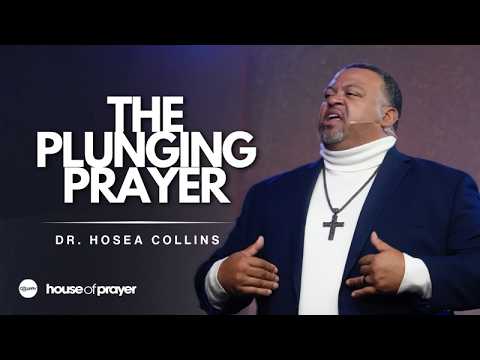
This individual study guide draws directly from Calvary Hawthorne's sermon “Follow-Up Materials - Initial Analysis” so you can keep engaging with the message all week. Read, reflect, and share it with your small group or friends.
THE PLUNGING PRAYER: FORGIVENESS FROM THE CROSS
A Comprehensive Bible Study Guide
Based on Luke 23:33-34 | Series: The Lord's Prayers
"Father, forgive them, for they know not what they do." — Luke 23:34a
ESTIMATED STUDY TIME: 2.5–3 Hours
SECTION 1: INTRODUCTION & OVERVIEW
Sermon Summary
In this powerful message from Calvary, the pastor opens with extended corporate worship centered on the incomparability and supremacy of Jesus—"there is no greater name"—before pivoting to one of the most theologically dense and emotionally striking moments in all of Scripture: Jesus' prayer of forgiveness from the cross in Luke 23:33-34.
The sermon introduces the concept of the "Plunging Prayer"—the idea that just as a clogged drain prevents water from flowing, unresolved unforgiveness clogs our spiritual pipeline, preventing God's answers, blessings, and voice from reaching us. The pastor argues that Jesus, in his final moments before death, chose to pray not for himself, not for his disciples, not for his mother—but for the very people torturing and killing him. This prayer, the sermon contends, was both intercessory (on behalf of others) and preventive (protecting Jesus himself from dying with bitterness that would compromise his perfect sacrifice).
The sermon weaves together a theology of forgiveness, a psychology of why people hurt people, a theology of tithing from Malachi 3, and a passionate call to make forgiveness an act of will rather than a feeling—culminating in a congregational prayer of release.
Learning Objectives
By the end of this study, participants will be able to:
- Understand the historical and theological context of Jesus' crucifixion prayer and why it represents the climax of his redemptive mission
- Conduct meaningful word studies on key terms: aphiēmi (forgive), agnoeo (know not), Calvary/Golgotha, Logos, and hilasmos
- Trace the biblical theology of forgiveness from Genesis through Revelation, seeing how Luke 23:34 stands at the center of God's redemptive story
- Articulate the difference between forgiveness as a feeling versus forgiveness as a decision, grounded in Scripture and theology
- Apply the "plunging prayer" concept to their own prayer lives and relational conflicts
SECTION 2: EXEGETICAL ANALYSIS
Literary Structure of Luke 23:26-49
Luke 23:33-34 does not stand alone. It is embedded within Luke's passion narrative, which is carefully structured around seven utterances from the cross (across all four Gospels). Luke uniquely records three of the seven:
- Luke 23:34 — "Father, forgive them" (Forgiveness)
- Luke 23:43 — "Today you will be with me in paradise" (Salvation)
- Luke 23:46 — "Father, into your hands I commit my spirit" (Surrender)
Notice Luke's theological artistry: the crucifixion narrative begins with forgiveness and ends with surrender. This is not accidental. Luke, the physician and careful historian (Luke 1:1-4), arranges his material with intentional theological purpose.
Genre
This passage operates simultaneously on multiple literary levels:
- Historical narrative — A factual account of crucifixion events
- Prayer text — Direct speech addressed to God
- Typological fulfillment — The ultimate fulfillment of Israel's sacrificial system
- Prophetic echo — The fulfillment of Isaiah 53:12: "He bore the sin of many and made intercession for the transgressors"
Verse-by-Verse Analysis
Luke 23:33 — "And when they were come to the place which is called Calvary, there they crucified him, and the malefactors, one on the right hand and the other on the left."
The Greek term here is Kranion (skull), translated in Latin as Calvaria (Calvary). Luke's matter-of-fact tone—"there they crucified him"—is striking in its restraint. He does not linger on the gore. The placement of Jesus between two criminals is theologically significant: it fulfills Isaiah 53:12 ("he was numbered with the transgressors") and frames the entire scene as one of substitution. Jesus takes the criminal's place.
Luke 23:34a — "Then said Jesus, Father, forgive them; for they know not what they do."
Critical textual note: This verse has one of the most significant textual variants in the New Testament. Some early manuscripts omit verse 34a entirely. However, the majority of textual scholars—including Bruce Metzger in his Textual Commentary on the Greek New Testament—argue for its authenticity, noting that scribes may have omitted it due to theological discomfort (particularly after the destruction of Jerusalem in AD 70, which some interpreted as God's judgment on the Jews, making Jesus' prayer seem unfulfilled). The overwhelming weight of manuscript tradition, early patristic citations, and the verse's coherence with Luke's theological themes support its inclusion.
Luke 23:34b — "And they parted his raiment, and cast lots."
The soldiers dividing his garments fulfills Psalm 22:18 precisely. Luke juxtaposes the prayer of intercession with this act of callous indifference—soldiers gambling for a dying man's clothes while he prays for their forgiveness. The contrast is staggering.
Author's Intent
Luke, writing to a Greek audience (Theophilus, likely a Roman official), is making a specific argument: Jesus is the innocent, forgiving Son of God whose death is not a tragedy but a purposeful act of divine love. The prayer of forgiveness is Luke's theological centerpiece demonstrating that Jesus' death accomplishes exactly what he came to do—not revenge, not self-preservation, but redemption.
SECTION 3: HISTORICAL & CULTURAL CONTEXT
Roman Crucifixion
Crucifixion was the Roman Empire's most extreme form of capital punishment, reserved specifically for slaves, rebels, and the lowest criminals. Cicero called it "the most cruel and disgusting penalty." It was designed not merely to kill but to humiliate—victims were often crucified naked, in public, along major roads, as a deterrent to others.
The physical reality was horrific. After flogging (which could itself be fatal), the condemned carried the crossbeam (patibulum) to the execution site. Nails were driven through the wrists (the Greek word cheir, "hand," included the wrist) and feet. Death came through a combination of asphyxiation, blood loss, and shock, often over several days.
That Jesus could form coherent, theologically profound sentences in this condition is itself remarkable.
Golgotha
The execution site, "Golgotha" (Aramaic for "skull"), was located just outside Jerusalem's walls—likely near a major gate to maximize public visibility. The exact location is debated between two sites: the Church of the Holy Sepulchre (favored by most scholars) and Gordon's Calvary. Being outside the city walls is theologically significant: Hebrews 13:12 notes that "Jesus also suffered outside the city gate to make the people holy through his own blood," connecting him to the Old Testament practice of burning sin offerings outside the camp (Leviticus 16:27).
The Original Audience's Understanding
Jewish hearers would have immediately recognized several layers:
- The Suffering Servant of Isaiah 52-53 who "made intercession for the transgressors"
- The Day of Atonement sacrifice, where the high priest would enter the Holy of Holies to make atonement for sins the people committed in ignorance (Leviticus 16; Numbers 15:22-31)
- The concept of shogeg (unintentional sin) in Jewish law—sins committed without full knowledge still required atonement, and Jesus' prayer addresses precisely this category
Roman hearers would have been astonished at the absence of cursing. It was common—even expected—for crucifixion victims to curse their executioners. Jesus' prayer of forgiveness would have been, to Roman ears, almost incomprehensible.
The "They" Who Did Not Know
The pastor rightly identifies multiple groups within "them." Historically:
- Roman soldiers — following military orders, likely unaware of Jewish messianic theology
- Jewish religious leaders — who believed they were protecting the covenant community from a blasphemer
- The crowd — swept up in mob psychology
- Judas — whose betrayal was motivated by complex theological misunderstanding and personal disillusionment
- All humanity — represented in this act, as Paul argues in 1 Corinthians 2:8
SECTION 4: WORD STUDIES
"Forgive" (Greek, aphiēmi, af-EE-ay-mee): From apo (away from) + hiēmi (to send). Literally means "to send away, to release, to let go." This is the standard New Testament word for forgiveness. It carries the image of a debt being cancelled, a prisoner being released, or a burden being lifted. Critically, in Luke 23:34, Jesus uses the aorist imperative—a command requesting a decisive, completed action. He's not asking God to consider forgiving them or to begin forgiving them. He's asking for a definitive act of release. This grammatical form strengthens the sermon's point that forgiveness is an act, not a process of feeling.
"Know not" (Greek, oida, OY-da): This is the negative form of oida, which refers to deep, experiential, comprehensive knowledge—the kind that comes from intimate acquaintance. Jesus is not saying they lack basic factual information about what they're doing. He's saying they lack deep, transformative understanding of the cosmic significance of this moment. They don't know they are killing the Author of Life (Acts 3:15), the one through whom all things were made (John 1:3). This distinction is crucial: ignorance of ultimate significance, not ignorance of actions.
"Calvary/Golgotha" (Aramaic, Gûlgaltâ, gool-GAL-tah): From the Aramaic word for "skull." The exact origin of the name is debated—it may refer to the shape of the hill, to it being a place of execution where skulls were found, or to a connection with the skull of Adam in early Christian tradition (Origen and other church fathers taught that Adam was buried at Golgotha, making the cross literally the antidote to the fall—Christ's blood dripping onto Adam's skull). Whether historically accurate, this tradition powerfully captures the theological reality: where death entered through Adam, life is restored through Christ.
"Father" (Greek, Patēr, pah-TARE; Aramaic, Abba, AB-bah): Jesus consistently addresses God as "Father" throughout Luke's Gospel. In Gethsemane (Luke 22:42), he cries "Father, if you are willing..." and here again "Father, forgive them." This address is theologically loaded. Jesus is not approaching God as a distant deity but as a Son appealing to a Father's mercy on behalf of others. The Aramaic Abba (which Jesus likely used) carries the intimacy of "Daddy"—a term so intimate that Jewish prayers of the period almost never used it. Jesus is leveraging his unique filial relationship to intercede for humanity. As the sermon notes, "he appealed to God through his sonship."
"Malefactors" (Greek, kakourgos, kak-OOR-gos): From kakos (evil) + ergon (work/deed). Literally "evil-doers" or "criminals." Luke's use of this term rather than "thieves" (as in Matthew and Mark) may be intentional—kakourgos was the technical term for those guilty of capital crimes. The positioning of Jesus between two kakourgoi is the visual embodiment of Isaiah 53:12 and Paul's theology in 2 Corinthians 5:21: "God made him who had no sin to be sin for us."
SECTION 5: CROSS-REFERENCES & BIBLICAL THEOLOGY
Forgiveness as the Spine of Biblical Theology
1. Genesis 3:15 — God's first response to human sin is not punishment alone but promise: "I will put enmity between you and the woman, and between your offspring and hers; he will crush your head." The seed of forgiveness is planted at the very moment of the fall. Luke 23:34 is the bloom of this seed.
2. Leviticus 16:20-22 — The scapegoat ritual on the Day of Atonement: the high priest lays hands on the goat, confesses the sins of Israel, and the goat is sent away into the wilderness—aphiēmi, sent away. Jesus is both the high priest (making intercession) and the scapegoat (bearing sin away).
3. Numbers 15:22-31 — The Torah distinguishes between sins committed b'shogeg (unintentionally) and sins committed b'yad ramah (with a high hand, defiantly). Unintentional sins could be atoned for; defiant sins were more severe. Jesus' prayer invokes this very category: "they know not what they do"—placing his executioners in the category of shogeg, for which atonement is available.
4. Isaiah 53:12 — "He bore the sin of many, and made intercession for the transgressors." Written 700 years before the crucifixion, this verse is fulfilled with stunning precision in Luke 23:34. Jesus' prayer is the intercession Isaiah prophesied.
5. Psalm 22:1, 18 — Jesus quotes verse 1 from the cross ("My God, my God, why have you forsaken me?"), and verse 18 is fulfilled in the soldiers casting lots for his garments (Luke 23:34b). The entire Psalm is a prophetic script of the crucifixion.
6. Acts 3:17 — Peter, preaching after Pentecost, echoes Jesus' words: "Now, brothers, I know that you acted in ignorance, as did your leaders." Peter is applying Jesus' intercessory prayer as the theological basis for offering the gospel to those who crucified Christ.
7. Acts 7:60 — Stephen, the first Christian martyr, at the moment of his stoning cries out: "Lord, do not hold this sin against them." He is directly modeling Jesus' prayer from Luke 23:34. The pattern of forgiving one's killers becomes the mark of Christian martyrdom.
8. Romans 5:8 — "But God demonstrates his own love for us in this: While we were still sinners, Christ died for us." The "while we were still" is the temporal equivalent of Jesus forgiving before repentance. Forgiveness precedes the apology.
9. Ephesians 4:32 — "Be kind and compassionate to one another, forgiving each other, just as in Christ God forgave you." The grammar here is important: kathōs (just as)—our forgiveness of others is to be patterned after and empowered by God's forgiveness of us in Christ.
10. Colossians 3:13 — "Bear with each other and forgive one another if any of you has a grievance against someone. Forgive as the Lord forgave you." Again the kathōs pattern: the standard and source of our forgiveness is Christ's forgiveness.
11. Hebrews 7:25 — "He is able to save completely those who come to God through him, because he always lives to intercede for them." The prayer in Luke 23:34 is not a one-time event—it reflects the eternal intercessory ministry of Christ that continues even now at the Father's right hand.
12. Revelation 5:9 — "You were slain, and with your blood you purchased for God persons from every tribe and language and people and nation." The scope of "forgive them" is ultimately universal in its offer—the prayer at Calvary opens the door of forgiveness to all humanity across all of history.
SECTION 6: INTERPRETIVE CONSIDERATIONS
Is Luke 23:34 Authentic?
As noted in the exegetical section, some manuscripts omit this verse. However, the textual evidence strongly favors inclusion. Scholars like F.F. Bruce, I. Howard Marshall, and Joel Green all defend its authenticity. The most compelling argument: if a scribe were inventing a saying, he would not choose one that creates such theological complexity (did God actually forgive those who rejected Jesus?). The verse's difficulty argues for its authenticity.
Does This Prayer Mean Everyone Is Automatically Forgiven?
This is the most significant interpretive challenge. Three main positions:
Position 1: Universal Pardon — Jesus' prayer secured universal forgiveness for all humanity. This view is held by some universalists but struggles against the consistent New Testament teaching that forgiveness requires faith and repentance (Acts 2:38; John 3:16-18).
Position 2: Conditional Offer — Jesus' prayer opened the possibility of forgiveness for all, which is appropriated through faith. This is the majority evangelical position. The prayer does not automatically save but creates the space for the gospel offer to be made—which is exactly what Peter does in Acts 2 and 3, offering forgiveness to those who crucified Christ.
Position 3: Specific Intercession for Israel — Some interpreters (particularly in Reformed theology) see this as Jesus interceding specifically for elect Jews, fulfilled in the large numbers who responded at Pentecost (Acts 2:41 — 3,000 in one day).
The sermon's interpretation aligns with Position 2, and it is the most exegetically defensible. The prayer is an act of intercession that opens the door; it does not bypass the need for personal response. This is consistent with the entire New Testament's call to repentance and faith.
Was Jesus Praying for Himself?
The sermon offers a theologically creative and devotionally rich reading: that Jesus may have been "plunging" his own spiritual pipes—ensuring that he died without bitterness or resentment that could have compromised his perfect sacrifice. While this is not the primary exegetical meaning of the text, it is theologically sound as application. Jesus was fully human (Hebrews 4:15) and "tempted in every way, just as we are." The Gethsemane prayer demonstrates his emotional reality. The sermon's application—that forgiveness protects us as much as it releases others—is thoroughly biblical.
SECTION 7: THEOLOGICAL IMPLICATIONS
The Nature of God: Forgiveness as Divine Character
Luke 23:34 is one of Scripture's clearest windows into the heart of God. The prayer reveals:
God's Prevenient Grace — Forgiveness is offered before repentance is expressed. This is consistent with Romans 5:8 and challenges any transactional understanding of salvation. God moves toward humanity first.
The Doctrine of Atonement — Jesus' prayer is inseparable from his atoning work. He is not merely asking God to overlook sin; he is paying for the forgiveness he requests. The cross is the price; the prayer is the application. This is why Reformed theologians speak of "definite atonement" and Arminians of "unlimited atonement"—both traditions agree that the cross accomplishes something real.
The Intercession of Christ — Hebrews 7:25 tells us Jesus "always lives to intercede." Luke 23:34 is the historical anchor of this eternal ministry. The one who prayed for his killers continues to pray for his people.
The Doctrine of Humanity and Sin — The phrase "they know not what they do" is not an excuse but an explanation. It illuminates the biblical teaching on noetic effects of sin—sin darkens the mind (Ephesians 4:18; Romans 1:21). Sinners do not fully understand the gravity of their rebellion against God. This is not innocence; it is the tragic depth of human fallenness.
The Doctrine of Sanctification — The sermon's teaching that forgiveness is an act that precedes feeling, and that obedience matters more than emotional readiness, is rooted in a robust theology of sanctification. Sanctification is not primarily about feeling holy; it is about choosing to align one's will with God's (Philippians 2:12-13).
Systematic Theology Connections
- Soteriology: Forgiveness is the heart of salvation; this prayer is its definitive expression
- Christology: The prayer demonstrates both Jesus' full humanity (he felt the pain) and full divinity (he could intercede as the unique Son)
- Pneumatology: The Spirit empowers believers to forgive as Christ forgave (Romans 8:26; Ephesians 4:30-32)
- Ecclesiology: The church is called to be a forgiving community, embodying what Christ demonstrated (Colossians 3:12-14)
- Eschatology: The prayer points forward to the final reconciliation of all things under Christ (Colossians 1:20)
SECTION 8: PRACTICAL APPLICATION
How Scholarship Informs Living
Understanding aphiēmi (to send away, release) transforms forgiveness from a vague spiritual sentiment into a concrete act. When you forgive, you are performing a legal-spiritual action—releasing someone from the debt they owe you. You are not saying "what they did was okay." You are saying "I will not hold this debt against them." The Greek word makes this clear.
Understanding the aorist imperative in Jesus' prayer shows us that forgiveness is meant to be decisive, not incremental. You don't forgive someone a little at a time. You make a decision.
Specific Applications
1. The Plunging Prayer as Personal Practice Identify someone (or multiple people) you have not fully forgiven. Using Jesus' prayer as a model, pray specifically: "Father, forgive [name] for [specific action]. They did not fully understand what they were doing or how it would affect me. I release them from the debt I have held against them. And forgive me for holding it this long."
2. Forgiveness Journaling Write out the specific offense, the specific person, and then write the words: "I release [name] from the debt of [offense]." Sign it. Date it. This externalizes the internal decision and creates a record you can return to when feelings resurface.
3. Praying for Those Who Hurt You The sermon notes that consistent prayer for those who hurt us transforms anger into pity. Begin a practice of praying for the person you find hardest to forgive—not for their punishment, but for their healing and salvation. Do this for 30 days and observe the transformation.
4. Examining Your "Why" The sermon's psychological framework (hurt people hurt people; insecurity; learned behavior; need for control; self-centeredness) is not just interesting—it's a tool for compassion. When someone hurts you, ask: "What might be going on inside them that produced this?" This is not excusing the behavior; it is seeing the person through God's eyes.
5. The Tithe as Heart Indicator The sermon's extended teaching on Malachi 3 invites a practical examination: look at your last three months of bank statements. Where does your money go? The sermon argues this reveals the location of your heart. This is not about guilt—it's about honest self-examination and realignment.
6. Obedience Before Feeling Identify one area where you have been waiting to "feel ready" before obeying God. Apply the sermon's principle: the act precedes the feeling. Take the first step of obedience this week, trusting that the feeling will follow.
SECTION 9: DISCUSSION QUESTIONS
Use these in small groups, personal study, or Tuesday Bible study. Questions move from observation to application.
Observational Questions
Read Luke 23:33-34 alongside Isaiah 53:12 and Acts 7:60. What specific verbal and thematic connections do you notice? What does this pattern suggest about how the early church understood Jesus' prayer?
The pastor notes that Jesus could have prayed many different prayers in his final moments. List at least five other prayers Jesus could have prayed. Why do you think he chose this one? What does that choice reveal about his priorities?
Interpretive Questions
The sermon distinguishes between "they know what their actions are" and "they don't know what this is all about." Using 1 Corinthians 2:8 and Acts 3:17 as supporting texts, how would you explain this distinction to someone who argues "they knew exactly what they were doing"?
The word aphiēmi means "to send away, release." How does this definition change or deepen your understanding of what forgiveness actually is? What are you releasing when you forgive someone?
The textual variant question: some early manuscripts omit Luke 23:34a. If you were explaining to a new believer why scholars still include it, what two or three arguments would you use?
Theological Questions
The sermon argues that forgiveness is "proactive, not just reactive"—that we should forgive before someone apologizes. How do you reconcile this with passages like Luke 17:3 ("If your brother sins against you, rebuke him, and if he repents, forgive him")? Is there a tension here, and if so, how do you resolve it?
The pastor suggests Jesus may have prayed this prayer partly to "plunge" his own spiritual pipes—to ensure he died without bitterness. Do you find this interpretation theologically valid? What does Hebrews 4:15 contribute to this discussion?
The sermon draws a connection between tithing (Malachi 3) and the heart's location (Matthew 6:21). How does the theology of the heart connect to the theology of forgiveness? In other words, what does your pattern of forgiveness (or unforgiveness) reveal about your heart?
Applicational Questions
The pastor says: "Unforgiveness is you drinking a bottle of poison hoping the other person will die." Describe a time (without naming names if uncomfortable) when you experienced the self-destructive effects of unforgiveness. What changed when you finally released it?
The sermon identifies five reasons people hurt people: hurt people hurt people; insecurity and comparison; need for control; learned behavior; selfishness/self-centeredness. Think of someone who has hurt you. Which of these categories might apply to them? How does understanding the "why" affect your capacity to forgive?
The sermon argues that obedience to God's command to forgive does not require emotional readiness. The children-and-dishes illustration makes the point humorously but seriously. What is the hardest part of this teaching for you personally? What would it look like to obey before you feel ready?
Investigative Questions
- The closing testimony from the congregation member who forgave her uncle for childhood abuse is a stunning real-world example of Luke 23:34 lived out. Using Romans 8:28 and Genesis 50:20 (Joseph forgiving his brothers), construct a biblical theology of "redemptive forgiveness"—the idea that God uses the act of forgiveness to bring others to salvation. How does this change how we view the cost of forgiving?
SECTION 10: RECOMMENDED RESOURCES
Commentaries on Luke
Beginner/Intermediate:
Darrell Bock, Luke (NIV Application Commentary) — Excellent balance of scholarly rigor and practical application. Bock is one of the foremost Lukan scholars. Highly accessible. ⭐ Start here.
R. Kent Hughes, Luke: That You May Know the Truth (Preaching the Word Series) — Pastorally rich, theologically sound, beautifully written. Excellent for devotional depth alongside study.
Intermediate/Advanced:
Joel B. Green, The Gospel of Luke (New International Commentary on the New Testament) — Comprehensive scholarly treatment with excellent attention to Luke's literary artistry and social-historical context. The best one-volume commentary on Luke available.
I. Howard Marshall, The Gospel of Luke (New International Greek Testament Commentary) — For those with some Greek background. Marshall's treatment of the textual variant in 23:34 is definitive.
Books on Forgiveness
Accessible:
Lewis B. Smedes, Forgive and Forget: Healing the Hurts We Don't Deserve — The classic popular treatment of forgiveness. Smedes' distinction between forgiving and forgetting, and between forgiving and excusing, is essential reading. Warm, wise, and deeply practical.
Timothy Keller, Forgive: Why Should I and How Can I? — Keller brings his characteristic theological depth to the subject in an accessible format. Excellent treatment of why the gospel is the only sufficient motivation for radical forgiveness.
Deeper:
- Chris Brauns, Unpacking Forgiveness: Biblical Answers for Complex Questions and Deep Wounds — A more nuanced treatment that takes seriously the complexity of forgiveness in cases of abuse, ongoing harm, and unrepentant offenders. Theologically careful.
Books on the Atonement and the Cross
- John Stott, The Cross of Christ — The definitive evangelical treatment of atonement theology. Chapter by chapter, Stott unpacks what happened at Calvary and why it matters for every dimension of Christian life. A must-read for serious students. ⭐ Essential.
Online Resources
Bible Gateway (biblegateway.com) — Access multiple translations side by side; includes Strong's concordance links for word studies
Blue Letter Bible (blueletterbible.org) — Excellent free tool for Greek/Hebrew word studies, interlinear Bible, and access to multiple commentaries. Search Luke 23:34 and click the "Tools" button next to any word to access Strong's definitions, usage statistics, and lexicon entries. Free and highly recommended.
The Bible Project (bibleproject.com) — Their video series on "Forgiveness" and "The Gospel of Luke" provide excellent visual and conceptual overviews that complement deeper study
CLOSING DEVOTIONAL REFLECTION
In the ancient world, a dying person's last words were considered their most important—their final testament, the distillation of everything they believed and valued. By that standard, Luke 23:34 is the most important sentence Jesus ever spoke.
Not "I have overcome." Not "It is finished." Not "Father, receive my spirit."
"Father, forgive them."
The whole of Christian theology fits inside those three words. There is a Father who hears. There is a Son who intercedes. There is a "them" who desperately need what only God can give. And there is a cross that makes the asking possible.
The sermon's "plunging prayer" metaphor is more than clever—it is deeply true. Unforgiveness is a clog. It doesn't just block what flows out of us toward others; it blocks what God is trying to pour into us. The very blessings, the open windows of heaven, the access to God's voice—all of it gets stopped up when we refuse to do what Jesus did on the cross.
The good news is this: you don't have to feel it to do it. You just have to decide. And when you decide—when you pray "Father, forgive them"—you are not just practicing a spiritual discipline. You are participating in the prayer Jesus prayed. You are joining your voice to the intercession that has been ascending from Calvary for two thousand years.
There is no greater name. And there is no greater prayer.
Study guide prepared for Calvary congregation members. For deeper engagement, join Tuesday online Bible study. All Greek terms verified against Bauer's Greek-English Lexicon (BDAG) and Strong's Concordance. Scripture quotations primarily from KJV (as used in sermon) with supplemental reference to ESV and NIV for clarity.