
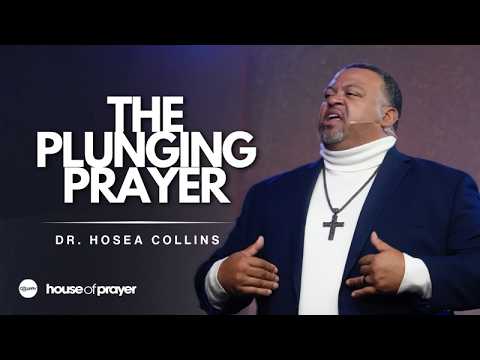
This small group discussion guide draws directly from Calvary Hawthorne's sermon “Follow-Up Materials - Initial Analysis” so you can keep engaging with the message all week. Read, reflect, and share it with your small group or friends.
Small Group Discussion Guide
"The Plunging Prayer: Unclogging the Channel of Forgiveness"
Based on Luke 23:33-34
A Note to Facilitators: This guide is designed for 60–90 minutes. You know your group best — feel free to skip questions, linger where conversation flows, or adjust the pace as needed. The goal is genuine connection and growth, not covering every question. Sensitive topics like personal hurt and betrayal may surface; create a safe, grace-filled space where people feel free to share without pressure.
OVERVIEW
In this powerful message, Pastor explored what he calls "the plunging prayer" — the idea that unforgiveness can clog the pipeline of our prayer lives, blocking what God is trying to get to us. Using Jesus' final prayer from the cross — "Father, forgive them, for they know not what they do" (Luke 23:34) — the sermon challenges us to understand that forgiveness is not a feeling to wait for, but a decision to make. Just as Jesus chose to forgive his tormentors before they apologized, we are called to forgive proactively, trusting that the act of forgiveness itself begins the process of healing.
ICEBREAKER
(5–10 minutes)
Before we dive in, let's get to know each other a little better:
"Think about a time when you had a clogged drain, a blocked pipe, or something that just wouldn't flow right — in your home, your car, anywhere. What was it, and what did it take to fix it?"
After a few people share, transition with something like:
"This week's message uses that exact picture — a clogged pipe — to describe what happens in our prayer lives and our hearts when we hold onto unforgiveness. Let's explore that together."
SCRIPTURE READING
(5 minutes)
Ask a volunteer to read the passage aloud. Encourage the group to listen for something that surprises or moves them.
Primary Text: Luke 23:33–34 (NIV)
"When they came to the place called the Skull, they crucified him there, along with the criminals — one on his right, the other on his left. Jesus said, 'Father, forgive them, for they do not know what they are doing.' And they divided up his clothes by casting lots."
Supporting Texts (for reference during discussion)
Matthew 6:14–15 (NIV)
"For if you forgive other people when they sin against you, your heavenly Father will also forgive you. But if you do not forgive others their sins, your Father will not forgive your sins."
Ephesians 4:31–32 (NIV)
"Get rid of all bitterness, rage and anger, brawling and slander, along with every form of malice. Be kind and compassionate to one another, forgiving each other, just as in Christ God forgave you."
Romans 5:8 (NIV)
"But God demonstrates his own love for us in this: While we were still sinners, Christ died for us."
[Context Note for Facilitators]: Luke 23 records the crucifixion of Jesus. He had been arrested, falsely accused, beaten, mocked, and was dying a brutal public death. The people surrounding him included Roman soldiers following orders, religious leaders who orchestrated his arrest, a crowd that had turned against him, and even a disciple who had betrayed him. It is in this moment — not after — that Jesus prays for their forgiveness.
DISCUSSION QUESTIONS
(30–45 minutes)
Work through these questions at a natural pace. Questions are organized from lighter/observational to deeper/personal. You do not need to cover all of them — choose the ones that best fit your group.
SECTION A: OPENING THE CONVERSATION
What We Heard (Observational — 8–10 minutes)
1. What was one thing from Sunday's message that stood out to you, surprised you, or stayed with you this week?
[Leader Tip]: This is a great "entry ramp" question — it lets people share at whatever level they're comfortable with and helps you gauge where the group's attention was most captured. There are no wrong answers here. If the group is quiet, share something that stood out to you first to model openness.
2. The pastor described Jesus' prayer in Luke 23:34 as "the plunging prayer." In your own words, what do you think he meant by that? What is it that forgiveness "unclogs" in us?
SECTION B: GOING DEEPER INTO THE TEXT
What the Scripture Teaches (Interpretive — 10–12 minutes)
3. Jesus was on the cross — betrayed, beaten, and dying — and his final prayer was not for himself, but for the people who were killing him. What does that tell you about Jesus' priorities and his character?
[Leader Tip]: This question often opens up rich conversation. Some may focus on Jesus' love; others may focus on his sacrifice or his mission. Both are valid. If the group gets stuck, you might ask: "What does it say about Jesus that he used his last prayer for his enemies rather than for himself or his loved ones?"
4. Jesus said, "Forgive them, for they know not what they do." The pastor unpacked several reasons why people hurt other people — hurt people hurt people, insecurity, learned behavior, the need for control, and self-centeredness.
Which of these reasons resonated most with you — either in understanding someone who hurt you, or in recognizing a pattern in yourself?
[Leader Tip]: This is a vulnerable question. Normalize that it can go both directions — we are sometimes the one who was hurt, and sometimes we are the one who hurt others. Keep the tone gracious and non-judgmental. Remind the group that what's shared in the room stays in the room.
5. The pastor said, "People can only give you what they have." He compared expecting kindness from a hurting person to expecting apples from a lemon tree.
How does understanding why someone hurt you affect your ability to forgive them? Does it make it easier, harder, or more complicated?
SECTION C: THE HEART OF THE MESSAGE
Forgiveness as a Decision (Application — 12–15 minutes)
6. One of the most challenging statements in the sermon was this:
"Forgiveness is not a feeling. It's a decision. Healing is a process. The act of forgiving is what starts the process of healing."
What is your honest reaction to that idea? Does it feel freeing, frustrating, or something else — and why?
[Leader Tip]: This question often surfaces real tension. Some people may push back — and that's healthy! Let them. The goal isn't to argue them into agreement, but to explore it together. You might follow up with: "What would it look like practically to 'decide' to forgive someone you still feel hurt by?"
7. The pastor pointed out that Jesus forgave his persecutors while they were still hurting him — before they apologized, before they stopped, before they even recognized what they were doing. He called this "proactive forgiveness."
How does that challenge the way most of us think about forgiveness? What makes proactive forgiveness so difficult?
8. The pastor shared a powerful image: "Unforgiveness is drinking a bottle of poison hoping the other person will die."
In what ways have you seen unforgiveness harm the person holding it more than the person who caused the hurt?
[Leader Tip]: This question can draw on personal experience or observations of others. If someone shares a painful experience, thank them for their honesty and allow space before moving on. Avoid rushing past vulnerable moments.
9. Toward the end of the message, a woman in the congregation shared how she forgave her uncle for molesting her as a child — and how that act of forgiveness opened the door for him to pursue a relationship with God.
What does that story reveal about the potential power of forgiveness — not just for us, but for the people we forgive?
PERSONAL APPLICATION
(10–15 minutes)
These questions are more reflective and personal. You may choose to have people answer silently, share with a partner, or share with the group — depending on your group's comfort level and time.
1. Is there someone in your life — past or present — toward whom you are carrying unforgiveness or resentment? You don't need to name them out loud. What has holding onto that cost you?
2. The pastor suggested that when we pray for the people who have hurt us, something shifts — our anger often turns to pity and understanding. Is there someone you could commit to praying for this week, even if you don't feel like it?
3. The pastor also made a personal observation: that when he was struggling with bitterness, God would call him to pray for the person he was angry with, and consistently, that prayer would change his perspective more than anything else.
What is one step — however small — you could take this week toward forgiveness in an area where you've been stuck?
4. The sermon ended with a prayer of forgiveness that the congregation prayed together:
"Dear Lord, right now, I ask you to forgive them who wronged me. I don't want to carry it any longer. Forgive them, and forgive me for holding it this long. I forgive them on purpose. It's a decision because I love you and I want to obey you. Thank you for starting my process of healing so I can be free. In Jesus' name. Amen."
If you're ready, would you be willing to pray that prayer again — either silently or aloud — as a group?
[Leader Tip]: Don't force participation, but do invite it. Some people may be at the very beginning of their forgiveness journey; others may be ready to take a significant step. Honor both. If the group is open, you can lead them through the prayer together.
THIS WEEK'S CHALLENGE
(Choose one or more)
🔹 Pray for them. Identify one person who has hurt you. Every day this week, pray for them by name — not for justice, but for their wellbeing and relationship with God. Notice what happens in your own heart by the end of the week.
🔹 Write it down. Journal about a situation where you've been carrying unforgiveness. Write out what happened, how it affected you, and then write a prayer releasing that person — even if you don't fully feel it yet.
🔹 Take a step. If God is nudging you toward a conversation, a letter, or a phone call with someone you've been avoiding, take one small step this week. You don't have to have the full conversation — just one step.
🔹 Explore the Word. Read the story of Joseph and his brothers in Genesis 37 and Genesis 45. Notice how Joseph's perspective on his suffering changed — and what forgiveness made possible.
PRAYER FOCUS
(5–10 minutes)
Close your time together in prayer. Below are suggested prayer topics. You can pray as a group, ask for volunteers to pray for specific topics, or have the facilitator lead.
Suggested Prayer Topics:
- Gratitude — Thank God for the forgiveness he extended to us through Jesus Christ, even before we asked for it.
- Courage — Ask for the strength to forgive someone you've been holding at arm's length, especially when it doesn't feel natural or deserved.
- Healing — Pray for those in the group who are carrying pain from betrayal, abandonment, or abuse — that God would begin a process of healing as forgiveness is chosen.
- Clarity — Ask God to reveal any unforgiveness in your heart that you may not even be fully aware of.
- Intercession — Pray for the people in your life who have hurt you — that God would work in their lives and draw them closer to him.
- Community — Pray that your small group would be a place of safety, grace, and authentic connection where healing can happen together.
[Leader Tip]: If your group is comfortable with open prayer, invite 2–3 people to pray aloud. If your group is newer or more reserved, you might pray on their behalf, incorporating themes they shared during discussion. Always make space for silent prayer as well.
OPTIONAL DEEP DIVE
For Groups Wanting to Go Further
*These questions are for groups with more time or a desire to explore the topic more thoroughly. They work well for mature groups or as a follow-up for a second session.
Deep Dive 1: The pastor noted that Jesus said "Father" — not "God" — when he prayed from the cross. He described this as Jesus appealing to God "through his sonship." Read Romans 8:14–17, which talks about our own identity as children of God.
"For those who are led by the Spirit of God are the children of God. The Spirit you received does not make you slaves, so that you live in fear again; rather, the Spirit you received brought about your adoption to sonship. And by him we cry, 'Abba, Father.' The Spirit himself testifies with our spirit that we are God's children. Now if we are children, then we are heirs — heirs of God and co-heirs with Christ, if indeed we share in his sufferings in order that we may also share in his glory." (Romans 8:14–17, NIV)
How does understanding your identity as a child of God — not just a servant or a follower — change the way you approach God in prayer, especially in moments of pain or injustice?
Deep Dive 2: The pastor described forgiveness as "proactive, not just reactive" — something we do before the other person apologizes, not after. Read Romans 5:6–8:
"You see, at just the right time, when we were still powerless, Christ died for the ungodly. Very rarely will anyone die for a righteous person, though for a good person someone might possibly dare to die. But God demonstrates his own love for us in this: While we were still sinners, Christ died for us." (Romans 5:6–8, NIV)
God forgave us proactively — before we repented, before we asked, before we even knew we needed it. How does the way God forgave us serve as both the model and the motivation for how we forgive others?
Deep Dive 3: The pastor made a distinction between forgiveness and healing — saying forgiveness is a decision, while healing is a process. He also said the act of forgiveness is what starts the healing process.
Discuss: What do you think forgiveness does NOT mean? (For example: Does forgiving someone mean you must trust them again? Does it mean what they did was okay? Does it mean the relationship must be restored?)
How might clearing up these misconceptions help people take the step of forgiving that they've been avoiding?
[Leader Tip]: This is an important distinction that can unlock forgiveness for many people who feel that forgiving means excusing the behavior or reconciling the relationship. Clarifying what forgiveness is not can be as freeing as understanding what it is. Key truths: Forgiveness does not require trust to be immediately restored. It does not mean the offense was acceptable. It does not always mean the relationship returns to what it was. It is primarily a transaction between you and God — releasing the debt in your own heart.
ADDITIONAL RESOURCES
For Personal Study This Week
Scripture passages to explore further:
- Psalm 103:8–12 — God's forgiveness toward us
- Matthew 18:21–35 — The parable of the unmerciful servant
- Colossians 3:12–14 — Clothed in forgiveness
- Genesis 45:1–15 — Joseph forgives his brothers
- Luke 15:11–32 — The parable of the prodigal son (the father's proactive forgiveness)
FACILITATOR'S QUICK REFERENCE
| Section | Suggested Time |
|---|---|
| Icebreaker | 5–10 min |
| Scripture Reading | 5 min |
| Discussion Questions (A–C) | 30–45 min |
| Personal Application | 10–15 min |
| Prayer Focus | 5–10 min |
| Total | 55–85 min |
Final Note to Facilitators: If someone in your group shares a deeply painful experience — abuse, betrayal, loss — resist the urge to fix it or rush past it. Simply say, "Thank you for trusting us with that," and allow the group to respond with care. If someone appears to be in crisis or dealing with trauma that needs professional support, gently encourage them to speak with a pastor or counselor. Your role is to create a safe space, not to be a therapist. You are doing important work — thank you for leading.
This guide was prepared for small group use at Calvary Baptist Church Hawthorne. Permission granted for congregational use.