
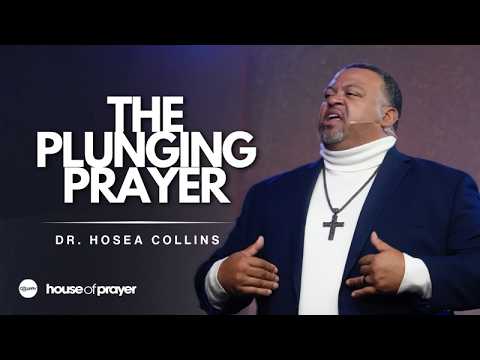
This small group discussion guide draws directly from Calvary Hawthorne's sermon “SUNDAY WORSHIP | 10 AM | DR. HOSEA COLLINS | CALVARY HAWTHORNE | 04.19.2026 - 2026-04-20” so you can keep engaging with the message all week. Read, reflect, and share it with your small group or friends.
Small Group Discussion Guide
"The Plunging Prayer: Unclogging the Channel Through Forgiveness"
Based on Luke 23:33-34
A Note to Facilitators: Welcome! This guide is designed to help your group engage meaningfully with Sunday's message — whether you're an experienced elder or leading a small group for the first time. You don't need to have all the answers. Your job is simply to create space for honest conversation and let the Holy Spirit do the work. Read through the guide before your meeting, choose the questions that feel right for your group, and trust the process. You've got this.
SERMON OVERVIEW
In this message, the pastor explored one of Jesus' most profound prayers — His final prayer from the cross: "Father, forgive them, for they know not what they do" (Luke 23:34). Using the image of a plunger unclogging a blocked drain, the sermon challenged us to see unforgiveness as the thing that stops the flow between us and God — and to understand that forgiveness is not a feeling to wait for, but a decision to make. The message also explored why people hurt people and how understanding the "why" can help us extend grace.
BEFORE YOU BEGIN
Estimated Total Time: 75–90 minutes
What You'll Need:
- Printed or digital copies of this guide
- Bibles (or Bible app)
- A willingness to be honest and gracious with one another
A Word on Sensitivity: Today's topic — forgiveness — can surface deep pain. Some group members may carry wounds from abuse, betrayal, or loss. Create a safe, non-pressuring environment. No one should feel forced to share more than they're comfortable with. Remind your group at the start: "What's shared here, stays here."
SECTION 1: ICEBREAKER
(5–10 minutes)
Opening Question — Choose ONE:
Option A (lighter/fun):
"Have you ever had a clogged drain or pipe cause a major problem at home? What happened, and how did you finally fix it?"
Option B (more reflective):
"Think about a time when you felt genuinely free from something that had been weighing you down — not necessarily related to forgiveness. What did that freedom feel like?"
[Leader Tip]: The icebreaker is just to get people talking and comfortable. Don't let it run longer than 10 minutes. If your group is quiet, you share your answer first — it gives others permission to open up.
SECTION 2: SCRIPTURE READING
(5 minutes)
Ask a volunteer to read the passage aloud. Invite the group to listen for one word or phrase that stands out to them.
Primary Text
Luke 23:33–34 (NIV)
"When they came to the place called the Skull, they crucified him there, along with the criminals — one on his right, the other on his left. Jesus said, 'Father, forgive them, for they do not know what they are doing.' And they divided up his clothes by casting lots."
Supporting Passages
Matthew 6:14–15 (NIV)
"For if you forgive other people when they sin against you, your heavenly Father will also forgive you. But if you do not forgive others their sins, your Father will not forgive your sins."
Malachi 3:10 (NIV) (Referenced during the giving/tithing portion of the message)
"Bring the whole tithe into the storehouse, that there may be food in my house. Test me in this," says the Lord Almighty, "and see if I will not throw open the floodgates of heaven and pour out so much blessing that there will not be room enough to store it."
Romans 5:8 (NIV)
"But God demonstrates his own love for us in this: While we were still sinners, Christ died for us."
After reading, ask:
"What one word or phrase from Luke 23:33–34 stood out to you, and why?"
(Allow 2–3 brief responses — this is a warm-up, not a full discussion yet.)
SECTION 3: DISCUSSION QUESTIONS
(30–45 minutes)
Work through as many questions as time allows. Questions are organized from lighter/observational to deeper/personal. You do not need to cover every question — choose what fits your group best.
THEME A: The Prayer Itself
(Observational — Getting Into the Text)
Question 1:
"The pastor pointed out that Jesus' final prayer before death was not for Himself, His family, or His disciples — it was for the people who were killing Him. What does that choice tell us about what Jesus valued most in His final moments?"
[Leader Tip]: This is a great entry-level question — there's no wrong answer. Encourage people to sit with the weight of the scenario. If the group is quiet, try: "If you had only one prayer left, what would you pray for?"
Question 2:
"The pastor broke down who 'them' included in Jesus' prayer — Roman soldiers, religious leaders, the crowd, Judas, and ultimately, us. How does it change the meaning of this prayer for you personally when you realize you're included in the 'them'?"
Question 3:
"Jesus said, 'Forgive them, for they know not what they do.' The pastor explained that the people crucifying Jesus didn't fully understand who they were killing or what it all meant. How does understanding that people often 'don't know what they're doing' change how you feel about those who have hurt you?"
THEME B: Why People Hurt People
(Interpretive — Exploring the Concepts)
Question 4:
"The pastor gave several reasons why people hurt people — hurt people hurt others, insecurity, need for control, learned behavior, and selfishness. Which of these resonated most with you, either in understanding someone who hurt you or in recognizing something in yourself?"
[Leader Tip]: This question can go deep quickly. It's okay to let it. But watch for anyone who seems to be processing something painful — you may want to gently check in with them after the group. If the group is hesitant, you might share a brief, low-stakes personal example first.
Question 5:
"The pastor used a vivid illustration: a man who rescued a frozen snake, nursed it back to health, and set it free — only to be bitten as it left. The snake said, 'I really appreciate all you did... I'm still a snake.' What does this story teach us about managing our expectations of people and about our own need for healing and change?"
THEME C: Forgiveness as a Decision
(Personal — Moving Toward Application)
Question 6:
"The pastor said, 'Forgiveness is not a feeling — it's a decision. Healing is a process.' Many of us have been taught (or have believed) that we need to 'feel ready' to forgive before we actually do it. How does reframing forgiveness as an act of obedience rather than an emotional response challenge or encourage you?"
[Leader Tip]: This is one of the most important questions in the guide. Give it time. Some group members may push back — that's okay and worth exploring. A good follow-up if discussion stalls: "Has there ever been a time you did the right thing even when you didn't feel like it, and the feeling caught up later?"
Question 7:
"The pastor described forgiveness as a 'plunging prayer' — something that unclogs the pipes of our prayer life so God's blessings can flow through. Have you ever noticed a connection between unforgiveness and feeling spiritually stuck or distant from God? What did that look or feel like?"
Question 8:
"The pastor said, 'Unforgiveness is like drinking a bottle of poison hoping the other person will die.' In your own words, who does unforgiveness actually hurt the most — and why is it so hard to let go of it even when we know this?"
THEME D: Forgiveness in Community
(Community-Focused — Building Together)
Question 9:
"The woman who closed the service shared a powerful testimony about forgiving her uncle for childhood abuse — and how that act of forgiveness ultimately led him toward God. How does her story illustrate the pastor's point that forgiveness isn't just personal — it can become a witness and a ministry to others?"
[Leader Tip]: Handle this question with great care. Abuse is a serious topic. Affirm that forgiveness does not mean excusing behavior, reconciling with unsafe people, or skipping justice. Forgiveness is releasing the debt in your own heart — it doesn't always mean restoring a relationship. If someone in your group has experienced abuse, honor their experience and don't rush past it.
Question 10:
"The pastor said Jesus prayed 'Father, forgive them' — not 'God, help me forgive them.' He was interceding for his enemies. The pastor also shared that when God led him to pray for people he was angry with, it consistently turned his anger into pity. What would it look like practically for you to begin praying for someone who has hurt you, even before you feel ready?"
SECTION 4: PERSONAL APPLICATION
(10–15 minutes)
These questions are more reflective. You may want to give people 2–3 minutes of quiet to think before sharing, or invite people to journal their responses rather than share aloud.
Reflection Question 1:
"Is there someone in your life — past or present — who you have not yet forgiven? You don't need to name them. But honestly, what has holding onto that unforgiveness cost you — emotionally, spiritually, relationally?"
Reflection Question 2:
"The pastor said Jesus essentially 'plunged the pipes' before He died — making sure nothing was clogging His relationship with the Father in His final moments. If you were to take an honest inventory of your own heart right now, what might be clogging the flow between you and God?"
Reflection Question 3:
"Forgiveness is a decision, but healing is a process. Where are you in that process right now? Are you at the decision stage, the early healing stage, or somewhere further along — and what do you need most from God and from this community in that place?"
Reflection Question 4:
"The pastor also spoke about tithing and generosity as a matter of the heart — where your treasure goes reveals where your heart is. Is there any area of your life — not just finances, but time, energy, attention — where you sense God asking you to trust Him more fully?"
SECTION 5: THIS WEEK'S CHALLENGE
(Share before closing prayer)
Choose ONE of the following challenges to take into your week:
🔑 The Forgiveness Decision Identify one person you've been withholding forgiveness from. This week, make the decision to forgive them — not because you feel ready, but as an act of obedience. You don't have to tell them (especially if contact would be unsafe or unhealthy). Simply say out loud or write in a journal: "I choose to forgive [name] because God has forgiven me." Then notice what begins to shift.
🙏 The Plunging Prayer For the next 7 days, spend 5 minutes each day praying for someone who has hurt you. Don't pray about them — pray for them. Ask God to bless them, heal them, and reveal Himself to them. Pay attention to how your feelings toward them begin to change.
📖 The Scripture Meditation Read Luke 23:33–34 every day this week. Each day, ask yourself: "Who is the 'them' in my life that I need to release to God today?" Write down what comes to mind.
💬 The Conversation Is there someone in your life with whom a broken relationship needs a step toward repair? This week, take one small step — a text, a call, a note — not because you have everything figured out, but because God is asking you to move first.
SECTION 6: PRAYER FOCUS
(5–10 minutes)
Suggested Prayer Topics — Choose what fits your group:
For those carrying deep wounds — Pray for the courage to move from pain to forgiveness, and from forgiveness to healing.
For those who need to receive forgiveness — Pray for anyone in the group who may be carrying guilt or shame, that they would fully receive what Christ paid for on the cross.
For the people who hurt us — Follow the pastor's example and pray specifically for those who have wronged group members — that God would bless them, heal them, and draw them to Himself.
For unclogged prayer lives — Pray that whatever is blocking the flow between each person and God would be identified and removed.
For the boldness to obey before feeling ready — Pray for the strength to choose obedience over comfort, especially in the area of forgiveness.
Suggested Closing Prayer:
You may pray this together, or a leader can pray it on behalf of the group:
"Dear Lord, right now, we ask You to forgive those who have wronged us. We don't want to carry it any longer. Forgive them, and forgive us for holding it this long. We forgive them on purpose — it's a decision, because we love You and we want to obey You. Thank You for starting our process of healing so we can be free. In Jesus' name. Amen."
SECTION 7: OPTIONAL DEEP DIVE
(For groups wanting to go further — 15–20 additional minutes)
Deep Dive Question 1:
"Jesus prayed, 'Father, forgive them' — not 'I forgive them.' He was asking the Father to act. What does it tell us about the nature of true forgiveness that even Jesus, in His humanity, brought it before the Father rather than simply declaring it on His own? What does that suggest about how we should approach forgiveness in our own lives?"
Deep Dive Question 2:
"The pastor made a distinction between forgiving and aftergiving — saying that forgiveness is supposed to happen before an apology, not after. Read Romans 5:8 again: 'While we were still sinners, Christ died for us.' How does God's proactive forgiveness toward us become both the model and the motivation for how we forgive others?"
Suggested Further Reading: Matthew 18:21–35 (The Parable of the Unmerciful Servant)
Deep Dive Question 3:
"The sermon touched on the connection between tithing and trust — the idea that where your treasure goes reveals your heart. How does the principle of trust and surrender apply not just to finances, but to the act of forgiveness? In what ways is forgiving someone an act of trusting God with the outcome — the justice, the healing, the relationship?"
ADDITIONAL RESOURCES
Related Scripture Passages for Further Study:
| Passage | Theme |
|---|---|
| Matthew 18:21–35 | The Parable of the Unmerciful Servant |
| Ephesians 4:31–32 | Put away bitterness; forgive as God forgave you |
| Colossians 3:13 | Bear with each other and forgive |
| Psalm 103:10–12 | God's forgiveness toward us |
| Matthew 5:43–48 | Love your enemies; pray for those who persecute you |
| Luke 6:27–28 | Do good to those who hate you |
FACILITATOR NOTES
If your group gets quiet: Don't panic. Silence often means people are thinking deeply. Wait 10–15 seconds before rephrasing or moving on. You can also say: "Would anyone like to share what they're sitting with right now, even if it's just a question?"
If emotions surface: Acknowledge and honor them. You might say: "Thank you for trusting us with that. We're glad you're here." You don't need to fix anything — just be present. If someone is in crisis, connect them with pastoral care after the meeting.
If your group runs short on time: Prioritize Questions 1, 6, and 8, plus the Closing Prayer. These capture the core of the message.
If someone pushes back on forgiveness: That's okay — it's a hard topic. Validate their feelings: "That's a real and honest reaction." You can gently offer: "The pastor didn't say forgiveness means the hurt wasn't real or that there are no consequences — he said it means releasing the debt in your own heart. What do you think about that distinction?"
This guide was prepared for small group use at Calvary Baptist Church Hawthorne based on the Sunday sermon series "The Lord's Prayers." Permission granted for local church use.
"Father, forgive them, for they know not what they do." — Luke 23:34