
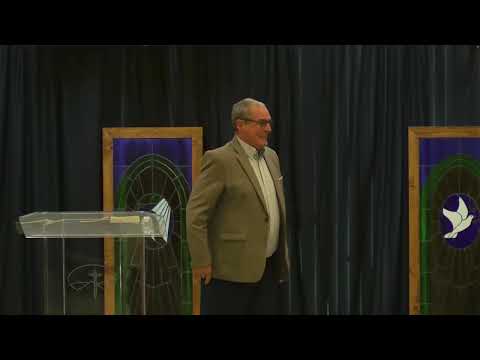
This small group deep study guide draws directly from Christopher D King's sermon “Faithful in Parenting” so you can keep engaging with the message all week. Read, reflect, and share it with your small group or friends.
DEEP-DIVE SMALL GROUP DISCUSSION GUIDE
Based on: Faithful Parenting: God's Design for the Home Primary Text: Ephesians 6:1–4 Time: 90–120 minutes
LEADER PREPARATION
(Read before your group meets)
Overview: This session explores one of the most practical passages in Paul's letter to the Ephesians — four verses that address both children and parents with remarkable economy and depth. The pastor drew out a crucial distinction between obedience (action) and honor (attitude), and challenged parents not to provoke their children while also not shrinking from the responsibility of genuine, loving discipline. Your group will dig into what these commands meant in their original context and what they demand of us today.
Big Idea: God's design for the family is not about control or compliance — it is about forming people who understand authority, love, and flourishing as reflections of his own character.
Essential Background:
- Ephesians 6:1–4 is part of what scholars call the Haustafeln (household codes) — a section of Ephesians (5:22–6:9) addressing relationships within the home. Paul is describing what life "filled with the Spirit" (5:18) looks like in the most ordinary, daily relationships.
- Paul's command to fathers in verse 4 was countercultural in the Roman world, where fathers held nearly absolute legal authority (patria potestas) over their children — including the right to abandon, sell, or punish them without limit. Paul limits and redirects that authority dramatically.
- The "first commandment with a promise" reference points to Exodus 20:12 and Deuteronomy 5:16. The promise ("that it may go well with you") was originally corporate — addressed to Israel as a nation — but Paul applies it to individual households, connecting family order to community flourishing.
Preparation Checklist:
- Read Ephesians 6:1–4 in at least two translations (ESV and NIV work well together)
- Read Deuteronomy 6:4–9 and Exodus 20:12 for cross-reference context
- Review the word studies below and practice saying the transliterations aloud
- Reflect on your own experience of being parented — what shaped you?
- Pray for each group member by name, especially those who may carry wounds from their family of origin
Facilitator Encouragement: You don't need to be a parenting expert or a biblical scholar to lead this conversation well. Your job is to ask good questions, create space for honest answers, and trust that the Holy Spirit is the real teacher in the room. The background material below will give you more than enough to guide a rich discussion. Lead with curiosity, not authority.
OPENING
(5–10 minutes)
Icebreaker Question:
What is one thing your parents did — or one thing a parent figure in your life did — that you have carried with you into adulthood, for better or worse?
Give everyone a chance to share briefly. This question opens the door to both gratitude and honest acknowledgment of imperfection — both of which will matter for this study. Remind the group that this is a safe space, and that today's passage speaks to all of us, whether we are currently parenting, were once parented, or both.
TEACHING TIME
(15–20 minutes)
Share the following with your group in a conversational tone. You don't need to read it word-for-word — use it as a guide.
Historical & Cultural Context
(5–7 minutes)
When Paul wrote Ephesians, he was writing to a church in one of the most cosmopolitan cities in the Roman Empire. Ephesus was a major port city, full of competing philosophies, religious practices, and social structures. Into that world, Paul describes what a Spirit-filled community looks like — and he starts in the home.
One of the most striking things about Ephesians 6:1–4 is what Paul does not do. In the Roman world, a document called the Haustafeln — household codes — was a common literary form that simply reinforced existing social hierarchies. Fathers had nearly unlimited power over their children under Roman law (patria potestas). A Roman father could legally abandon a newborn, sell a child into slavery, or punish harshly with no accountability. Paul's code looks similar on the surface, but it is quietly revolutionary: he addresses children directly as moral agents capable of obedience and honor, and he places a limit on fathers — "do not provoke your children to wrath." That limit was not a common feature of Roman household ethics. Paul is reshaping the family from the inside out.
Key Word Studies
(5–7 minutes)
"Obey" — Greek: hypakouō (hoop-ah-KOO-oh) This word literally means "to hear under" — to place yourself under what you have heard. It carries the idea of active, attentive response to a voice of authority. It is the same root used when Jesus calms the storm and the wind and waves "obey" him (Mark 4:41). For children, this is not passive compliance — it is an active, engaged response to parental direction.
"Honor" — Greek: timaō (tee-MAH-oh) This word means to assign weight or value to someone — to treat them as worthy of respect. In the ancient world, timē (honor) was one of the most important social values. To honor someone was to publicly acknowledge their worth. Paul is calling children not merely to outward compliance but to an inward posture of genuine respect. As the pastor noted, obedience is about action; honor is about attitude. You can obey without honoring, but you cannot truly honor without also obeying.
"Provoke" — Greek: parorgizō (par-or-GID-zoh) This word means to stir up anger, to irritate or embitter. Paul uses a related word in Colossians 3:21 — erethizō — which means to exasperate or discourage. Together, these words describe a pattern of parenting that wears a child down through harsh criticism, impossible expectations, emotional neglect, or inconsistency. The command is not "be nice" — it is "do not be the source of your child's bitterness."
Important Cross-References
(3–5 minutes)
Have someone look up each of these while you briefly explain the connection:
- Deuteronomy 6:4–9 — The Shema, Israel's foundational confession. God's instruction to parents was not to outsource spiritual formation but to weave it into everyday life — walking, sitting, waking, sleeping. The church reinforces what parents teach; it was never designed to replace it.
- Exodus 20:12 — The fifth commandment, the one Paul calls "the first commandment with a promise." It sits at the hinge of the Ten Commandments — bridging our duty to God (commandments 1–4) and our duty to one another (commandments 6–10). Honoring parents is where vertical and horizontal love meet.
- Proverbs 22:6 — "Train up a child in the way he should go; even when he is old he will not depart from it." The Hebrew word for "train" (chanak) means to dedicate or initiate — it carries the idea of creating a taste or appetite for something. Parents are not just setting rules; they are cultivating desires.
- Psalm 127:3–5 — Children as a "heritage from the Lord" and arrows in a warrior's hand. The arrow image implies intentional preparation and purposeful sending — not permanent possession.
SCRIPTURE READING & OBSERVATION
(10–15 minutes)
Read aloud: Ephesians 6:1–4 Suggest reading once from the ESV or NKJV, then once from the NIV or NLT.
Observation Questions (ask these before any interpretation):
- What words or phrases appear more than once, or seem to carry the most weight?
- What surprises you about this passage — what did you not expect to find here?
- Who is being addressed in each verse? Notice the shifts.
- What questions does this passage raise for you that you'd want to explore?
DEEP DIVE DISCUSSION
(40–50 minutes)
Section A: Understanding the Text
1. Paul distinguishes between "obey" (v. 1) and "honor" (v. 2). Based on the word studies, how would you describe the difference in your own words? Can you think of a situation where someone might obey without honoring, or honor without immediately obeying?
2. Paul calls this "the first commandment with a promise." Why do you think God attached a promise specifically to this commandment — and not to others? What does that tell us about how God views the parent-child relationship in the larger order of things?
[Leader Tip: If the group gets stuck, point them back to the Deuteronomy 6 cross-reference. The promise was originally national — Israel's flourishing depended on covenant faithfulness passing from generation to generation. Help the group see that family order has always been connected to communal health, not just personal benefit.]
3. Verse 4 is addressed specifically to fathers (pateres in Greek, though it can include both parents). Why do you think Paul singles out fathers with the warning against provoking? What does this suggest about the particular weight of a father's influence — for good or harm?
4. The phrase "training and admonition of the Lord" (v. 4) uses two different Greek words: paideia (discipline, training through experience) and nouthesia (instruction, verbal correction). What does the combination of these two words suggest about what faithful parenting actually looks like?
Section B: Theological Connections
5. The pastor observed that the family structure in Ephesians — children submitting to parents, parents submitting to God — mirrors a larger pattern of authority and love in Scripture. How does understanding God as a Father who both disciplines and delights in his children (see Hebrews 12:5–11) shape how we think about human parenting?
[Leader Tip: This question can go deep quickly. Encourage the group to sit with the Hebrews 12 passage for a moment. The key insight is that God's discipline is always purposeful and always rooted in love — never in frustration, ego, or control. That is the standard Paul holds up for human parents.]
6. The fifth commandment is the only one of the Ten Commandments that comes with a promise attached. What does it suggest about God's character that he would motivate obedience with blessing rather than only with threat of consequence?
7. Proverbs 22:6 uses the image of training, and Psalm 127 uses the image of an arrow. What do these metaphors together say about the goal of parenting? How does this vision differ from parenting that is primarily focused on the child's happiness, safety, or achievement?
Section C: Contemporary Application
8. The pastor made a pointed observation: "The church was never intended to teach your children. The church was intended to teach you so that you can teach your children." How does that land for your group? Where do you see this playing out — or breaking down — in families today?
[Leader Tip: This can be a sensitive question for people who grew up in homes where faith was not modeled. Acknowledge that many people did find faith through the church when their home did not provide it — God is gracious. But help the group wrestle with the design Paul is describing, not just the exceptions.]
9. The pastor shared a vivid memory from Little League — a moment of criticism from his father that stayed with him for over 50 years. What does that story reveal about the lasting power of a parent's words and presence? Have you experienced something similar — a moment of affirmation or criticism that shaped you far longer than the person may have realized?
10. Paul's warning against provoking children includes the idea of placing unmanageable expectations on them. Where do you see this happening most commonly in today's culture? What pressures are parents placing on children — and what pressures are parents themselves under — that make this warning especially relevant?
11. The pastor asked: "When was the last time you told your adult child you were proud of them?" This question applies in both directions — as a parent and as an adult child. What barriers make those conversations hard? What would it take to have one this week?
[Leader Tip: Give the group a moment of quiet before answering this one. It is personal. Some people in your group may have parents who have passed away, or relationships that are estranged. Acknowledge the complexity without letting the group avoid the question entirely.]
PERSONAL APPLICATION
(15–20 minutes)
Invite the group to spend 2–3 minutes in quiet personal reflection before sharing.
Reflection Questions:
Are you more naturally prone to under-discipline (avoiding hard conversations, letting things slide) or over-discipline (criticism, unrealistic expectations, emotional distance)? What does that tendency cost your relationships?
Is there someone in your life — a child, a parent, a parent figure — to whom you owe either an apology or an expression of gratitude? What is keeping you from offering it?
The pastor closed by inviting people to ask the Holy Spirit for help in parenting. Whether or not you have children, where do you need God's help in honoring someone in your life who has authority over you, or in not provoking someone who is under your care or influence?
This Week Challenge:
Choose one of the following and do it before your group meets again:
- If you are a parent: Have one intentional conversation with your child — not about correction or logistics, but simply to express that you are proud of them and you believe in them.
- If you are an adult child: Reach out to a parent or parent figure and say thank you for something specific they did that shaped you for good.
- If both apply: Do both. And pray specifically for the Holy Spirit's help in the one relationship where you know you need to grow.
PRAYER & CLOSING
(10 minutes)
Suggested Prayer Focus:
Close by praying in one of these ways — choose what fits your group best:
- Conversational Prayer: Invite anyone who wants to pray aloud to do so. Suggest focusing on one of three areas: gratitude for parents or parent figures, honest confession of ways we have fallen short, or a specific request for help in a family relationship.
- Paired Prayer: Break into pairs and pray for each other's specific family situations — especially anything shared during the application time.
- Guided Closing Prayer (leader-led): "Lord, you are the perfect Father — you discipline in love, you never provoke, you always pursue. Teach us to reflect that in our homes and our relationships. Give us courage to say what needs to be said, and wisdom to hold back what does not need to be. May our families be places where your character is visible. In Jesus' name, amen."
Vision for the Week:
Remind the group: the sermon was the beginning of this conversation, not the end. The real work happens in the ordinary moments of the week — at the dinner table, in the car, in a text message, in a quiet moment of prayer. Go and be the kind of parent, child, or community member that makes God's design visible.
Guide prepared for peer-led small group use. Primary Text: Ephesians 6:1–4.