
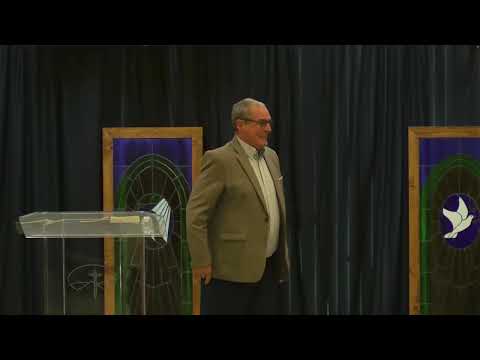
This small group discussion guide draws directly from Christopher D King's sermon “Faithful in Parenting” so you can keep engaging with the message all week. Read, reflect, and share it with your small group or friends.
Small Group Discussion Guide
"Faithful Parenting: God's Design for the Home"
Based on Ephesians 6:1–4
For the Facilitator: Welcome! This guide is designed to help your group have an honest, grace-filled conversation about one of life's most rewarding — and challenging — callings: parenting. Whether your group includes parents of young children, empty-nesters, grandparents, or adults reflecting on their own upbringing, this passage speaks to everyone. You don't need to be a parenting expert to lead this discussion. Your job is simply to create a safe space for genuine conversation. Read through the guide before your meeting, choose the questions that best fit your group, and trust the Holy Spirit to do the rest.
Estimated Total Time: 60–90 minutes Target Group Size: 4–12 people
OVERVIEW
In Ephesians 6:1–4, the Apostle Paul outlines God's design for the parent-child relationship as part of a broader vision for the Spirit-filled home. Sunday's message explored two sides of that relationship: the call for children to obey and honor their parents, and the equally important call for parents — especially fathers — to raise their children with discipline and encouragement rather than provoking them to frustration. The sermon reminded us that faithful parenting is less about perfection and more about purpose: intentionally shaping children to know God, respect authority, and face the world with both roots and wings.
SCRIPTURE READING (5 minutes)
Ask a group member to read the passage aloud. Invite everyone to listen for a word or phrase that stands out to them.
Ephesians 6:1–4 (NKJV)
"Children, obey your parents in the Lord, for this is right. 'Honor your father and mother,' which is the first commandment with promise: 'that it may be well with you and you may live long on the earth.' And you, fathers, do not provoke your children to wrath, but bring them up in the training and admonition of the Lord."
Related Passages Referenced in the Sermon:
Colossians 3:20
"Children, obey your parents in all things, for this is well pleasing to the Lord."
Proverbs 29:15
"The rod and rebuke give wisdom, but a child left to himself brings shame to his mother."
Psalm 127:3–5
"Behold, children are a heritage from the Lord, the fruit of the womb is a reward. Like arrows in the hand of a warrior, so are the children of one's youth. Happy is the man who has his quiver full of them."
[Leader Tip — Scripture Reading]: After the passage is read, ask the group: "What word or phrase jumped out at you?" This simple question invites everyone into the conversation immediately, even quieter group members, without requiring a "right" answer.
ICEBREAKER (5–10 minutes)
Start here — keep it light and fun!
Question: Think back to your childhood. What is one rule your parents had that you thought was completely unfair at the time — but looking back, you can now see the wisdom in it? (Or: What's one rule you wish your parents had enforced more consistently?)
[Leader Tip — Icebreaker]: This question works for everyone in the room regardless of whether they are a parent, because everyone has been a child. It sets a tone of honest, even humorous reflection before the group moves into deeper territory. Give everyone a chance to share briefly — aim for 1–2 minutes per person.
DISCUSSION QUESTIONS (30–45 minutes)
Work through as many of these questions as time allows. Questions are grouped by theme and build in depth. You do not need to cover every question — choose what fits your group best.
SECTION 1: God's Design — Obedience and Honor (10–12 minutes)
1. The sermon pointed out that Paul uses two different words in Ephesians 6:1–2 — "obey" and "honor." What distinction did the pastor draw between those two words, and why do you think that difference matters?
(Reminder: "Obey" refers to actions — what we do. "Honor" refers to attitude — how we think and feel toward our parents. Both are commanded.)
2. Paul says children should obey their parents "in the Lord" (v. 1) and that this is "right." What do you think the phrase "in the Lord" adds to the command? How does it shape the way we think about authority in the home?
[Leader Tip]: This is a good theological question that can open up rich discussion. If the group gets stuck, try this follow-up: "Are there situations where obeying parents might conflict with obeying God? How would you think through that?" The phrase "in the Lord" is generally understood to mean that obedience operates within the boundaries of what is right before God — it is not unconditional obedience to wrongdoing.
3. The pastor made a strong statement: "We don't have bad kids in America — we have lazy parents." That's a bold claim. How did that land with you? Where do you think he was right, and where might that statement need some nuance?
[Leader Tip]: Expect a range of reactions here — some will strongly agree, others may push back. Both responses are healthy. Encourage the group to engage with the principle behind the statement (that parental intentionality matters greatly) without turning it into a debate. Acknowledge that some parents are doing their very best in genuinely difficult circumstances.
SECTION 2: The Warning to Parents — Don't Provoke (10–12 minutes)
4. Ephesians 6:4 begins with a warning: "Do not provoke your children to wrath." The sermon identified several ways parents can provoke their children — unrealistic expectations, emotional neglect, lack of presence, and criticism instead of discipline. Which of these do you think is the most common struggle for parents today, and why?
5. The pastor shared a personal memory from Little League — a moment when he desperately needed encouragement from his father and received only criticism instead. He said he still carries that memory 50+ years later. What does that story reveal about the lasting impact parents have on their children — for good or for harm?
[Leader Tip]: This question may surface some tender emotions for group members who have painful memories of their own parents or regrets about their parenting. Create space for honest sharing without pressure. If someone becomes emotional, simply affirm: "Thank you for sharing that — those kinds of memories are real and they matter." Do not rush past this question.
6. The sermon drew a clear distinction between discipline and criticism: "Discipline is given to lead a child to correction. Criticizing leads a child to resentment." In practical terms, what does that difference look like in a real parenting moment? Can you think of an example of each?
SECTION 3: The Positive Call — Training and Admonition (10–12 minutes)
7. The second half of verse 4 gives parents a positive assignment: "bring them up in the training and admonition of the Lord." The pastor described this as discipling our children — being in their corner, shaping their thinking, encouraging them even when they fail. What does that kind of intentional parenting look like in the everyday rhythms of family life?
8. The sermon challenged the idea that church is responsible for teaching children spiritually, saying: "The church was never intended to teach your children. The church was intended to teach you so that you can teach your children." How does that reframe the role of parents? What does it look like practically for a parent to be the primary spiritual influence in a child's life?
[Leader Tip]: Some group members may feel convicted or even defensive here — especially those who rely heavily on church programs for their children's spiritual formation. Affirm that church, children's ministry, and small groups are vital supports, but gently reinforce that Scripture places the primary responsibility on parents. A helpful follow-up: "What's one small, practical way a family could build spiritual conversation into their week?"
9. The pastor used the image from Psalm 127 of children as arrows — prepared, aimed, and sent out. How does that image change the way you think about the goal of parenting? What are you (or were you) actually preparing your children for?
SECTION 4: It's Never Too Late (5–8 minutes)
10. The sermon closed with a reminder that we never stop being parents — and never stop being children. He asked: "When was the last time you told your adult child you were proud of them?" and "When was the last time you thanked your parents for pointing you toward faith?" What barriers — whether pride, distance, old wounds, or simply habit — make those conversations hard to have?
PERSONAL APPLICATION (10–15 minutes)
These questions are more reflective. You may want to give people a moment of quiet to think before sharing, or invite people to share only what they're comfortable with.
1. Honestly reflecting on your own experience — either as a parent or as a child — where do you most identify with the message from Sunday? Is there an area where you feel God nudging you toward change or growth?
2. The pastor said it's not too late to change your approach to parenting — and that the key is attitude and purpose, not technique. If you're currently parenting, what is one specific attitude or habit you sense God calling you to adjust?
3. For those whose children are grown: Is there a conversation you've been putting off — words of affirmation, an apology, an expression of gratitude — that this message is prompting you to have? What's one step you could take this week?
4. For those who are not parents: How does this passage speak to you — either in how you relate to your own parents, how you might one day parent, or how you might serve as a spiritual mentor or "parent figure" to someone younger in your life?
[Leader Tip — Application Section]: Not everyone will be ready to share personal responses to these questions, and that's okay. You might say: "Take a moment to sit with one of these questions silently, and share only if you feel comfortable." The goal is personal reflection and honest community — not performance.
THIS WEEK'S CHALLENGE
Choose one or more of the following based on where you are in life:
🏠 If you are parenting children at home: Write down one expectation you have placed on your child that may be unrealistic or discouraging. Pray about it, and find one intentional moment this week to encourage your child — not for their performance, but for who they are.
📞 If your children are grown: Make a phone call, send a text, or write a note to your adult child this week that simply says: "I'm proud of you. I love you." Don't wait for the right moment — make the moment.
🙏 If you are reflecting on your own upbringing: Take time this week to pray for your parents — whether they are living or not, whether your relationship is close or complicated. Ask God to help you grow in honoring them in whatever way is healthy and appropriate.
📖 For everyone: Read Deuteronomy 6:4–9 this week — one of the most important passages in all of Scripture about passing faith from one generation to the next. Ask yourself: What does it look like to talk about God "when you sit in your house, when you walk by the way, when you lie down, and when you rise up"?
PRAYER FOCUS (5–10 minutes)
Close your time together in prayer. You may pray as a group, in pairs, or have one person lead. Use the following prompts to guide your prayer time:
Pray together for...
Parents in the trenches — those raising young children in a culture that often works against godly values. Ask God for wisdom, patience, courage, and joy.
Healing from the past — for those who carry wounds from their own upbringing, or who carry regret over mistakes made as parents. Ask God for His grace to cover what we cannot undo.
Restored relationships — for families where distance, hurt, or silence has grown between parents and children. Ask God to open doors for reconciliation and honest conversation.
Courage to lead — for parents who feel overwhelmed or ill-equipped. Ask God to remind them that He does not call the equipped — He equips the called.
Gratitude — for the parents, grandparents, mentors, and spiritual "parents" who have pointed us toward faith. Thank God for those who shaped us.
[Leader Tip — Prayer]: If your group isn't accustomed to open prayer, offer to pray on behalf of the group using these themes. Alternatively, invite people to share one word or phrase describing what they want to bring before God, and then incorporate those into a closing prayer. Even a simple, heartfelt prayer is powerful.
OPTIONAL DEEP DIVE
For groups with extra time or those who want to explore the topic further:
Deep Dive 1 — The Bigger Picture of Submission The sermon placed parenting within a broader framework of submission: wives to husbands, husbands to God, children to parents — all within the context of everyone submitting to one another in Christ (Ephesians 5:21). How does understanding mutual submission as the foundation change the way we think about authority in the home? How is this different from a model of authority that is simply about control or power?
Read Ephesians 5:21 together: "submitting to one another in the fear of God."
Deep Dive 2 — Deuteronomy 6 and Generational Faith Long before Paul wrote Ephesians, Moses gave Israel a vision for how faith passes from one generation to the next. Read Deuteronomy 6:4–9 together. What does this passage suggest about when and how spiritual formation happens in a family? What might it look like to weave conversations about God into the ordinary moments of daily life rather than treating faith as a "Sunday activity"?
Deep Dive 3 — Grace for Imperfect Parents The pastor mentioned that the verse about provoking children to anger was one he personally had to apologize to his own children for. What does it look like to model repentance and grace within a family? How might a parent's honest acknowledgment of failure actually become a powerful spiritual lesson for their children rather than a source of shame?
Consider reading together: 1 John 1:9 — "If we confess our sins, He is faithful and just to forgive us our sins and to cleanse us from all unrighteousness."
ADDITIONAL RESOURCES
For those who want to go deeper this week:
📖 Scripture to Read:
- Deuteronomy 6:4–9 (Passing faith to the next generation)
- Proverbs 22:6 (Train up a child)
- Psalm 78:1–7 (Telling the next generation)
- Colossians 3:18–21 (Parallel passage to Ephesians 5–6)
- Luke 15:11–32 (The father who never stopped loving)
FACILITATOR'S QUICK-REFERENCE CHECKLIST
Before your group meets:
- Read through the entire guide
- Select 5–7 discussion questions that best fit your group
- Mark the "This Week" challenge options you want to highlight
- Pray for your group members by name
- Have Bibles or a Bible app available for those who need one
- Print copies of the guide or share digitally in advance
During your group:
- Start with the icebreaker to warm up the room
- Read the scripture passage together before discussing
- Watch the time — don't rush, but keep discussion moving
- Protect quieter voices — invite, don't pressure
- Leave time for the "This Week" challenge and prayer
- End on time — honor your group's schedule
This discussion guide was prepared for the small groups of First Baptist Church Kimberling City based on the sermon "Faithful Parenting: God's Design for the Home" from Ephesians 6:1–4. For questions or prayer requests, please contact the church office.