
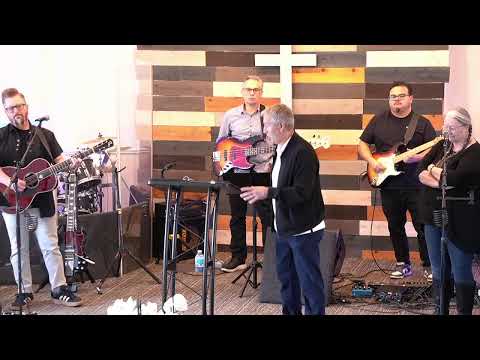
This individual study guide draws directly from Church of the Beach Cities's sermon “1/18/26 - Why Do I Exist - Part 3 of 6” so you can keep engaging with the message all week. Read, reflect, and share it with your small group or friends.
Called to Belong to His Family: A Comprehensive Bible Study Guide
1. Introduction & Overview
This sermon explores the second aspect of God's calling on our lives: the call to belong to His family. Building on the previous message about being called to receive God's love, Pastor Jimmy explains that before we can understand what God wants us to do, we must understand who we are in relation to Him and His family. The sermon explores five biblical metaphors for the church—family, temple, body, flock, and vineyard—each revealing different aspects of our identity and purpose within God's community of believers.
Study Objectives:
- Understand the biblical concept of belonging to God's family as our primary identity
- Examine the five metaphors Scripture uses to describe the church
- Recognize how church membership meets our deepest needs for identity, support, value, protection, and productivity
- Apply these truths to develop meaningful relationships within the body of Christ
Estimated Study Time: 2-3 hours
2. Exegetical Analysis
Structure and Genre
This sermon is structured around the five biblical metaphors for the church, each revealing a different benefit of belonging to God's family:
- God's Family - Where I learn my true identity
- God's Temple - Where I'm supported by others
- Christ's Body - Where I discover my unique value
- God's Flock - Where I'm protected and cared for
- God's Vineyard - Where my life becomes productive
The sermon employs expository teaching, examining multiple passages that develop the theme of belonging to God's family.
Verse-by-Verse Analysis
Ephesians 1:5 - "His unchanging plan has always been to adopt us into his own family by bringing us to himself through Jesus Christ."
- The concept of adoption is central to understanding our relationship with God
- This is a divine initiative ("His unchanging plan") rather than human effort
- Adoption is accomplished "through Jesus Christ," emphasizing the mediatorial role of Christ
1 Timothy 3:14-15 - "I'm writing to you so that you will know how to live in the family of God. That family is the church of the living God, the support and foundation of the truth."
- The church is explicitly identified as "the family of God"
- The church has a dual role as "support and foundation of the truth"
- This passage establishes proper conduct within God's family as essential
Ephesians 2:19 - "So now you are no longer visitors or strangers. Now you are citizens together with God's holy people. You belong to God's family."
- Contrasts former alienation ("visitors or strangers") with present inclusion
- Uses citizenship language to describe belonging
- Affirms definitive membership ("you belong")
Romans 1:6 - "You are among those who have been called to belong to Jesus Christ."
- The passive voice ("have been called") emphasizes divine initiative
- The purpose of the calling is belonging to Christ
- This belonging is personal (to Jesus Christ) rather than merely institutional
Author's Intent
The sermon aims to shift listeners' understanding of church from an event or location to a relationship—a family to which they belong. The pastor wants believers to recognize that their primary identity is as children of God, and that this identity meets their deepest needs in ways that temporary identities cannot.
3. Historical & Cultural Context
First-Century Understanding of Church
The Greek word for church, ekklēsia, referred to an assembly or gathering of people, not a building. The early church met primarily in homes and had no dedicated buildings for several centuries. Understanding this helps clarify why the New Testament emphasizes relationships rather than structures when discussing church.
Family in the Ancient World
Family identity was paramount in the ancient Mediterranean world. A person's family determined their social standing, occupation, marriage prospects, and inheritance. By describing the church as a family, the New Testament was employing the strongest possible metaphor for belonging and identity.
Temple Context
When Paul described believers as God's temple, his Jewish readers would have immediately thought of the Jerusalem Temple—the center of Jewish worship and national identity. This metaphor was particularly striking because:
- The Temple was considered God's dwelling place
- It was the holiest site in Judaism
- Only priests could enter certain areas
Claiming that believers collectively formed God's temple was a radical redefinition of sacred space and divine presence.
Body Metaphor in Greco-Roman Culture
The body metaphor for social unity was known in Greco-Roman political discourse, but Paul transformed it by emphasizing:
- The equality of all members despite different functions
- The care due to "weaker" members
- Christ as the head of the body
Shepherd-Flock Imagery
The shepherd-flock metaphor had deep roots in both:
- Israel's history (David was a shepherd before becoming king)
- Ancient Near Eastern royal ideology (kings were often described as shepherds)
- Old Testament descriptions of God (Psalm 23)
When Jesus claimed to be the Good Shepherd, he was making a profound statement about his divine identity and care for his people.
4. Word Studies
"Called" (Greek: καλέω, kaleō): This term appears throughout the New Testament to describe God's initiative in bringing people into relationship with Himself. It carries the sense of being summoned or invited with authority. In Romans 1:6, believers are described as "called to belong to Jesus Christ," emphasizing that our belonging to God's family is by divine invitation rather than human achievement.
"Church" (Greek: ἐκκλησία, ekklēsia): Originally referring to a called-out assembly of citizens in Greek city-states, this term took on new meaning in Christian usage. In 1 Timothy 3:15, Paul identifies the church as "God's family" (οἶκος θεοῦ, oikos theou). This dual understanding helps us see that the church is both a gathered assembly and a household relationship.
"Belong" (Greek: εἰμί, eimi with a genitive construction): In Romans 1:6, the phrase "belong to Jesus Christ" uses a genitive construction indicating possession. This grammatical structure emphasizes that believers are Christ's possession—we have been purchased at a price (1 Corinthians 6:20) and now belong to Him.
"Family" (Greek: οἰκεῖος, oikeios): In Ephesians 2:19, this term literally means "household members" or "those who belong to the house." It carries connotations of intimate relationship, shared resources, and mutual responsibility. The emphasis is on relational proximity rather than mere biological connection.
"Body" (Greek: σῶμα, sōma): In 1 Corinthians 12:27, this term describes the physical human body but is used metaphorically for the church. The metaphor emphasizes organic unity, interdependence, diverse functions, and Christ as the head. Each member is vital, with unique contributions to make to the whole.
5. Cross-References & Biblical Theology
God's Family:
- John 1:12-13 - "Yet to all who did receive him, to those who believed in his name, he gave the right to become children of God—children born not of natural descent, nor of human decision or a husband's will, but born of God."
- Galatians 4:4-7 - "But when the set time had fully come, God sent his Son, born of a woman, born under the law, to redeem those under the law, that we might receive adoption to sonship. Because you are his sons, God sent the Spirit of his Son into our hearts, the Spirit who calls out, 'Abba, Father.' So you are no longer a slave, but God's child; and since you are his child, God has made you also an heir."
God's Temple:
- 1 Peter 2:4-5 - "As you come to him, the living Stone—rejected by humans but chosen by God and precious to him—you also, like living stones, are being built into a spiritual house to be a holy priesthood, offering spiritual sacrifices acceptable to God through Jesus Christ."
- 2 Corinthians 6:16 - "What agreement is there between the temple of God and idols? For we are the temple of the living God. As God has said: 'I will live with them and walk among them, and I will be their God, and they will be my people.'"
Christ's Body:
- Ephesians 4:15-16 - "Instead, speaking the truth in love, we will grow to become in every respect the mature body of him who is the head, that is, Christ. From him the whole body, joined and held together by every supporting ligament, grows and builds itself up in love, as each part does its work."
- Colossians 1:18 - "And he is the head of the body, the church; he is the beginning and the firstborn from among the dead, so that in everything he might have the supremacy."
God's Flock:
- Ezekiel 34:11-16 - "For this is what the Sovereign LORD says: I myself will search for my sheep and look after them... I will tend them in a good pasture... I myself will tend my sheep and have them lie down, declares the Sovereign LORD. I will search for the lost and bring back the strays. I will bind up the injured and strengthen the weak..."
- 1 Peter 5:2-4 - "Be shepherds of God's flock that is under your care, watching over them—not because you must, but because you are willing, as God wants you to be; not pursuing dishonest gain, but eager to serve; not lording it over those entrusted to you, but being examples to the flock. And when the Chief Shepherd appears, you will receive the crown of glory that will never fade away."
God's Vineyard:
- Isaiah 5:1-7 - A prophetic song about Israel as God's vineyard
- Matthew 21:33-44 - Jesus' parable of the vineyard, representing God's kingdom
- John 15:1-8 - Jesus as the true vine and believers as branches
6. Interpretive Considerations
Individualism vs. Community
Western culture's emphasis on individualism can make it difficult to fully appreciate the biblical emphasis on community. The sermon challenges the modern notion that one can be a Christian without being meaningfully connected to Christ's body. Scripture consistently presents salvation as not only reconciliation with God but also incorporation into His family.
The Visible and Invisible Church
Theologians distinguish between the "visible church" (those who profess faith and participate in church activities) and the "invisible church" (those truly regenerated by the Holy Spirit). The sermon acknowledges this distinction when noting that "not everybody that goes into a church building is really in God's family." This helps explain the apparent contradiction between the church's imperfection and its divine calling.
Metaphorical Language
The five metaphors for the church should be understood as complementary rather than competing. Each illuminates different aspects of the same reality. Taking any single metaphor to an extreme would distort our understanding of the church.
Church as Organization vs. Organism
The sermon emphasizes the organic, relational nature of the church (organism) over its institutional structure (organization). While both aspects are present in Scripture, the New Testament gives priority to relationships over structures.
Universal Church vs. Local Church
The sermon clarifies that while we belong to local congregations, our primary identity is with the universal church—all believers in Christ across time and space. This prevents denominational or congregational tribalism while still affirming the importance of local church commitment.
7. Theological Implications
Ecclesiology (Doctrine of the Church)
This sermon addresses fundamental questions about the nature and purpose of the church:
- The church is not primarily an institution but a family relationship
- Membership in the church is not optional for believers but essential to Christian identity
- The church exists to meet believers' deepest needs for identity, support, value, protection, and productivity
- The church's unity transcends denominational boundaries while still being expressed in local congregations
Soteriology (Doctrine of Salvation)
The sermon connects salvation to church membership, not as a requirement for salvation but as its natural expression. Salvation is not merely individual forgiveness but incorporation into God's family.
Anthropology (Doctrine of Humanity)
The sermon addresses fundamental human needs:
- Need for identity (found in being God's child)
- Need for support (found in being part of God's temple)
- Need for significance (found in being part of Christ's body)
- Need for security (found in being part of God's flock)
- Need for productivity (found in being part of God's vineyard)
Trinitarian Implications
The church's identity involves all three persons of the Trinity:
- Adopted by the Father into His family
- United with Christ as His body
- Indwelt by the Holy Spirit as God's temple
Eschatology (Doctrine of Last Things)
The sermon touches on the eternal nature of our identity as God's children, contrasting it with temporary earthly identities. Our belonging to God's family is the only identity that will endure into eternity.
8. Practical Application
Receiving Before Doing
The sermon emphasizes that our primary calling is to receive God's love and belong to His family before we focus on what we're called to do. Practical application includes:
- Taking time daily to receive God's love through Scripture and prayer
- Recognizing when you're basing your identity on what you do rather than who you are in Christ
- Resting in God's acceptance rather than striving for it
Developing Church Relationships
Since belonging to God's family is central to our identity, we should prioritize developing meaningful relationships within the church:
- Join a small group or Bible study
- Serve alongside others in ministry
- Practice the "one another" commands (love, encourage, pray for, etc.)
- Commit to a local congregation while recognizing all believers as family
Discovering Your Role in the Body
Since each person has a unique value in Christ's body:
- Identify your spiritual gifts through assessment tools and feedback from others
- Look for needs in the church that match your abilities and passions
- Start serving in areas that interest you to discover where you fit
- Remember that no role is insignificant—every part is needed
Extending Care to Others
As members of God's flock, we're called to care for one another:
- Be attentive to others' needs, especially during difficult seasons
- Offer practical help and emotional support
- Pray for others consistently
- Create a welcoming environment for newcomers
Staying Connected to Christ
As branches in God's vineyard:
- Maintain daily connection with Christ through spiritual disciplines
- Recognize that productivity comes from relationship, not effort alone
- Evaluate whether your activities are bearing spiritual fruit
- Prune activities that don't contribute to spiritual growth
9. Discussion Questions
Observational: What are the five metaphors for the church presented in the sermon, and what unique aspect of church life does each one emphasize?
Interpretive: How does understanding the church as a family rather than a building or event change our approach to church involvement?
Theological: The sermon states that "your physical family is a channel by which you came into this world, but God's number one goal was for you to be in God's family." How does this statement challenge or confirm your understanding of God's purposes?
Applicational: In what ways might you be basing your identity on temporary roles (career, relationships, achievements) rather than your permanent identity as God's child?
Investigative: Research the "one another" commands in the New Testament. Which ones do you find most challenging to practice, and why?
Theological: How does baptism serve as a symbol of belonging to God's family? Why is this public identification important?
Interpretive: The sermon mentions that Jesus "is not ashamed to call us brothers and sisters" (Hebrews 2:11). What does this tell us about Christ's attitude toward imperfect believers?
Applicational: What specific steps could you take this week to deepen your sense of belonging in God's family and help others experience that belonging?
Theological: How does understanding ourselves as "temples of the Holy Spirit" both individually (1 Corinthians 6:19) and collectively (1 Corinthians 3:16) affect how we view ourselves and our relationships?
Observational: What biblical passages support the idea that we discover our unique value in Christ's body?
Applicational: If you've had negative experiences with churches in the past, how might the biblical understanding of church as God's family help you move forward?
Theological: How does the vine-and-branches metaphor (John 15) relate to the other metaphors for the church? What unique aspect does it emphasize?
10. Recommended Resources
Commentaries
"Paul's Letter to the Ephesians" by Peter T. O'Brien (Pillar New Testament Commentary) - Excellent scholarly treatment of Ephesians, which contains many key passages about the church as God's family. [Advanced]
"The Church: The Gospel Made Visible" by Mark Dever - A concise biblical theology of the church that explores its nature, attributes, and practices. [Intermediate]
"Life Together" by Dietrich Bonhoeffer - A classic work on Christian community that explores what it means to live as the family of God. [Intermediate]
Books
"Total Church" by Tim Chester and Steve Timmis - Explores how the gospel shapes church community and mission. [Intermediate]
"When the Church Was a Family" by Joseph H. Hellerman - Examines the family metaphor for church in its historical context and applies it to contemporary church life. [Intermediate]
"Everybody's Normal Till You Get to Know Them" by John Ortberg - Addresses the challenges and rewards of authentic community in the church. [Introductory]
Online Resources
The Bible Project: "The Church" Video - https://bibleproject.com/explore/video/church/ - An excellent visual overview of the biblical concept of church. [Introductory]
9Marks Ministry - https://www.9marks.org/ - Articles and resources on building healthy churches based on biblical principles. [Intermediate]