
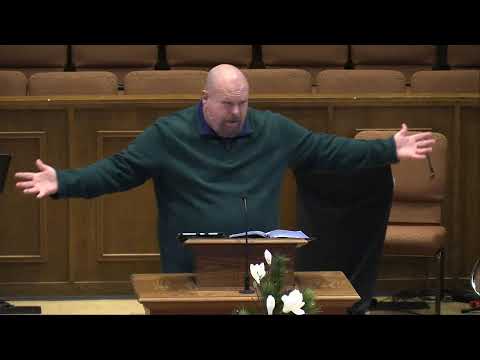
This small group deep study guide draws directly from First Baptist Church Union's sermon “Sunday Morning Worship” so you can keep engaging with the message all week. Read, reflect, and share it with your small group or friends.
DEEP STUDY GUIDE: CROWN OR CROSS - WHO DO YOU SAY I AM?
INTRODUCTION TO THE STUDY
This week's sermon from Mark 8:27-33 addresses one of the most pivotal questions in all of Scripture: "Who do you say that I am?" This question cuts to the heart of our faith and challenges us to examine what we truly believe about Jesus. In this deep study, we'll explore the theological significance of Peter's confession, Jesus' revelation of His mission, and the profound tension between human expectations and divine purposes.
SCRIPTURE FOCUS
Primary Text: Mark 8:27-33 Supporting Texts: Matthew 16:13-23, Luke 9:18-22, Isaiah 53:1-12, John 6:44-45
HISTORICAL AND CULTURAL CONTEXT
Caesarea Philippi
Caesarea Philippi was located about 25 miles north of the Sea of Galilee at the base of Mount Hermon. This location is significant for several reasons:
Religious significance: The area was known for pagan worship, particularly of the Greek god Pan. There was a temple dedicated to Caesar Augustus, symbolizing Roman rule. The location featured a large cave believed to be the "gates of Hades."
Political significance: This region was outside the jurisdiction of Herod Antipas in territory ruled by Philip the Tetrarch, providing Jesus a safer place to have this crucial conversation.
Theological significance: Jesus chose to ask about His identity in a place filled with pagan idols and symbols of earthly power, creating a stark contrast between worldly kingdoms and His divine kingdom.
Messianic Expectations in First-Century Judaism
The Jewish people of Jesus' day had specific expectations about the Messiah:
Political liberator: Many expected the Messiah to overthrow Roman rule and restore Israel's independence.
Military leader: The Messiah was often viewed as a warrior-king like David who would defeat Israel's enemies.
Religious reformer: Some expected the Messiah to purify temple worship and restore proper religious observance.
Eternal ruler: Based on passages like Isaiah 9:6-7, many believed the Messiah would establish an eternal kingdom.
These expectations help explain Peter's reaction to Jesus' prediction of His suffering and death.
DETAILED VERSE ANALYSIS
Mark 8:27-28 - The Question of Identity
"Jesus and his disciples went on to the villages around Caesarea Philippi. On the way he asked them, 'Who do people say I am?' They replied, 'Some say John the Baptist; others say Elijah; and still others, one of the prophets.'"
Key Insights:
Strategic timing: This conversation occurs after multiple miracles, including the feeding of the 4,000 and the healing of the blind man at Bethsaida, giving the disciples plenty of evidence to consider.
Public opinions: The three opinions mentioned (John the Baptist, Elijah, one of the prophets) all share something in common - they represent figures who had died or been taken to heaven. This suggests people recognized Jesus' supernatural power but misunderstood His true identity.
Theological significance:
- John the Baptist was the forerunner of the Messiah (Malachi 4:5-6)
- Elijah was expected to return before the Messiah (Malachi 4:5)
- "One of the prophets" suggests people saw Jesus as a prophet like those in Israel's past
Limited understanding: These answers reveal that the public recognized Jesus as someone special but failed to see Him as the Messiah.
Mark 8:29 - Peter's Confession
"He asked them, 'But what about you? Who do you say I am?' Peter answered, 'You are the Messiah.'"
Key Insights:
Personal challenge: Jesus shifts from general opinions to personal conviction with "But what about you?" The Greek emphasizes this contrast with the emphatic "you" (hymeis).
Representative response: Peter speaks as the representative of the disciples, though Matthew's account shows Jesus blesses Peter individually for this confession.
Theological weight: "The Messiah" (Christos in Greek) means "Anointed One," the promised deliverer of Israel. This title carries immense theological significance:
- The fulfillment of Old Testament prophecies
- The promised King from David's line
- The ultimate Prophet, Priest, and King
Divine revelation: Matthew 16:17 adds Jesus' response that this knowledge came not from "flesh and blood" but from the Father in heaven, highlighting the supernatural origin of true faith.
Mark 8:30 - The Command of Silence
"Jesus warned them not to tell anyone about him."
Key Insights:
Messianic secret: This verse is part of what scholars call the "Messianic secret" theme in Mark, where Jesus often commands silence about His identity.
Strategic timing: Jesus knew that premature declarations of His messiahship would:
- Fuel misguided political expectations
- Potentially incite premature conflict with authorities
- Create obstacles to completing His mission
Incomplete understanding: The disciples' understanding of Jesus' messianic role was still incomplete, as the next verses demonstrate.
Theological significance: Jesus wanted to define His messiahship on His terms, not according to popular expectations.
Mark 8:31 - The Suffering Servant Revealed
"He then began to teach them that the Son of Man must suffer many things and be rejected by the elders, the chief priests and the teachers of the law, and that he must be killed and after three days rise again."
Key Insights:
"Began to teach": This marks a significant turning point in Jesus' ministry. After confirming His identity, He now reveals His mission.
"Son of Man": This title from Daniel 7:13-14 refers to a heavenly figure given authority, glory, and sovereign power. Jesus combines this glorious title with the suffering servant imagery from Isaiah 53.
"Must" (dei in Greek): This indicates divine necessity - these events are part of God's predetermined plan, not accidents or contingencies.
Four-part mission: Jesus outlines four components of His mission:
- Suffer many things
- Be rejected by the religious leaders
- Be killed
- Rise after three days
Theological significance: Jesus is revealing that the path to glory goes through suffering, contradicting popular messianic expectations.
Mark 8:32-33 - Peter's Rebuke and Jesus' Response
"He spoke plainly about this, and Peter took him aside and began to rebuke him. But when Jesus turned and looked at his disciples, he rebuked Peter. 'Get behind me, Satan!' he said. 'You do not have in mind the concerns of God, but merely human concerns.'"
Key Insights:
"Spoke plainly": Jesus was not being cryptic or using parables; He was explicitly clear about His coming suffering and death.
Peter's rebuke: The Greek word for "rebuke" (epitimaō) is the same word used when Jesus rebukes demons, suggesting the severity of Peter's correction.
"Get behind me, Satan": Jesus identifies the source of Peter's thinking as satanic, not because Peter is Satan but because his thinking aligns with Satan's attempts to divert Jesus from the cross.
"You do not have in mind the concerns of God": The Greek literally means "you are not thinking the things of God but the things of men." Peter's understanding was shaped by human expectations rather than divine revelation.
Theological significance: This exchange reveals the stark contrast between divine wisdom and human wisdom regarding salvation. The cross appears as foolishness to human thinking (1 Corinthians 1:18-25).
THEOLOGICAL THEMES FOR DEEPER STUDY
1. The Necessity of Divine Revelation in Faith
Peter's confession that Jesus is the Christ came not through human reasoning alone but through divine revelation (Matthew 16:17). This illustrates the theological truth that saving faith is not merely intellectual assent but requires God's initiative:
- John 6:44: "No one can come to me unless the Father who sent me draws them"
- 2 Corinthians 4:6: "For God, who said, 'Let light shine out of darkness,' made his light shine in our hearts to give us the light of the knowledge of God's glory displayed in the face of Christ."
- Ephesians 2:8-9: "For it is by grace you have been saved, through faith—and this is not from yourselves, it is the gift of God—not by works, so that no one can boast."
Theological reflection: How does understanding faith as a divine gift rather than a human achievement change our approach to evangelism and discipleship? How might this understanding affect our view of those who don't yet believe?
2. The Divine Necessity of the Cross
Jesus stated that He "must" (dei) suffer, be rejected, killed, and rise again. This divine necessity reveals several theological truths:
- Predetermined plan: Acts 2:23 states Jesus was "handed over to you by God's deliberate plan and foreknowledge."
- Substitutionary atonement: Isaiah 53:4-6 prophesied that the Messiah would bear our griefs, carry our sorrows, be pierced for our transgressions, and crushed for our iniquities.
- God's sovereignty: The cross was not a tragic accident or a backup plan but the centerpiece of God's redemptive purpose from before creation (Revelation 13:8).
Theological reflection: How does understanding the cross as God's predetermined plan rather than a tragic accident transform our view of suffering? How might this affect our trust in God's sovereignty during difficult circumstances?
3. The Tension Between Divine and Human Perspectives
Peter's rebuke of Jesus demonstrates the profound tension between divine wisdom and human thinking:
- 1 Corinthians 1:18: "For the message of the cross is foolishness to those who are perishing, but to us who are being saved it is the power of God."
- Isaiah 55:8-9: "'For my thoughts are not your thoughts, neither are your ways my ways,' declares the LORD. 'As the heavens are higher than the earth, so are my ways higher than your ways and my thoughts than your thoughts.'"
- Romans 12:2: "Do not conform to the pattern of this world, but be transformed by the renewing of your mind."
Theological reflection: In what areas might our cultural conditioning be causing us to "rebuke" God's revealed truth? How can we better align our thinking with God's perspective rather than human wisdom?
4. The Paradoxical Nature of Christ's Kingdom
Jesus reveals that the path to glory goes through suffering, establishing a kingdom principle that applies to His followers as well:
- Mark 8:34-35: "Whoever wants to be my disciple must deny themselves and take up their cross and follow me. For whoever wants to save their life will lose it, but whoever loses their life for me and for the gospel will save it."
- Philippians 2:5-11: Christ's example of humbling Himself to death on a cross before exaltation
- 2 Corinthians 12:9: "My grace is sufficient for you, for my power is made perfect in weakness."
Theological reflection: How does the paradoxical nature of Christ's kingdom (strength through weakness, life through death, exaltation through humiliation) challenge contemporary Christian expressions of faith and ministry?
CROSS-REFERENCES FOR DEEPER STUDY
1. Old Testament Prophecies About the Messiah
- Isaiah 53:1-12: The suffering servant who bears our griefs and is pierced for our transgressions
- Psalm 22:1-31: Prophetic description of the Messiah's suffering, including "they have pierced my hands and feet"
- Daniel 7:13-14: The "son of man" who receives authority, glory, and sovereign power
- Zechariah 12:10: "They will look on me, the one they have pierced"
- Psalm 118:22: "The stone the builders rejected has become the cornerstone"
2. New Testament Parallels to This Passage
- Matthew 16:13-23: Parallel account with additional details about Peter being blessed
- Luke 9:18-22: Luke's account of the same conversation
- John 6:66-69: Peter's confession after many disciples turned away
- 1 Peter 2:21-25: Peter's later reflection on Christ's suffering, showing his mature understanding
3. Passages About Christ's Predetermined Suffering
- Acts 2:23: "This man was handed over to you by God's deliberate plan and foreknowledge"
- Acts 4:27-28: "They did what your power and will had decided beforehand should happen"
- 1 Peter 1:18-20: Christ was "chosen before the creation of the world"
- Revelation 13:8: "The Lamb who was slain from the creation of the world"
4. Passages About Human Thinking vs. Divine Wisdom
- Isaiah 55:8-9: "My thoughts are not your thoughts, neither are your ways my ways"
- 1 Corinthians 1:18-25: The foolishness of God is wiser than human wisdom
- Romans 11:33-36: The depth of God's wisdom and knowledge
- Proverbs 3:5-6: "Trust in the LORD with all your heart and lean not on your own understanding"
IN-DEPTH DISCUSSION QUESTIONS
Section 1: The Question of Identity (vv. 27-28)
Why do you think Jesus chose Caesarea Philippi, a center of pagan worship and Roman authority, to ask this pivotal question about His identity?
The sermon mentioned that the public opinions about Jesus (John the Baptist, Elijah, one of the prophets) all referred to figures who had died or been taken to heaven. What does this suggest about how people understood Jesus' power but misunderstood His identity?
How do people in our contemporary culture answer the question "Who is Jesus?" What similarities do you see between first-century misconceptions and modern misconceptions?
Jesus asked about public opinion before asking for the disciples' personal confession. Why this progression? What can we learn about effective discipleship from this approach?
Consider how public opinion might have influenced the disciples' understanding of Jesus. How does popular opinion about Christianity influence your own faith today, whether positively or negatively?
Section 2: Peter's Confession (v. 29)
Matthew's account adds Jesus saying, "Blessed are you, Simon son of Jonah, for this was not revealed to you by flesh and blood, but by my Father in heaven" (Matthew 16:17). What does this teach us about the nature of saving faith and spiritual understanding?
The sermon emphasized that "Christ" is a title, not Jesus' last name. How might a deeper understanding of what "Christ/Messiah" meant in Jewish expectation enhance our appreciation of Peter's confession?
What evidence had the disciples witnessed that should have led them to this conclusion about Jesus' identity? Despite this evidence, why was divine revelation still necessary?
Peter made the right confession but still misunderstood Jesus' mission. In what ways might we correctly identify Jesus while still misunderstanding crucial aspects of His character or mission?
How would you articulate your personal answer to Jesus' question, "Who do you say that I am?" How has your answer to this question evolved throughout your spiritual journey?
Section 3: The Command of Silence (v. 30)
Jesus commanded the disciples not to tell anyone about Him at this point. What strategic and theological reasons might explain this command of silence?
How does Jesus' command to remain silent at this point contrast with His later command to "go into all the world and preach the gospel" (Mark 16:15)? What changed?
The sermon suggested one reason for silence was that the disciples didn't yet fully understand Jesus' mission. What dangers might come from sharing truth that we only partially understand?
How might premature declarations about Jesus' messiahship have hindered rather than helped His mission at this point?
Are there times when Christians should exercise restraint in proclaiming certain aspects of faith until fuller understanding is achieved? What principles might guide such decisions?
Section 4: The Suffering Servant Revealed (v. 31)
Jesus used the title "Son of Man" when describing His suffering. This title from Daniel 7 describes a glorious, powerful figure. Why would Jesus deliberately connect this title with suffering and death?
The Greek word "dei" (must) indicates divine necessity. How does understanding the cross as divinely necessary rather than tragically accidental change our perspective on suffering in general?
Jesus outlined a four-part mission: suffering, rejection, death, and resurrection. How does each element contribute to our understanding of salvation? What would be missing if any part were removed?
Isaiah 53 was written approximately 700 years before Jesus. How does this prophecy of the suffering servant enhance our understanding of Jesus' words in Mark 8:31?
The sermon mentioned that Jesus' healings were temporary (everyone He healed eventually died), pointing to something greater. How does this help us understand the purpose of Jesus' miracles in relation to His ultimate mission?
Section 5: Peter's Rebuke and Jesus' Response (vv. 32-33)
Peter had just confessed Jesus as the Christ, yet moments later Jesus calls him "Satan." What does this dramatic exchange reveal about the possibility of simultaneously having right belief and wrong understanding?
Jesus says Peter was "not setting your mind on the things of God, but on the things of man." What specific aspects of Peter's thinking reflected human rather than divine perspective?
The sermon compared Peter's rebuke to Satan's temptation in the garden ("Did God really say?"). What other parallels do you see between Peter's reaction and Satan's tactics throughout Scripture?
Jesus says Peter's thinking is aligned with Satan. In what ways might our well-intentioned but misguided thinking serve the enemy's purposes rather than God's?
What areas of biblical teaching do you find most difficult to accept? How might these difficulties reveal places where your thinking is still aligned with human rather than divine perspectives?
PRACTICAL APPLICATION FOR MATURE BELIEVERS
1. Examining Our Personal Confession
Reflection exercise: Write out your own detailed answer to Jesus' question, "Who do you say that I am?" Include:
- What you believe about His identity
- What you believe about His mission
- How these beliefs impact your daily life
- Areas where you struggle to fully embrace the implications of who He is
Action step: Identify one area where your life doesn't fully align with your confession of Jesus as Lord. Create a specific plan to bring this area under His lordship this week.
2. Recognizing Cultural Influences on Our Faith
Reflection exercise: List ways contemporary culture might be shaping your understanding of:
- What it means to follow Jesus
- What "success" looks like in Christian life
- How you understand suffering in relation to faith
- Your expectations of what God should do in your life
Action step: Choose one area where cultural thinking has influenced your faith perspective. Study Scripture passages that address this area, asking God to renew your mind with His truth.
3. Embracing the Cross-Centered Life
Reflection exercise: Consider how the principle "the way to glory is through suffering" applies to:
- Your personal spiritual formation
- Your approach to ministry and service
- Your response to personal difficulties
- Your understanding of success in God's kingdom
Action step: Identify an area where you've been avoiding necessary suffering or sacrifice. Make a deliberate choice to embrace this "cross" as part of following Jesus faithfully.
4. Cultivating Divine Perspective
Reflection exercise: Reflect on recent situations where your initial reaction revealed "human thinking" rather than "divine thinking." Consider:
- What assumptions were behind your reaction?
- What biblical principles should have shaped your thinking?
- How might your response have been different with God's perspective?
Action step: Establish a daily practice of "mind renewal" through Scripture meditation, focusing specifically on passages that challenge human wisdom with divine perspective (e.g., Romans 12:1-2, 1 Corinthians 1:18-31, Philippians 2:5-11).
5. Proclaiming Christ Accurately
Reflection exercise: Consider how you typically present Jesus to others:
- Do you emphasize His identity as well as His benefits?
- Do you include both His suffering and His glory?
- Do you present Him as He is in Scripture or as culture might prefer Him to be?
Action step: Practice articulating the full biblical picture of Jesus—including both His suffering and His glory—to a fellow believer, asking for feedback on the completeness and accuracy of your presentation.
RESOURCES FOR FURTHER STUDY
Books
The Cross of Christ by John Stott - A comprehensive examination of the centrality and necessity of the cross in Christian theology.
King's Cross: The Story of the World in the Life of Jesus by Timothy Keller - An exploration of Mark's Gospel that highlights Jesus' true identity and mission.
The Crucified King: Atonement and Kingdom in Biblical and Systematic Theology by Jeremy Treat - Examines how Jesus' kingship and His suffering work together in God's plan.
Christ the Conqueror of Hell by Archbishop Hilarion Alfeyev - Provides historical Christian perspectives on Christ's descent into hell and victory over death.
Knowing Christ by Mark Jones - A theological exploration of the person and work of Jesus Christ.
Articles and Essays
"The Messianic Secret in Mark's Gospel" by William Wrede - A classic scholarly analysis of Jesus' commands for silence in Mark.
"The Son of Man in Mark's Gospel" by Darrell Bock - Examines the theological significance of this title in Mark.
"Divine Necessity in Mark 8:31" by Joel Marcus - A scholarly examination of the concept of divine necessity in Jesus' prediction of His suffering.
Online Resources
The Bible Project: "The Messiah" - An animated exploration of the biblical concept of Messiah.
Desiring God: "What Does It Mean to Take Up Your Cross?" - John Piper's reflection on the implications of Jesus' call to cross-bearing.
Ligonier Ministries: "Who Do You Say That I Am?" - R.C. Sproul's devotional on Peter's confession.
Study Tools
Bible Software: Tools like Logos, Accordance, or the free Blue Letter Bible app can help you explore the original Greek text and cross-references.
The ESV Study Bible or NIV Biblical Theology Study Bible - Both contain excellent notes on this passage and its theological significance.
A Greek-English Lexicon of the New Testament by Bauer, Danker, Arndt, and Gingrich (BDAG) - For those interested in deeper word studies of key terms like "Christ," "must," and "rebuke."
CONCLUSION AND PRAYER
As we conclude this deep study of Mark 8:27-33, we're confronted with the same question Jesus asked His disciples: "Who do you say that I am?" Our answer to this question shapes everything about our faith journey. Peter got the identity right but misunderstood the mission. May we embrace both the full identity of Jesus as the Christ and the full mission that required Him to suffer, die, and rise again.
Prayer: Lord Jesus, we confess you as the Christ, the Son of the living God. Forgive us for the times we've tried to reshape you according to our preferences or cultural expectations. Thank you for willingly embracing suffering and death for our salvation. Help us to set our minds on the things of God rather than the things of men. Transform our thinking through your Word and Spirit so that we might follow you faithfully—even when that path leads through suffering. May we take up our cross daily, following your example and rejoicing in your resurrection power. In your name we pray, Amen.