
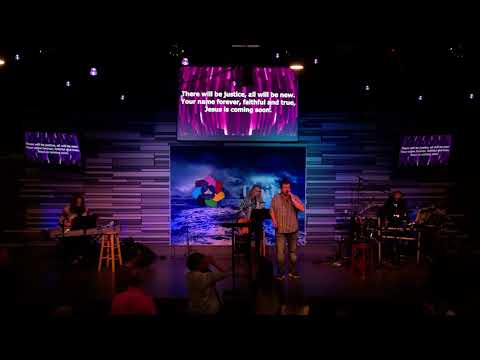
This small group deep study guide draws directly from Jeremy Wood's sermon “United in Formation: Discipleship Shapes the Inner Life” so you can keep engaging with the message all week. Read, reflect, and share it with your small group or friends.
UNITED IN FORMATION
A Comprehensive Small Group Deep Study Guide
"Do not be conformed to this world, but be transformed by the renewal of your mind, that by testing you may discern what is the will of God, what is good and acceptable and perfect." - Romans 12:2
INTRODUCTION
This deep study guide examines the biblical concept of spiritual formation as presented in the sermon "United in Formation." The sermon emphasized that unity in the church cannot be sustained without the deep inner transformation of believers into the image of Christ. True discipleship involves not merely believing in Jesus but being formed by Him into His likeness.
As we explore this topic together, we'll dig into the theological foundations of spiritual formation, examine key biblical texts, and consider practical applications for our daily walk with Christ.
PART 1: UNDERSTANDING THE TRANSFORMATION MANDATE
Key Scripture: Romans 12:1-2
"I appeal to you therefore, brothers, by the mercies of God, to present your bodies as a living sacrifice, holy and acceptable to God, which is your spiritual worship. Do not be conformed to this world, but be transformed by the renewal of your mind, that by testing you may discern what is the will of God, what is good and acceptable and perfect."
Exegetical Insights
"I appeal to you" - The Greek word parakaleo carries a sense of strong urging or exhortation. This is not a mere suggestion but a heartfelt plea from Paul.
"Living sacrifice" - This phrase creates an intentional paradox. In the Old Testament sacrificial system, animals died when sacrificed. Paul introduces the concept of a continual, ongoing sacrifice—our entire lives offered to God.
"Transformed" - The Greek word metamorphoo is where we get "metamorphosis." It's the same word used to describe Jesus' transfiguration (Matt 17:2) and indicates a complete, inside-out transformation.
"Renewal of your mind" - The Greek term anakainosis refers to a complete renovation, not just superficial changes. This renewal is ongoing (present tense in Greek), not a one-time event.
Theological Framework
The passage establishes a critical theological foundation for spiritual formation:
The Basis for Transformation: "By the mercies of God" - Our transformation is a response to God's prior work of grace, not a means to earn His favor.
The Nature of Transformation: Inside-out change that affects how we think (mind), what we desire (heart), and how we act (bodies).
The Purpose of Transformation: To discern and live according to God's will.
The Context of Transformation: Worship - Our transformation is an act of worship to God.
Cross-References
2 Corinthians 3:18 - "And we all, with unveiled face, beholding the glory of the Lord, are being transformed into the same image from one degree of glory to another. For this comes from the Lord who is the Spirit."
Ezekiel 36:26-27 - "And I will give you a new heart, and a new spirit I will put within you. And I will remove the heart of stone from your flesh and give you a heart of flesh. And I will put my Spirit within you, and cause you to walk in my statutes and be careful to obey my rules."
Philippians 2:12-13 - "Work out your own salvation with fear and trembling, for it is God who works in you, both to will and to work for his good pleasure."
Deep Reflection Questions
In what ways have you experienced the tension between being "conformed to this world" and being "transformed" by God? What specific thought patterns or values do you find most difficult to renew?
The concept of a "living sacrifice" suggests ongoing surrender. What areas of your life are you currently holding back from full surrender to God? What makes these areas particularly difficult to release?
Romans 12:2 emphasizes the renewal of our minds. How has your thinking changed since becoming a follower of Christ? What specific biblical truths have most transformed your perspective?
What is the relationship between the renewal of our minds and discerning God's will? How has clearer thinking led to clearer direction in your life?
Paul connects transformation to worship. How does viewing your personal growth as worship change your approach to spiritual disciplines and obedience?
PART 2: THE DISCIPLE'S DESTINATION
Key Scripture: Luke 6:40
"A disciple is not above his teacher, but everyone when he is fully trained will be like his teacher."
Exegetical Insights
"Disciple" - The Greek word mathetes means a learner or student, but in the Jewish context, it meant much more than acquiring information. It involved imitating and becoming like one's rabbi.
"Fully trained" - The Greek term katartizo means to be completely equipped, prepared, or perfected. It implies a process that leads to completion.
"Will be like" - This indicates the end goal of discipleship: resemblance to the teacher. For Christians, this means becoming like Christ.
Theological Framework
This verse establishes the ultimate goal of discipleship:
The Purpose of Discipleship: Not merely to learn about Jesus but to become like Him.
The Process of Discipleship: Training that shapes character and conduct.
The Posture of Discipleship: Humility ("not above his teacher") and submission to Christ's authority and example.
Cross-References
Romans 8:29 - "For those whom he foreknew he also predestined to be conformed to the image of his Son, in order that he might be the firstborn among many brothers."
1 John 2:6 - "Whoever says he abides in him ought to walk in the same way in which he walked."
2 Corinthians 3:18 - "And we all, with unveiled face, beholding the glory of the Lord, are being transformed into the same image from one degree of glory to another."
Philippians 2:5 - "Have this mind among yourselves, which is yours in Christ Jesus."
Deep Reflection Questions
Jesus modeled specific character qualities during His earthly ministry (compassion, truth-telling, courage, humility, etc.). In which of these qualities have you seen the most growth in your life? Where do you still need significant development?
Luke 6:40 suggests that discipleship involves a process of becoming "fully trained." What does spiritual maturity look like to you? How would you know if you were making progress toward this goal?
What specific habits, relationships, or environments in your life are currently forming you more into the image of Christ? What aspects of your life might be forming you into something else?
How might your understanding of Christian growth change if you viewed it less as following rules and more as becoming like Jesus?
What obstacles or resistance do you experience in the process of being formed into Christ's image? How might these challenges actually be part of God's formation process?
PART 3: THE FORMATION PROCESS
Key Scripture: Galatians 4:19
"My little children, for whom I am again in the anguish of childbirth until Christ is formed in you."
Exegetical Insights
"Anguish of childbirth" - Paul uses the metaphor of labor pains to describe the intensity and pain involved in spiritual formation. This suggests that formation is not always comfortable or easy.
"Formed" - The Greek word morphoo (related to metamorphoo in Romans 12:2) refers to the development of the essential nature or character of something. It's like a baby developing in the womb—gradual but purposeful.
"In you" - Formation happens from the inside out. It's not merely external behavior modification but internal character development.
Theological Framework
This passage reveals several important aspects of spiritual formation:
The Pain of Formation: Spiritual growth often involves struggle, discomfort, and even suffering.
The Pattern of Formation: Like physical development, spiritual formation follows a pattern of gradual growth and development.
The Patience of Formation: Formation takes time and cannot be rushed.
The Purpose of Formation: That Christ would be fully formed in us—His character, priorities, and love.
Cross-References
James 1:2-4 - "Count it all joy, my brothers, when you meet trials of various kinds, for you know that the testing of your faith produces steadfastness. And let steadfastness have its full effect, that you may be perfect and complete, lacking in nothing."
Philippians 1:6 - "And I am sure of this, that he who began a good work in you will bring it to completion at the day of Jesus Christ."
1 Peter 4:12-13 - "Beloved, do not be surprised at the fiery trial when it comes upon you to test you, as though something strange were happening to you. But rejoice insofar as you share Christ's sufferings, that you may also rejoice and be glad when his glory is revealed."
Deep Reflection Questions
Paul compares spiritual formation to childbirth—a painful but purposeful process. What "birth pains" have you experienced in your spiritual growth? How have difficult seasons shaped your character?
Formation is gradual, like a baby developing in the womb. Where have you become impatient with your own spiritual growth or that of others? How might God's timeline differ from yours?
The sermon identified three realities of formation: it is intentional (not accidental), painful (not comfortable), and communal (not isolated). Which of these aspects challenges you the most and why?
How has community played a role in your spiritual formation? Can you identify specific instances where others have been instrumental in shaping you to be more like Christ?
What specific spiritual practices (Bible reading, prayer, fasting, etc.) have been most formative in your life? How have these practices shaped your character and not just your knowledge?
PART 4: FORMATION FOR UNITY
Key Scripture: Ephesians 4:1-3
"I therefore, a prisoner for the Lord, urge you to walk in a manner worthy of the calling to which you have been called, with all humility and gentleness, with patience, bearing with one another in love, eager to maintain the unity of the Spirit in the bond of peace."
Exegetical Insights
"Walk in a manner worthy" - The Greek word for "walk" (peripateo) refers to one's conduct or lifestyle. Paul is calling for consistent, daily living that reflects our calling.
"Humility" - The Greek tapeinophrosyne refers to lowliness of mind, not thinking too highly of oneself.
"Bearing with one another" - The Greek anecho means to endure, put up with, or tolerate. It implies that unity requires patience with others' weaknesses.
"Eager to maintain" - This suggests an active, diligent effort to preserve unity, not a passive hope that it will happen naturally.
Theological Framework
This passage establishes the connection between personal formation and corporate unity:
The Character Basis for Unity: Unity flows from Christlike character qualities (humility, gentleness, patience, love).
The Challenge to Unity: Differences, weaknesses, and conflicts that require "bearing with one another."
The Cultivation of Unity: Unity must be actively maintained through intentional effort.
Cross-References
1 Corinthians 3:1-3 - "But I, brothers, could not address you as spiritual people, but as people of the flesh, as infants in Christ. I fed you with milk, not solid food, for you were not ready for it. And even now you are not yet ready, for you are still of the flesh. For while there is jealousy and strife among you, are you not of the flesh and behaving only in a human way?"
Colossians 3:12-14 - "Put on then, as God's chosen ones, holy and beloved, compassionate hearts, kindness, humility, meekness, and patience, bearing with one another and, if one has a complaint against another, forgiving each other; as the Lord has forgiven you, so you also must forgive. And above all these put on love, which binds everything together in perfect harmony."
John 17:20-23 - "I do not ask for these only, but also for those who will believe in me through their word, that they may all be one, just as you, Father, are in me, and I in you, that they also may be in us, so that the world may believe that you have sent me. The glory that you have given me I have given to them, that they may be one even as we are one, I in them and you in me, that they may become perfectly one, so that the world may know that you sent me and loved them even as you loved me."
Deep Reflection Questions
Ephesians 4:2-3 lists specific character qualities that promote unity: humility, gentleness, patience, and love. Which of these qualities do you find most challenging to demonstrate in difficult relationships? How might growing in this area strengthen unity?
According to 1 Corinthians 3:1-3, what is the relationship between spiritual immaturity and disunity? How have you observed this connection in church contexts?
The sermon suggested that "formed disciples protect unity while unformed believers fracture it." Can you think of examples where spiritual maturity (or lack thereof) affected unity in a group or church? What was the outcome?
Jesus prayed for unity "so that the world may know" (John 17:23). How does unity among believers serve as a witness to the world? Conversely, how does disunity damage our witness?
Matthew 18:15-20 provides Jesus' instructions for addressing conflict. How well do you follow this pattern when conflicts arise? What makes this approach difficult to practice?
PART 5: PRACTICAL STEPS TOWARD FORMATION
Key Scriptures
Hebrews 10:24-25 - "And let us consider how to stir up one another to love and good works, not neglecting to meet together, as is the habit of some, but encouraging one another, and all the more as you see the Day drawing near."
Psalm 1:1-3 - "Blessed is the man who walks not in the counsel of the wicked, nor stands in the way of sinners, nor sits in the seat of scoffers; but his delight is in the law of the LORD, and on his law he meditates day and night. He is like a tree planted by streams of water that yields its fruit in its season, and its leaf does not wither. In all that he does, he prospers."
James 1:22-25 - "But be doers of the word, and not hearers only, deceiving yourselves. For if anyone is a hearer of the word and not a doer, he is like a man who looks intently at his natural face in a mirror. For he looks at himself and goes away and at once forgets what he was like. But the one who looks into the perfect law, the law of liberty, and perseveres, being no hearer who forgets but a doer who acts, he will be blessed in his doing."
Theological Framework
The Bible presents several key practices that facilitate spiritual formation:
Community Engagement: Formation happens best in community where we can be known, challenged, and supported.
Spiritual Disciplines: Regular practices like Bible reading, prayer, fasting, and worship that shape our hearts and minds.
Intentional Growth: Identifying areas where Christ wants to form us and actively pursuing growth.
Practical Application: Putting God's word into practice, not just acquiring knowledge.
Practical Application Steps
Based on the sermon and Scripture, here are key steps toward spiritual formation:
Join a Formation-Focused Small Group
- Find a group where you can be known, challenged, and supported
- Commit to regular attendance and honest participation
- Be willing to both receive and offer accountability
Establish Daily Formation Practices
- Commit to a Bible reading plan (like the one mentioned in the sermon)
- Develop a consistent prayer rhythm
- Practice spiritual disciplines that shape your character
Identify Your Formation Frontier
- Prayerfully consider: What area is Jesus currently trying to form in you?
- Share this with a trusted friend or mentor who can help you grow
- Look for practical ways to practice growth in this area
Practice Unity-Protecting Responses
- Respond with humility instead of defensiveness
- Ask questions instead of making accusations
- Follow Matthew 18 principles when conflicts arise
Deep Reflection Questions
Which of the four practical steps mentioned above represents your greatest growth opportunity? What specific action could you take this week to begin addressing this area?
The sermon mentioned that our relationship with money and possessions reveals our formation level. How does your approach to finances reflect or contradict Christ's formation in you? What one change might bring greater alignment?
What specific daily spiritual practice could you commit to for the next 30 days? How might you measure its impact on your formation?
Hebrews 10:24-25 talks about "stirring up one another to love and good works." Who in your life stirs you up in this way? Who might you be called to stir up?
What "formation frontier" is God currently working on in your life? What evidence do you see that this is His focus area for you right now?
PART 6: FORMED FOR A PURPOSE
Key Scripture: John 17:20-23
"I do not ask for these only, but also for those who will believe in me through their word, that they may all be one, just as you, Father, are in me, and I in you, that they also may be in us, so that the world may believe that you have sent me. The glory that you have given me I have given to them, that they may be one even as we are one, I in them and you in me, that they may become perfectly one, so that the world may know that you sent me and loved them even as you loved me."
Exegetical Insights
"That they may all be one" - Unity is the explicit goal of Jesus' prayer. This is not uniformity but a deep, spiritual oneness.
"Just as you, Father, are in me, and I in you" - The unity of believers is modeled after the unity within the Trinity—a profound, intimate, loving relationship.
"So that the world may believe" - Unity has an evangelistic purpose. It serves as a witness to the world about Jesus.
"The glory that you have given me I have given to them" - Our unity is empowered by the glory Jesus shares with us.
Theological Framework
This passage reveals the ultimate purpose of our formation:
The Pattern of Unity: Trinitarian relationship (Father, Son, and Spirit)
The Power for Unity: The glory Christ shares with us
The Purpose of Unity: That the world may believe in Jesus
The Perfection of Unity: "Perfectly one"—a complete, mature unity
Cross-References
Acts 4:32-33 - "Now the full number of those who believed were of one heart and soul, and no one said that any of the things that belonged to him was his own, but they had everything in common. And with great power the apostles were giving their testimony to the resurrection of the Lord Jesus, and great grace was upon them all."
1 Peter 2:9-12 - "But you are a chosen race, a royal priesthood, a holy nation, a people for his own possession, that you may proclaim the excellencies of him who called you out of darkness into his marvelous light. Once you were not a people, but now you are God's people; once you had not received mercy, but now you have received mercy. Beloved, I urge you as sojourners and exiles to abstain from the passions of the flesh, which wage war against your soul. Keep your conduct among the Gentiles honorable, so that when they speak against you as evildoers, they may see your good deeds and glorify God on the day of visitation."
Matthew 5:14-16 - "You are the light of the world. A city set on a hill cannot be hidden. Nor do people light a lamp and put it under a basket, but on a stand, and it gives light to all in the house. In the same way, let your light shine before others, so that they may see your good works and give glory to your Father who is in heaven."
Deep Reflection Questions
Jesus prays that believers would be "perfectly one" as a witness to the world. How does this purpose change your perspective on the importance of unity in the church?
Jesus connects our unity to the unity within the Trinity. What qualities of the Trinity's relationship should be reflected in our relationships with other believers?
According to John 17:23, what will the world know when they see our unity? How might this impact your community if your church demonstrated this kind of unity?
The sermon suggested that "the world doesn't need more religious people who just agree on doctrines but fight like the world." How have you seen this dynamic damage the church's witness? What alternative could we offer?
What specific step could your small group take to demonstrate greater unity as a witness to those around you?
CONCLUSION AND APPLICATION
Personal Reflection
Take some time to reflect on your own spiritual formation journey:
- Where have you seen the most growth in becoming like Christ?
- What areas still need significant formation?
- What practices have been most helpful in your formation?
- How has community played a role in your formation?
Group Application
As a small group, consider taking these steps together:
- Covenant Together: Make a commitment to support one another's formation.
- Study Together: Follow the Bible reading plan mentioned in the sermon.
- Pray Together: Pray for specific formation needs in each other's lives.
- Serve Together: Find ways to demonstrate unity through service to your community.
Prayer Focus
Close your study time with prayer focused on:
- Thanking God for His work of formation in your lives
- Asking for growth in areas where you need formation
- Praying for unity within your church
- Praying that your unity would be a witness to the world
RESOURCES FOR DEEPER STUDY
Books on Spiritual Formation
- Celebration of Discipline by Richard Foster
- The Spirit of the Disciplines by Dallas Willard
- Renovation of the Heart by Dallas Willard
- Spiritual Formation by Henri Nouwen
- Life Together by Dietrich Bonhoeffer
Scripture Memory Verses
- Romans 12:1-2
- Luke 6:40
- Galatians 4:19
- Ephesians 4:1-3
- John 17:20-23
Additional Bible Study Resources
- Transformed: How God Changes Us by Rick Warren
- The Transforming Power of the Gospel by Jerry Bridges
- Spiritual Disciplines for the Christian Life by Donald S. Whitney
"May the God of peace himself sanctify you completely, and may your whole spirit and soul and body be kept blameless at the coming of our Lord Jesus Christ. He who calls you is faithful; he will surely do it." - 1 Thessalonians 5:23-24