
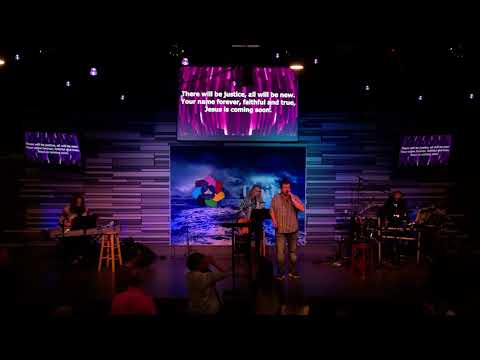
This small group discussion guide draws directly from Jeremy Wood's sermon “United in Formation: Discipleship Shapes the Inner Life” so you can keep engaging with the message all week. Read, reflect, and share it with your small group or friends.
UNITED IN FORMATION
Small Group Discussion Guide
OVERVIEW
This sermon explores how true Christian unity requires inner transformation, not just surface-level agreement. Pastor Scott emphasizes that discipleship is about becoming like Jesus through intentional formation practices, which happens best in community with other believers who can support, challenge, and encourage our growth.
ICEBREAKER (5-10 minutes)
Question: Share about someone who has significantly influenced who you are today. How did they shape you? What qualities of theirs do you see in yourself now?
SCRIPTURE READING (5 minutes)
Romans 12:1-2 (ESV) "I appeal to you therefore, brothers, by the mercies of God, to present your bodies as a living sacrifice, holy and acceptable to God, which is your spiritual worship. Do not be conformed to this world, but be transformed by the renewal of your mind, that by testing you may discern what is the will of God, what is good and acceptable and perfect."
Luke 6:40 (ESV) "A disciple is not above his teacher, but everyone when he is fully trained will be like his teacher."
DISCUSSION QUESTIONS (30-45 minutes)
TRANSFORMATION VS. CONFORMITY
In Romans 12:1-2, Paul contrasts being "conformed to this world" with being "transformed by the renewal of your mind." What do you think these two different paths look like in everyday life?
Pastor Scott used several examples of transformation requiring removal of the old (refinishing floors, repainting cars, replacing fingernails). Why can't we simply "add Jesus" on top of our old ways of thinking and living?
The sermon mentioned that our mindsets determine our behaviors. Can you share an example from your own life where changing your thinking led to changed actions?
[Leader Tip: If the group is quiet, you might share a personal example first. This question can be sensitive as it requires vulnerability, so affirm whoever shares first.]
FORMATION HAPPENS IN COMMUNITY
Pastor Scott emphasized that formation rarely happens in isolation but requires community. Why do you think we need others to grow spiritually?
Read Ephesians 4:1-3. According to this passage, what qualities are essential for maintaining unity? Which of these qualities is most challenging for you personally?
Ephesians 4:1-3 (ESV): "I therefore, a prisoner for the Lord, urge you to walk in a manner worthy of the calling to which you have been called, with all humility and gentleness, with patience, bearing with one another in love, eager to maintain the unity of the Spirit in the bond of peace."
The sermon contrasted formed disciples who protect unity with uninformed believers who fracture it. How have you seen this play out in church communities?
[Leader Tip: Be careful here that this doesn't turn into gossip about specific people. Keep the focus on patterns and principles, not personalities.]
THE FORMATION PROCESS
Pastor Scott described formation as intentional (not accidental), painful (not comfortable), and communal (not isolated). Which of these aspects of formation have you experienced most strongly in your own spiritual journey?
In Galatians 4:19, Paul compares spiritual formation to childbirth. Why do you think he uses this metaphor? What does it suggest about the formation process?
Galatians 4:19 (ESV): "My little children, for whom I am again in the anguish of childbirth until Christ is formed in you."
[Leader Tip: You might point out that childbirth is natural but painful, produces new life, requires time, and cannot be rushed.]
PERSONAL APPLICATION (10-15 minutes)
Pastor Scott asked, "How much more do you look like Jesus now than when you started?" Take a moment to reflect on this. In what areas have you seen growth? Where do you still need transformation?
What is your current "formation frontier" - an area where Jesus is trying to form you right now? (Examples: patience, forgiveness, truthfulness, generosity, etc.)
Which of the spiritual practices (daily Bible reading, prayer, fasting, Sabbath rest, sacrificial giving) do you find most challenging to maintain consistently? What gets in the way?
How might you respond differently the next time conflict arises in your relationships, based on what you've learned today about unity and formation?
PRAYER FOCUS (5-10 minutes)
- Pray for each person's "formation frontier" - the area where they're seeking growth
- Pray for our church to be united through transformation, not just surface agreement
- Pray for the courage to engage in formation even when it's uncomfortable
- Pray that our unity would be a witness to our community (John 17:23)
Suggestion: Consider having each person pray for the person on their right, specifically for their formation frontier.
OPTIONAL DEEP DIVE (for groups with extra time or wanting to go deeper)
Pastor Scott touched briefly on how our relationship with money reveals our formation level. Read Matthew 6:19-21 and discuss: How does what we do with our resources reveal what's happening in our hearts?
Matthew 6:19-21 (ESV): "Do not lay up for yourselves treasures on earth, where moth and rust destroy and where thieves break in and steal, but lay up for yourselves treasures in heaven, where neither moth nor rust destroys and where thieves do not break in and steal. For where your treasure is, there your heart will be also."
In 1 Corinthians 3:1-3, Paul addresses believers who are still "infants in Christ." What are the signs of spiritual immaturity he identifies? How might we recognize these tendencies in ourselves?
1 Corinthians 3:1-3 (ESV): "But I, brothers, could not address you as spiritual people, but as people of the flesh, as infants in Christ. I fed you with milk, not solid food, for you were not ready for it. And even now you are not yet ready, for you are still of the flesh. For while there is jealousy and strife among you, are you not of the flesh and behaving only in a human way?"
Pastor Scott shared his personal transformation story regarding alcohol. Can you identify a moment in your own life where God used circumstances to bring about a significant transformation in your thinking or behavior?
THIS WEEK'S CHALLENGE
Choose one of these practical steps toward formation:
Join a Small Group/Circle: If you're not already in one, commit to joining one of the church's small groups where you can be known, challenged, and supported.
Establish a Daily Formation Practice: Begin using the church's Bible reading plan (available on the app) starting tomorrow. Set aside a specific time each day for this practice.
Share Your Formation Frontier: Take the step of sharing with at least one trusted person the area where Jesus is currently trying to form you, and ask them to pray for you and check in with you about it.
Practice a Unity-Protecting Response: The next time conflict arises, practice responding with humility instead of defensiveness, with questions instead of accusations, and with direct conversation instead of gossip.