
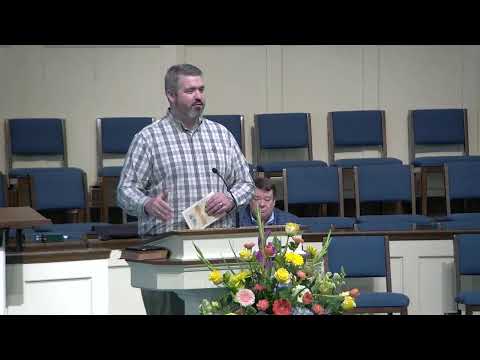
This small group discussion guide draws directly from Life Church DFW's sermon “Morning Worship (May 24, 2026) - 2026-05-25” so you can keep engaging with the message all week. Read, reflect, and share it with your small group or friends.
Kingdom Come: Facing Temptation with Jesus
Small Group Discussion Guide — Matthew 4:1-11
A Note to Facilitators: This guide is designed for 60–90 minutes. You know your group best — feel free to skip questions, spend extra time where conversation is flowing, or adjust the pace as needed. You don't need to be a theological expert to lead this discussion. Your job is to create a safe space for honest conversation and to point your group back to Jesus. Every section includes estimated time ranges to help you plan.
OVERVIEW
This week's sermon from Matthew 4:1-11 explored the account of Jesus's temptation in the wilderness. The preacher highlighted three key truths: Jesus can relate to our temptation because he was fully human; Jesus gives us victory over temptation through his finished work; and Jesus shows us how to fight temptation — primarily through knowing and applying the Word of God. The central invitation was this: the victory over sin and temptation has already been won by Jesus, and he wants to share that victory with us.
ICEBREAKER (5–10 minutes)
Before diving into the sermon content, use this question to help your group warm up and get comfortable with one another.
Question: Think back to a time when you were told not to do something — and that made you want to do it even more. What was it, and how did it turn out?
(This could be something funny from childhood, a diet you broke, or anything lighthearted. The goal is laughter and connection before going deeper.)
SCRIPTURE READING (5 minutes)
Have someone in the group read the passage aloud. You may want to ask two different people to read it — once for familiarity, once to listen for something new.
Matthew 4:1–11 (ESV)
"Then Jesus was led up by the Spirit into the wilderness to be tempted by the devil. And after fasting forty days and forty nights, he was hungry. And the tempter came and said to him, 'If you are the Son of God, command these stones to become loaves of bread.' But he answered, 'It is written, "Man shall not live by bread alone, but by every word that comes from the mouth of God."'
Then the devil took him to the holy city and set him on the pinnacle of the temple and said to him, 'If you are the Son of God, throw yourself down, for it is written, "He will command his angels concerning you," and "On their hands they will bear you up, lest you strike your foot against a stone."' Jesus said to him, 'Again it is written, "You shall not put the Lord your God to the test."'
Again, the devil took him to a very high mountain and showed him all the kingdoms of the world and their glory. And he said to him, 'All these I will give you, if you will fall down and worship me.' Then Jesus said to him, 'Be gone, Satan! For it is written, "You shall worship the Lord your God and him only shall you serve."'
Then the devil left him, and behold, angels came and were ministering to him."
Supporting Passages Referenced in the Sermon:
Hebrews 4:15 (ESV) "For we do not have a high priest who is unable to sympathize with our weaknesses, but one who in every respect has been tempted as we are, yet without sin."
Hebrews 2:17–18 (ESV) "Therefore he had to be made like his brothers in every respect, so that he might become a merciful and faithful high priest in the service of God, to make propitiation for the sins of the people. For because he himself has suffered when tempted, he is able to help those who are being tempted."
Romans 8:11–17 (ESV) "If the Spirit of him who raised Jesus from the dead dwells in you, he who raised Christ Jesus from the dead will also give life to your mortal bodies through his Spirit who dwells in you. So then, brothers, we are debtors, not to the flesh, to live according to the flesh. For if you live according to the flesh you will die, but if by the Spirit you put to death the deeds of the body, you will live. For all who are led by the Spirit of God are sons of God. For you did not receive the spirit of slavery to fall back into fear, but you have received the Spirit of adoption as sons, by whom we cry, 'Abba! Father!' The Spirit himself bears witness with our spirit that we are children of God, and if children, then heirs — heirs of God and fellow heirs with Christ, provided we suffer with him in order that we may also be glorified with him."
Ephesians 6:10–12 (ESV) "Finally, be strong in the Lord and in the strength of his might. Put on the whole armor of God, that you may be able to stand against the schemes of the devil. For we do not wrestle against flesh and blood, but against the rulers, against the authorities, against the cosmic powers over this present darkness, against the spiritual forces of evil in the heavenly places."
DISCUSSION QUESTIONS (30–45 minutes)
Work through these questions as a group. You don't need to cover every question — follow the conversation where it's going and skip questions if needed. Questions are arranged from lighter and observational to deeper and more personal.
THEME 1: Jesus Can Relate to Our Temptation
1. What stood out to you most from Sunday's message — a phrase, an idea, or a moment that stuck with you? Why did it stand out?
[Leader Tip]: This is a great opening question because there are no wrong answers. It helps you gauge what resonated with different people and can organically guide where the conversation goes. Invite quieter members by saying, "Anyone else want to share something different?"
2. The preacher emphasized that Jesus was fully human — that his hunger after 40 days of fasting was real, his exhaustion was real, and his temptation was real. Why do you think it matters that Jesus experienced genuine human weakness? How does that change the way you relate to him?
[Leader Tip]: Some people may have grown up thinking of Jesus as so divine that his humanity felt like a technicality. This question invites them to reconsider that. If conversation stalls, try asking: "Does it comfort you more to know Jesus has 'been there' — or does it surprise you? Why?"
3. Hebrews 4:15 says Jesus was "tempted in every way as we are, yet without sin." The sermon mentioned that Jesus's temptation was probably worse than ours because he was face-to-face with Satan at his most physically vulnerable moment. What does it mean to you personally that Jesus can sympathize with your weakness — not just observe it from a distance?
THEME 2: Jesus Gives Us Victory Over Temptation
4. The preacher drew a contrast between Jesus and two Old Testament figures: Adam (tempted in a perfect garden, yet fell) and the nation of Israel (wandering in the wilderness for 40 years, yet repeatedly rebelled). What do you think is the significance of Jesus succeeding where Adam and Israel failed? What does that mean for us?
[Leader Tip]: This is a slightly more theological question. If your group isn't familiar with these Old Testament stories, briefly explain: Adam and Eve were tempted in the Garden of Eden (Genesis 3) and gave in; Israel spent 40 years in the wilderness, constantly doubting and disobeying God. Jesus mirrors both situations but responds completely differently. The point is that Jesus is the "good and better" version — he does what we could never do on our own.
5. Romans 8:17 says that if we are children of God, we are "heirs of God and fellow heirs with Christ." The sermon described this as meaning that everything Jesus has — including his victory over sin and temptation — belongs to us too. What does it look like practically to claim that victory in everyday life? What gets in the way of doing that?
6. The preacher used a vivid illustration: imagine being given an open-book test with all the answers written out — but choosing to ignore them out of pride. In what ways do you see yourself (or people in general) doing the same thing with the victory Jesus offers over temptation?
THEME 3: Jesus Is Our Example for Dealing with Temptation
7. Every time Satan tempted him, Jesus responded with the phrase "It is written" — and then quoted Scripture. What does this tell us about the role of God's Word in resisting temptation? What would it look like for your group to take that more seriously in your daily lives?
[Leader Tip]: This question often surfaces honest admissions about inconsistent Bible reading. Keep the tone grace-filled, not guilt-inducing. The goal isn't to shame anyone but to help the group think practically. A helpful follow-up: "What's one thing that makes it hard for you to spend time in Scripture regularly?"
8. The sermon pointed to three powerful men in the Bible — David (a man after God's own heart), Samson (the strongest man who ever lived), and Solomon (the wisest man who ever lived) — all of whom fell to temptation. What do their stories tell us about our own ability to resist temptation in our own strength? How should that reality change the way we approach our own struggles?
9. Ephesians 6 tells us our battle isn't against "flesh and blood" but against spiritual forces of evil. The preacher said temptation is spiritual warfare and we need to take it seriously. How does thinking about temptation as spiritual warfare — rather than just a personal weakness or bad habit — change the way you approach it?
[Leader Tip]: Some people may be uncomfortable with spiritual warfare language, while others may be very familiar with it. Both responses are valid starting points for conversation. If needed, simplify the question: "Does it help or change anything for you to think of temptation as a battle with a real enemy, not just a personal failing?"
PERSONAL APPLICATION (10–15 minutes)
These questions are more personal and reflective. Encourage honest sharing, but remind your group that no one is required to share more than they're comfortable with. It can be helpful to give a moment of quiet reflection before inviting responses.
1. The sermon suggested that on any given Sunday, you find yourself in one of three places: the message speaks directly to your current situation, it reminds you of something God has brought you through, or it's preparing you for something you haven't faced yet. Which category did you find yourself in this week — and what does that tell you about where God might be working in your life right now?
2. Is there an area of temptation or sin in your life right now where you've been trying to fight the battle on your own? What would it look like to surrender that to Jesus this week — not just as a concept, but in a real, practical way?
(You don't need to share the specific struggle — just the pattern or the feeling of trying to handle it alone.)
3. The preacher said, "If you are in Christ, you don't have to sin anymore." That's a bold statement. Does that feel true to your experience? What makes it hard to believe or live out? What would help?
4. Think about someone in your life who is currently in a season of temptation, doubt, or struggle. How might the truths from this passage — that Jesus relates to them, that he's already won the victory, and that his Word is their weapon — be something you could share with or pray over them this week?
THIS WEEK'S CHALLENGE (Choose one or more)
Encourage each person in your group to choose at least one of these practical steps before you meet again.
🗺️ Map Your Temptation: Take 10 minutes this week to honestly write down one area of recurring temptation in your life. Then find one Scripture verse that speaks directly to that struggle and write it somewhere you'll see it daily — your phone, a sticky note, a journal. Use it the way Jesus did: "It is written..."
📖 Spend Time in the Word: Commit to reading your Bible for at least 10 minutes every day this week. If you're not sure where to start, try reading through Matthew 4–7 (the Sermon on the Mount follows right after this passage). Notice how Jesus continues to teach the way of the Kingdom.
🙏 Pray with Honesty: Set aside time to pray specifically and honestly about temptation — not a generic prayer, but one that names the real struggle. Ask God for the victory that is already yours in Christ.
👥 Find an Accountability Partner: Reach out to one person in your group (or in your life) this week and ask them to check in with you about one specific area of struggle. Invite them to pray for you and with you.
🛐 Come to the Altar: If you haven't already, consider responding to the sermon's invitation — whether that means trusting Christ for the first time, confessing unconfessed sin, or simply surrendering a battle you've been fighting alone.
PRAYER FOCUS (5–10 minutes)
Close your time together in prayer. You can use the suggested prompts below, pray as a group, or ask one person to lead. Consider breaking into pairs for more personal prayer if your group is comfortable with that.
Suggested Prayer Topics:
Gratitude — Thank God that Jesus fully understands our weakness and temptation, and that he doesn't condemn us but comes to us with compassion.
Confession — Invite group members to silently confess any areas of temptation or sin they've been carrying alone, trusting in the forgiveness and victory already won by Christ.
Strength — Ask God for the Holy Spirit's power to stand firm against temptation this week — not in our own strength, but in his.
The Word — Pray that each person in the group would grow in their knowledge of and love for Scripture, so that when temptation comes, they are equipped to respond.
One Another — Pray for the specific people in your group by name — that God would meet them in whatever season of life they're in and give them his victory.
Suggested closing prayer (for facilitators who'd like a guide):
"Father, thank you that you didn't send a Savior who stands at a distance and judges us. You sent one who walked in our shoes, felt our hunger, faced our enemy, and won. Thank you that because of Jesus, we don't have to fight our battles alone. Help us this week to lean into the victory that is already ours. Teach us your Word. Give us your Spirit. And when temptation comes, remind us: it is written. In Jesus's name, amen."
OPTIONAL DEEP DIVE (For groups wanting to go further)
Use these questions if your group has extra time or wants to explore the passage more deeply. These are great for groups with more biblical background or for individuals who want to study further on their own.
Deep Dive 1: The devil quotes Scripture in Matthew 4:6, using Psalm 91:11-12 to tempt Jesus to throw himself off the temple. Jesus responds by quoting Deuteronomy 6:16. What does it tell us that Satan knows and uses Scripture? How do we guard against the misuse of Scripture — whether by others or in our own thinking? What does this teach us about the importance of understanding Scripture in context, not just memorizing isolated verses?
Deep Dive 2: Compare the three temptations Jesus faced: turning stones to bread (physical need/comfort), throwing himself from the temple (testing God/seeking a sign), and receiving all the kingdoms of the world (power and glory without the cross). Many theologians suggest these three temptations correspond to patterns of temptation we all face — comfort, certainty, and control. Which of these three do you find yourself most susceptible to? Why?
(For further study, compare with 1 John 2:16 — "the desires of the flesh, the desires of the eyes, and pride in possessions.")
Deep Dive 3: Read Romans 8:11–17 again slowly. Paul says we have received "the Spirit of adoption" and can cry out "Abba, Father" — the intimate Aramaic word for daddy. How does your understanding of your identity as a child and heir of God affect the way you face temptation? In what ways does a faulty or incomplete understanding of who you are in Christ leave you more vulnerable to the enemy's schemes?
ADDITIONAL RESOURCES FOR FURTHER STUDY
For group members who want to explore this topic more deeply during the week:
- Genesis 3:1–13 — The temptation of Adam and Eve; compare with Jesus's temptation
- Deuteronomy 6:4–16 — The passages Jesus quotes in his responses to Satan
- Psalm 91 — The psalm Satan misquotes; read it in full for its true meaning
- 1 Corinthians 10:12–13 — God's promise to provide a way out of temptation
- James 1:12–15 — How temptation works and where it comes from
- 1 Peter 5:8–10 — The enemy as a roaring lion; resist him, firm in your faith
This guide was prepared for use in small groups during the week following the sermon "Kingdom Come: The Temptation of Jesus" from Matthew 4:1–11. For questions about small groups or to connect with a group, contact the church office.
"For because he himself has suffered when tempted, he is able to help those who are being tempted." — Hebrews 2:18