
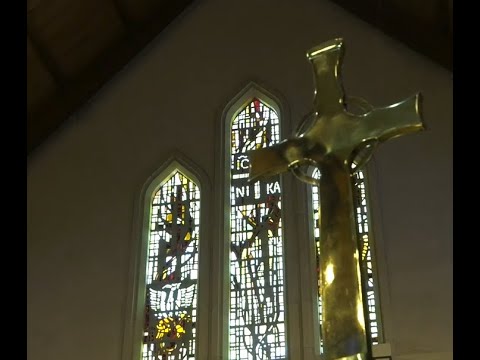
This individual study guide draws directly from St. Stephen Presbyterian Church Fort Worth's sermon “St. Stephen Presbyterian Church, Fifth Sunday of Epiphany, February 8, 2026 - 2026-02-09” so you can keep engaging with the message all week. Read, reflect, and share it with your small group or friends.
"Salt and Light: Living as Preservers and Illuminators"
A Comprehensive Bible Study Guide on Matthew 5:13-20
1. Introduction & Overview
This sermon explores Jesus' teaching in Matthew 5:13-20 where he calls his followers to be "salt of the earth" and "light of the world." The preacher connects these metaphors to our call to actively preserve life, work for justice, and shine God's light through good works rather than merely religious observance. The sermon draws a powerful parallel between the Isaiah 58 critique of empty religious ritual and Jesus' call for righteousness that exceeds that of the scribes and Pharisees.
Study Objectives:
- Understand the historical and cultural significance of salt and light metaphors in Jesus' time
- Explore the connection between Jesus' teaching and Isaiah's prophetic message about true worship
- Examine the tension between religious ritual and social justice in biblical faith
- Apply Jesus' call to be salt and light in specific, contemporary ways
- Understand how personal faith connects to communal responsibility
Estimated Study Time: 2-3 hours
2. Exegetical Analysis
Structure and Context
Matthew 5:13-20 falls within the Sermon on the Mount (Matthew 5-7), Jesus' most comprehensive ethical teaching. This passage comes immediately after the Beatitudes (5:1-12) and before Jesus' reinterpretation of the Law (5:21-48). This positioning is significant—Jesus first describes the character of kingdom people (Beatitudes), then their function in the world (salt and light), before explaining how they should interpret and live out God's law.
The passage divides into three sections:
- The salt metaphor (v.13)
- The light metaphor (vv.14-16)
- Jesus' relationship to the Law (vv.17-20)
Verse-by-Verse Analysis
Matthew 5:13 - "You are the salt of the earth. But if salt has lost its taste, how can its saltiness be restored? It is no longer good for anything, but is thrown out and trampled underfoot."
Jesus begins with a declarative statement—"You are the salt"—not "you should be" or "try to be." This is identity language. Salt in the ancient world was:
- A preservative (before refrigeration)
- A flavor enhancer
- A purifying agent
- A valuable commodity (Roman soldiers were paid in salt—the origin of the word "salary")
The warning about salt losing its taste (literally becoming "foolish" or "insipid" in Greek) refers to the mixed-quality salt common in Palestine that could become contaminated and lose its effectiveness. Jesus warns that disciples who lose their distinctive character become useless for their intended purpose.
Matthew 5:14-16 - "You are the light of the world. A city built on a hill cannot be hidden. No one after lighting a lamp puts it under a bushel basket, but on the lampstand, and it gives light to all in the house. In the same way, let your light shine before others so that they may see your good works and give glory to your father in heaven."
Again, Jesus uses identity language—"You are the light." This metaphor emphasizes:
- Visibility and influence
- Guidance in darkness
- Illumination of truth
- Revelation of God's character
The purpose of light is to be seen. Jesus emphasizes that discipleship is inherently public and visible. The goal is not self-promotion but directing attention to God ("give glory to your Father in heaven"). The reference to "good works" connects to the practical righteousness described in Isaiah 58.
Matthew 5:17-20 - "Do not think that I have come to abolish the law or the prophets. I have come not to abolish but to fulfill. For truly I tell you, until heaven and earth pass away, not one letter, not one stroke of a letter will pass from the law until all is accomplished. Therefore, whoever breaks one of the least of these commandments and teaches others to do the same will be called least in the kingdom of heaven. But whoever does them and teaches them will be called great in the kingdom of heaven. For I tell you, unless your righteousness exceeds that of the scribes and the Pharisees, you will never enter the kingdom of heaven."
Jesus addresses a potential misunderstanding—that his teaching undermines the Jewish law. Instead, he:
- Affirms the enduring validity of the Law
- Claims to "fulfill" rather than abolish it
- Emphasizes both teaching and practicing the commandments
- Sets a high standard—righteousness exceeding the religious experts
The Greek word for "fulfill" (πληρόω, plēroō) suggests bringing to completion or full expression, not merely obeying. Jesus is claiming to reveal the Law's true intent and meaning.
Author's Intent
Matthew's purpose in including this teaching appears to be:
- To establish Jesus' authority as interpreter of the Law
- To challenge his Jewish-Christian audience to a deeper, more transformative righteousness
- To emphasize that faith must produce visible, tangible results in the world
- To connect Jesus' teaching with Israel's prophetic tradition
3. Historical & Cultural Context
First-Century Palestinian Salt
Unlike our pure table salt, salt in ancient Palestine was often mixed with other minerals from the Dead Sea region. When exposed to moisture and sun, the sodium chloride could leach out, leaving behind a tasteless mineral residue that was literally "good for nothing except to be thrown out and trampled underfoot." This makes Jesus' warning about salt losing its saltiness scientifically accurate in his context.
Salt was also used in temple sacrifices (Lev 2:13) and in covenant ceremonies (Num 18:19), giving it religious significance beyond its practical uses.
Lamps and Houses
The typical Palestinian home was a small, one-room structure with few or no windows. A lamp was essential for any activity after sunset. The "bushel basket" (μόδιος, modios) was a common household measuring container that could be placed over a lamp to extinguish it. The imagery would have been immediately familiar to Jesus' audience.
Scribes and Pharisees
The scribes were professional experts in interpreting and applying the Law of Moses. The Pharisees were a lay movement devoted to strict observance of the Law and oral traditions. Both groups were respected for their religious knowledge and commitment. Jesus' statement that his followers' righteousness must exceed theirs would have been shocking and provocative.
The Pharisees were meticulous about ritual purity, tithing, and Sabbath observance. However, Jesus often criticized them for neglecting "the weightier matters of the law: justice and mercy and faith" (Matt 23:23). This connects directly to the Isaiah 58 critique of religious ritual divorced from justice and compassion.
Isaiah's Context
Isaiah 58 was addressed to Israelites who had returned from Babylonian exile (mid-5th century BCE). They were practicing religious rituals like fasting but failing to address economic exploitation and social injustice. The prophet's message challenged their compartmentalization of faith and ethics—a theme Jesus develops in his teaching about salt, light, and true righteousness.
4. Word Studies
"Salt" (ἅλας, halas): The Greek term refers to both the mineral substance and its qualities of preservation and flavor enhancement. In Greek literature, salt was often associated with wit, wisdom, and speech "seasoned with salt" (Col 4:6). Salt was essential for life and was used in covenant rituals, creating a rich metaphorical field for Jesus to draw upon.
"Light" (φῶς, phōs): This term refers to both physical light and metaphorical illumination. In Jewish tradition, light was associated with God's presence (Psalm 27:1), Torah (Psalm 119:105), and Israel's mission to the nations (Isaiah 42:6, 49:6). Jesus applies this language to his disciples, transferring Israel's vocation to his followers.
"Righteousness" (δικαιοσύνη, dikaiosynē): This key term appears throughout Matthew's Gospel and refers to right conduct before God and others. It encompasses both legal correctness and ethical integrity. In Matthew 5:20, it refers not merely to external compliance with rules but to a comprehensive alignment with God's will that affects attitudes, motives, and actions.
"Fulfill" (πληρόω, plēroō): This verb carries multiple meanings: to fill up, complete, bring to full expression, or accomplish. In Matthew, it often refers to Jesus fulfilling prophecy. Here, it suggests that Jesus brings the Law to its intended goal or full expression rather than simply obeying or replacing it.
"Abolish" (καταλύω, katalyō): Literally meaning "to loosen down" or "demolish," this term could refer to dismantling a structure or invalidating a law. Jesus explicitly denies this intention regarding the Law and Prophets, instead positioning himself as their authoritative interpreter and fulfiller.
5. Cross-References & Biblical Theology
Isaiah 58:6-9 - "Is not this the fast that I choose: to loose the bonds of injustice, to undo the thongs of the yoke, to let the oppressed go free, and to break every yoke? Is it not to share your bread with the hungry and bring the homeless poor into your house; when you see the naked, to cover them, and not to hide yourself from your own kin? Then your light shall break forth like the dawn..."
This passage provides the prophetic background for Jesus' teaching about light shining through good works. Isaiah criticizes empty religious observance and defines true worship as justice and compassion for the vulnerable.
Leviticus 2:13 - "You shall not omit from your grain offerings the salt of the covenant with your God; with all your offerings you shall offer salt."
Salt's covenant associations help explain its significance in Jesus' metaphor. As salt was required in Israel's worship, Jesus' disciples are essential to God's purposes in the world.
Isaiah 42:6 - "I am the LORD, I have called you in righteousness, I have taken you by the hand and kept you; I have given you as a covenant to the people, a light to the nations."
This verse shows how Israel was called to be a light to the nations—a role Jesus transfers to his disciples in Matthew 5:14.
Matthew 23:23-28 - "Woe to you, scribes and Pharisees, hypocrites! For you tithe mint, dill, and cummin, and have neglected the weightier matters of the law: justice and mercy and faith... You clean the outside of the cup and of the plate, but inside they are full of greed and self-indulgence..."
This passage expands on Jesus' critique of the scribes and Pharisees, explaining why their righteousness was insufficient despite their attention to detail in keeping the Law.
Romans 13:8-10 - "The one who loves another has fulfilled the law... Love does no wrong to a neighbor; therefore, love is the fulfilling of the law."
Paul's understanding of love fulfilling the law echoes Jesus' approach to the law in Matthew 5:17-20.
James 2:14-17 - "What good is it, my brothers and sisters, if you say you have faith but do not have works? Can faith save you? If a brother or sister is naked and lacks daily food, and one of you says to them, 'Go in peace; keep warm and eat your fill,' and yet you do not supply their bodily needs, what is the good of that?"
James develops the connection between faith and works that Jesus establishes in his salt and light metaphors.
Colossians 4:6 - "Let your speech always be gracious, seasoned with salt, so that you may know how you ought to answer everyone."
Paul applies the salt metaphor specifically to speech, suggesting one way disciples can function as salt in the world.
Philippians 2:14-15 - "Do all things without murmuring and arguing, so that you may be blameless and innocent, children of God without blemish in the midst of a crooked and perverse generation, in which you shine like stars in the world."
This passage echoes Jesus' light imagery, showing how moral distinctiveness makes believers shine in a dark world.
6. Interpretive Considerations
Different Interpretive Approaches
Ritualistic Interpretation: Some have interpreted Jesus' emphasis on fulfilling the Law as requiring continued observance of all Mosaic regulations, including dietary laws and Sabbath restrictions. This view struggles to account for how the early church, including Paul, understood certain aspects of the Law as no longer binding (Galatians 3-4, Romans 14).
Antinomian Interpretation: Others have suggested that Jesus' fulfillment of the Law means believers are no longer bound by any Old Testament commands. This view fails to account for Jesus' explicit statement that he did not come to abolish the Law and that not "one stroke of a letter" would pass away.
Ethical-Principle Interpretation: A third approach sees Jesus as extracting the ethical principles behind the Law while setting aside its cultural and ceremonial aspects. This view better accounts for how Jesus and the early church treated different aspects of the Law, but risks arbitrariness in determining which commands remain binding.
Kingdom-Fulfillment Interpretation: The sermon's view aligns with this approach, which sees Jesus as bringing the Law to its intended goal in the kingdom of God. This interpretation recognizes that Jesus both affirmed the Law's authority and transformed how it is understood and applied.
Interpretive Challenges
Salt Losing Its Saltiness: Since sodium chloride cannot chemically lose its saltiness, some have questioned this metaphor's validity. However, as noted earlier, the mixed-quality salt of ancient Palestine could indeed become useless through contamination or leaching.
The Law's Continuing Validity: Jesus' statement that not "one stroke of a letter will pass from the law until all is accomplished" presents challenges for understanding which Old Testament laws remain binding for Christians. The preacher navigates this by focusing on the ethical dimensions of the Law as exemplified in Isaiah 58.
Exceeding Pharisaic Righteousness: How can believers exceed the righteousness of those who meticulously observed hundreds of regulations? The sermon rightly suggests that Jesus is calling for a righteousness that addresses motives and impacts, not merely external compliance.
Why the Sermon's Interpretation Works
The sermon effectively connects Jesus' teaching with Isaiah's prophetic critique, showing the continuity between Jesus and Israel's prophetic tradition. This approach:
- Honors the historical context of both passages
- Recognizes the ethical thrust of Jesus' teaching about the Law
- Avoids both legalism and antinomianism
- Connects faith with tangible social responsibility
- Maintains the tension between personal spiritual formation and public ethical witness
7. Theological Implications
Doctrine of Discipleship
Jesus' metaphors of salt and light establish that Christian discipleship is:
- Identity-based ("you are") rather than merely behavioral
- Functionally oriented toward impact in the world
- Necessarily visible and public
- Directed toward God's glory rather than self-promotion
Doctrine of Scripture
Jesus' teaching about fulfilling the Law reveals:
- The continuity between Old and New Testaments
- Christ as the authoritative interpreter of Scripture
- The enduring moral authority of the Law
- The need to read Scripture through a Christological lens
Doctrine of the Kingdom
This passage contributes to our understanding of God's kingdom as:
- Already present in the community of Jesus' followers
- Characterized by a distinctive ethical quality
- Manifested through concrete acts of justice and mercy
- Both individual and communal in its expression
Doctrine of Salvation
The sermon highlights that salvation includes:
- Being restored to our created purpose (the "saltiness" God intends)
- Transformation rather than mere forgiveness
- Visible fruit in changed behavior and priorities
- Both personal renewal and social engagement
Doctrine of the Church
Jesus' metaphors suggest the church is:
- A contrast community in the world
- Called to preservation and illumination
- Evaluated by its impact rather than its intentions
- Both set apart from the world and embedded within it for the world's benefit
God's Character
This passage reveals God as:
- Concerned with both religious devotion and ethical behavior
- Desiring integrity between worship and social practice
- Glorified through the good works of his people
- Evaluating righteousness at the level of heart motives, not merely external compliance
8. Practical Application
Personal Spiritual Formation
- Examine where your "salt" may be losing its distinctive flavor through compromise or complacency
- Consider areas where you might be "hiding your light" out of fear or convenience
- Evaluate whether your religious practices are connected to concrete expressions of justice and compassion
- Develop spiritual disciplines that form both interior devotion and exterior action
Communal Witness
- Assess how your church functions as "salt and light" in your specific community
- Identify local issues of injustice or need where Christians should be visibly present and active
- Create opportunities for collective action that demonstrate God's love for the vulnerable
- Consider how worship practices might better connect with ethical commitments
Specific Areas of Application
- Economic Justice: Following Isaiah 58, examine how your financial choices either perpetuate or challenge systems of inequality
- Hospitality: Consider practical ways to "bring the homeless poor into your house" in today's context
- Advocacy: Use your voice to "loose the bonds of injustice" through political engagement and community organizing
- Reconciliation: Work to heal broken relationships as part of your witness as salt and light
- Environmental Stewardship: Extend the "preservation" metaphor of salt to care for God's creation
- Workplace Ethics: Bring distinctive "flavor" to your professional environment through integrity and compassion
- Digital Presence: Evaluate how your online interactions either illuminate or obscure Christ's presence in your life
Overcoming Obstacles
- When feeling spiritually depleted, return to Christ as the source of your "saltiness" and "light"
- When discouraged by slow progress, remember that both salt and light work gradually but powerfully
- When tempted to separate faith from ethics, recall Jesus' insistence on their integration
- When overwhelmed by the world's needs, focus on your specific calling within God's larger purposes
9. Discussion Questions
Observational: How does Jesus use the metaphors of salt and light differently? What specific functions of each does he emphasize?
Interpretive: What might it mean for salt to "lose its taste" in the context of discipleship? How does this connect to Jesus' warning in verse 13?
Theological: How does Jesus' statement about fulfilling rather than abolishing the Law shape our understanding of the relationship between the Old and New Testaments?
Applicational: In what specific ways might your "light shine before others" in your particular vocation or life situation?
Investigative: Research the uses of salt in the ancient world beyond what we've discussed. How might these enrich our understanding of Jesus' metaphor?
Theological: What does it mean for our righteousness to "exceed that of the scribes and Pharisees"? Is Jesus calling for more rigorous rule-keeping or something else?
Interpretive: How does the Isaiah 58 passage help us understand what Jesus means by "good works" in Matthew 5:16?
Applicational: Where might you be practicing religious rituals while neglecting the "fast that God chooses" according to Isaiah? How can you bring these into alignment?
Observational: What is the relationship between being salt/light and Jesus' teachings about the Law in verses 17-20?
Theological: How do these metaphors of salt and light relate to Israel's calling to be a "kingdom of priests" (Exodus 19:6) and a "light to the nations" (Isaiah 49:6)?
Applicational: What are the "bushel baskets" in your life that might be hiding your light? What practical steps could you take to remove them?
Investigative: How did the early church understand and apply Jesus' teaching about salt and light? Find examples in Acts or the Epistles that demonstrate this understanding.
10. Recommended Resources
Commentaries
The Gospel of Matthew by R.T. France (New International Commentary on the New Testament) Difficulty: Advanced A thorough exegetical treatment with strong historical-grammatical analysis and theological insight.
The Sermon on the Mount: A Commentary on Matthew 5-7 by Dale C. Allison Jr. Difficulty: Intermediate/Advanced Focuses specifically on the Sermon on the Mount with attention to its Jewish background and ethical implications.
Matthew for Everyone, Part 1 by N.T. Wright Difficulty: Introductory Accessible commentary that connects scholarly insights with practical application.
Topical Books
The Cost of Discipleship by Dietrich Bonhoeffer Difficulty: Intermediate Classic work on the Sermon on the Mount that explores the radical nature of Jesus' call to discipleship.
The Message of the Sermon on the Mount by John Stott (Bible Speaks Today) Difficulty: Introductory/Intermediate Thoughtful exposition that balances scholarly insight with practical application.
Online Resources
The Bible Project: "The Sermon on the Mount" Difficulty: Introductory https://bibleproject.com/explore/video/sermon-on-the-mount/ Excellent visual overview of the Sermon on the Mount's structure and themes.
Yale Bible Study: "The Sermon on the Mount" Difficulty: Intermediate https://yalebiblestudy.org/courses/sermon-on-the-mount/ Free study materials with scholarly depth and discussion questions.
Working Preacher: Commentary on Matthew 5:13-20 Difficulty: Intermediate https://www.workingpreacher.org/commentaries/revised-common-lectionary/fifth-sunday-after-epiphany-2/commentary-on-matthew-513-20-5 Regularly updated commentaries on the lectionary texts with both exegetical and homiletical insights.