
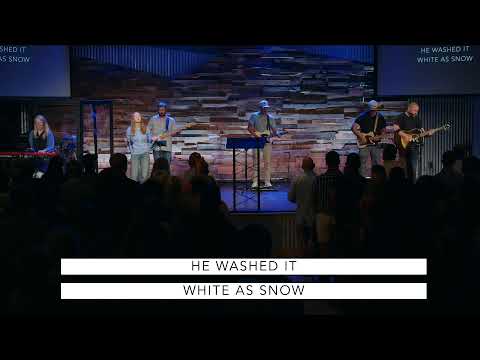
This golden moments draws directly from the sermon “Showcase - One Harbor MHC | Sunday Service” so you can keep engaging with the message all week. Read, reflect, and share it with your small group or friends.
Golden Moments Report
Sermon: "Monument or Altar" | 2 Samuel 24:18–25
Golden Moment #1: The Defining Contrast
"One king ends his time as king by building a monument to himself. The other king ends his time as king by building an altar. I think this is extremely significant. I think we're meant to notice these moments. These are moments that define really in many ways these men and define their legacy. So Saul builds a monument, but he builds up to himself out of his own pride and insecurity. Nothing can maybe bring out your insecurities like leadership. Nothing can reveal pride like success."
Why this moment works: The sermon's central thesis lands here with elegant economy. By placing Saul and David in direct contrast — one monument, one altar — the pastor gives the congregation a binary that is immediately memorable and endlessly applicable. The observation that "nothing can reveal pride like success" is a compact, aphoristic truth that carries real pastoral weight.
Rhetorically effective: This is skillful sermon architecture. The pastor has spent time establishing context and now delivers the interpretive payoff. The brevity of the contrast — one sentence for each king — gives it the feel of a verdict, not a lecture. The congregation hears it and knows exactly where the sermon is going, which creates anticipation rather than confusion.
Why congregants will share it: "Nothing can reveal pride like success" is the kind of sentence people write in their notes and repeat at dinner. The monument-versus-altar framework is portable — simple enough to remember, deep enough to apply to almost any area of life.
Golden Moment #2: The Mirror We Don't Want to See
"We do the same thing. Now obviously we do build monuments to great men and women. We do that as a culture. We do that as a country. But to be honest, Saul's monument, I think, looks a lot more like the ones we currently build. We build altars to ourselves through self-promotion, out of our insecurity and our pride. We take our possessions or our relationships or the amount of money in our bank account and we're building monuments to ourselves. None of those things are bad in and of themselves, but when those things are our efforts to define ourselves, to give us meaning, to show the world how great we are — it reveals our pride and our insecurity."
Why this moment works: The pastor makes the ancient text uncomfortably contemporary without cheapening it. The move from Saul's literal monument to our digital and social monuments is seamless and convicting. He is careful to say "none of those things are bad in and of themselves," which prevents the application from feeling like moralism and keeps the focus on the heart.
Pastorally wise: This is a pastor who knows his congregation. He doesn't name a specific sin so much as he names the posture behind the sin — insecurity and pride — which means nearly everyone in the room feels seen without feeling targeted. That's a mark of mature pastoral preaching.
Why congregants will share it: This moment names something people already sense but haven't articulated. "We build altars to ourselves through self-promotion" is the kind of phrase that surfaces in Monday morning conversations: "He said something that just stuck with me..."
Golden Moment #3: The Hamilton Question
"In the finale of Hamilton, Eliza Hamilton, reflecting on life and legacy, even after all of the incredible history-altering accomplishments, she is still haunted by a question. And the question that comes up again and again in this final act is the question: have I done enough? Against the backdrop of so much accomplishment, she asks the question, 'Have I done enough?' And Wilson brilliantly sums up how that speaks to not just her, but like us as a people — after all these great thinkers and inventors, the industrial revolution, the enlightenment, all this stuff — they tried to build a world apart from God. And even with all the amazing contributions, they've still left us as a people haunted by this question: have I done enough?"
Why this moment works: The Hamilton illustration is genuinely earned here — it's not a cultural reference dropped for relatability, but a carefully chosen example that carries the sermon's argument forward. The question "have I done enough?" becomes the sermon's emotional center of gravity, and it lands because it is both culturally resonant and personally unavoidable.
Rhetorically effective: The pastor uses the illustration to universalize the sermon's stakes. This isn't just about Saul or ancient Israel — it's about the defining anxiety of the modern age. By anchoring the illustration in a serious book by a serious thinker, he gives intellectual credibility to what might otherwise feel like a pop culture detour.
Why congregants will share it: "Have I done enough?" is a question almost everyone carries in some form. Naming it out loud — and connecting it to the monument-building impulse — gives people language for something they feel but rarely say. That's the kind of sermon moment people replay in their heads on the drive home.
Golden Moment #4: The True and Better Shepherd
"David, the shepherd king, is mindful of the innocence of the sheep and the guilt of the shepherd. But the true — as Jesus refers to himself — the good shepherd was innocent, and he's crushed so that the guilty sheep could be forgiven. John 10, he says, 'I am the good shepherd. The shepherd lays down his life for the sheep.' David here recognizes his own sin and the innocence of the people. And in a sense, it's like you can't really give David credit for going, 'Take me out, not them.' Because you want to say, 'Dude, that's pretty obvious. It's your fault all these people are dying.' But Jesus, who scripture shows us is this true and better David — what he does is the exact opposite. He, the shepherd, is the only innocent one, and we the sheep are guilty."
Why this moment works: This is the theological heart of the sermon, and it is delivered with both clarity and force. The "true and better David" typological move is exegetically sound and christologically rich. The conversational aside — "you can't really give David credit... dude, that's pretty obvious" — keeps the moment accessible without diluting the weight of what's being said.
Theologically sound: The typological reading of David as a shadow of Christ is not a homiletical trick here — it flows naturally from the text and is grounded in the shepherd imagery that runs from 2 Samuel through John 10 and Isaiah 53. The pastor is doing real biblical theology, and it shows.
Why congregants will share it: The inversion — the only innocent one crushed so the guilty could go free — is the gospel in miniature, and it is stated with unusual clarity here. People who have heard the gospel many times will feel it freshly in this moment.
Golden Moment #5: The Costly Sacrifice
"Like David, Jesus would not offer a sacrifice that cost him nothing. He would not offer a sacrifice that cost him nothing. But Jesus's sacrifice would be the costliest of them all. And because of that sacrifice, that final sacrifice, we don't have to make any more sacrifices. It is great news to me that we don't have to come to an altar today. That would be messy, right? Imagine the blood and the gore and the smell of having to cut all these animals and make all these sacrifices for sin. And we don't have to do that anymore because of what Jesus has done. He is — the scripture says — a once and for all sacrifice for our sin. Once and for all we come to his great mercy."
Why this moment works: The deliberate echo of David's refusal — "I will not offer burnt offerings to the Lord my God that cost me nothing" — applied to Jesus is a beautiful hermeneutical move. The pastor doesn't just tell the congregation what Jesus did; he shows them why it matters by connecting it to the very text they've been studying all morning.
Theologically sound: "Once and for all" is not thrown in as a platitude here — it is the logical and theological conclusion of everything the sermon has built toward. The contrast between the messy reality of Old Testament sacrifice and the finality of Christ's sacrifice makes the "once and for all" land with concrete force rather than abstract comfort.
Why congregants will share it: The moment of imaginative realism — "imagine the blood and the gore and the smell" — jolts people awake before the great comfort of "we don't have to do that anymore." The relief is felt, not just understood.
Golden Moment #6: The Answer to the Question
"So that the question of 'have I done enough?' could be answered like this: No. But he has. He has. As we prepare to come to this meal, just a few points of instruction. If you're not yet a follower of Jesus, this meal is not for you yet. But for all of us — man, I want to encourage you to take time to reflect on what we've spoken about. Don't just rush through the motions here. This is an opportunity to reflect: what am I really building with my life? Who am I really trusting? And am I mindful of the mercy and the grace of God through Jesus?"
Why this moment works: The sermon's central question — "have I done enough?" — is resolved here with three words: "No. But he has." The pastor has been building toward this moment since the Hamilton illustration, and the payoff is proportionate to the setup. The brevity is everything. He doesn't over-explain it.
Pastorally wise: Leading the congregation into Communion with this question — what am I really building with my life? — transforms the ordinance from ritual into reflection. The pastor doesn't just transition to the table; he gives the congregation something to bring with them. That's the work of a pastor who thinks about how people receive and process a sermon.
Why congregants will share it: "Have I done enough? No. But he has." is a complete gospel summary in seven words. It is the kind of thing that ends up on a sticky note on someone's mirror. The question and its answer will outlast the sermon by weeks.
A Final Word to the Pastor
The greatest overall strength of this sermon is its structural integrity. You built a single, clear framework — monument or altar — and held it all the way through without letting it collapse under the weight of too many sub-points or illustrations. Every major move in the sermon served the central question, and that kind of discipline is harder than it looks. Congregations feel it even when they can't name it.
The thread running through all six golden moments is the gospel as lived reality rather than theological abstraction. Again and again, you pushed mercy out of the realm of concept and into the realm of experience — David's mercy was "a lived reality," the Hamilton question is a real anxiety people carry, the Communion table is a real moment of reflection. You are a pastor who preaches theology incarnationally, and that is a genuine gift.
The instinct to lean into is your use of contrast. Monument versus altar. Saul versus David. "Have I done enough?" versus "He has." You think in pairs, and that binary clarity gives your congregation handles they can hold onto long after the sermon ends. Keep trusting that instinct — it is doing significant work in your preaching.
You are clearly a pastor who loves his people, loves the text, and has done the hard work of thinking about how those two things meet. This sermon will stay with people. Keep preaching.