
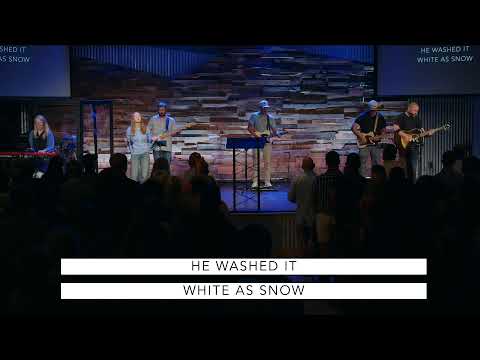
This guest blog post draws directly from the sermon “Showcase - One Harbor MHC | Sunday Service” so you can keep engaging with the message all week. Read, reflect, and share it with your small group or friends.
Monuments or Altars: What Are You Really Building With Your Life?
Meta Description: Pastor [Name] unpacked David's final act as king—and the profound question it raises: Are you building a monument to yourself or an altar to God's mercy? URL Slug: monuments-or-altars-what-are-you-building Featured Image: A wide-angle image of an ancient stone altar at golden hour, or a split image contrasting a grand monument with a simple, rugged altar—evoking the contrast at the heart of the message.
What do you want to be known for? It sounds like a question for a life coach or a retirement speech. But this past Sunday, Pastor [Name] showed us that it's actually one of the most urgent questions in all of Scripture—and he found it hiding in one of the Bible's most overlooked passages.
Wrapping up our series in 2 Samuel, he walked us through the final recorded act of King David, and the contrast he drew between David and his predecessor Saul was one of the most memorable and convicting things many of us have heard in a long time.
Two Kings. Two Final Acts. Two Very Different Legacies.
Pastor [Name] set the scene with honesty: this isn't the kind of passage that makes the highlight reel. It's not David and Goliath. It's not a battle won or a psalm written. It's a real estate transaction and a sacrifice. But the significance, he argued, is enormous—especially when placed alongside what Saul did at the end of his own reign.
In 1 Samuel 15:12, we read that Saul, at a defining moment of his kingship, "set up a monument for himself." His legacy-defining act was a tribute to his own greatness.
David's final act couldn't be more different. After sinning through a prideful census and watching the consequences unfold, David pleaded with God in 2 Samuel 24:17:
"Behold, I have sinned, and I have done wickedly. But these sheep, what have they done? Please let your hand be against me and against my father's house."
Then, directed by the prophet Gad, David went to purchase a threshing floor to build an altar to the Lord. When the owner offered to give it to him for free, David refused with words that stopped the room:
"I will not offer burnt offerings to the Lord my God that cost me nothing."
He paid for it himself. He built the altar. And he made the sacrifice.
The Monument We're All Tempted to Build
Pastor [Name] didn't let us observe this contrast from a safe distance. He turned it directly on us.
"In many ways, we're all kind of like kings," he said. "We've all got our little mini kingdoms—our little mini castles, our little mini worlds." And in those worlds, we're all building something. The question isn't whether we're building—it's what.
He pointed to the deeply human pull toward self-promotion: the way we use possessions, relationships, achievements, and even social media to construct monuments to our own significance. None of those things are inherently bad, he was careful to note. But when they become our attempt to define ourselves, to prove our worth, to show the world how great we are—we're building a monument, just like Saul.
And monuments, he reminded us, never satisfy. Referencing Andrew Wilson's book The Remaking of the World, Pastor [Name] pointed to the finale of the musical Hamilton, where Eliza Hamilton—after a lifetime of history-altering accomplishment—is still haunted by one question: Have I done enough?
"If you're living to build a monument to yourself," he said, "you too will be haunted by that question. And the answer will always be no. Because it's never enough."
The Altar David Chose—and What It Points To
In Romans 12:1, the Apostle Paul writes:
"I appeal to you therefore, brothers, by the mercies of God, to present your bodies as a living sacrifice."
Pastor [Name] pointed out that this is altar language. Paul's entire appeal—his whole call to a transformed life—is grounded not in human effort or achievement, but in the mercy of God. David understood this. His life was defined not by his victories, but by the moments he experienced God's mercy. The mercy that met him after his worst failures. The mercy that kept him when he deserved wrath.
David's altar wasn't just a religious act. It was a testimony to the mercy that had shaped his entire life.
The King of Kings Who Built Both
Here's where the message took a breathtaking turn. Pastor [Name] asked: what did Jesus build? A monument or an altar?
The answer, he showed us, is both—and in the most unexpected way.
In Matthew 16:18, Jesus says: "I will build my church, and the gates of hell will not prevail against it." That church is us. We are the monument Jesus is building—living testimonies to his grace and power.
But Jesus also built an altar. He carried a cross up a hill. And in John 2:19, he pointed to it in advance: "Destroy this temple, and in three days I will raise it up." He was speaking, the Gospel tells us, about his own body.
Pastor [Name] brought it home with Isaiah 53, written hundreds of years before the cross:
"He was pierced for our transgressions; he was crushed for our iniquities; upon him was the chastisement that brought us peace, and with his wounds we are healed. All we like sheep have gone astray... and the Lord has laid on him the iniquity of us all."
David, the shepherd king, was willing to take the blame for his sheep. But Jesus—the Good Shepherd—was the only truly innocent one, and he was crushed so that the guilty sheep could go free.
"David didn't know how good God's mercy was," Pastor [Name] reflected, "or how far it would go."
What Are You Building?
As we closed in Communion, Pastor [Name] invited us to sit with the question at the center of the message. Not in a morbid way, but in a clarifying one.
When your life's final chapter is written, what will define it? A monument to your own greatness—always chasing, never enough? Or an altar that points to the mercy of a God who gave everything?
For those who are already following Jesus, this is a call to examine what we're quietly constructing with our daily choices. For those still searching, the invitation was clear and warm: true fulfillment isn't found in building a monument to yourself. It's found in trusting the one who was torn down so we could be built up.
The question of "Have I done enough?" has already been answered—not by us, but by him.
If you weren't able to join us this Sunday, we'd encourage you to watch the full message on our website or YouTube channel. And if this message stirred something in you—whether questions, conviction, or a desire to talk with someone—our team would love to connect with you. Reach out through the church office or stop by after any Sunday service.
Social Media Excerpt (Facebook/Instagram): Two kings. Two final acts. One built a monument to himself. The other built a costly altar to God's mercy. This Sunday, Pastor [Name] asked us a question we're still thinking about: which one are you building? The answer matters more than we realize. 🙏
Hashtags: #MonumentsOrAltars #KingDavid #GodsМercy #SundaySermon #OneHarborChurch