
This golden moments draws directly from the sermon “Showcase - Calvary Church // New Community 11:00am Service 08/23/2026” so you can keep engaging with the message all week. Read, reflect, and share it with your small group or friends.
Golden Moments Report
Golden Moment #1: The Epidemic No One Talks About in Church
"The first thing that God said was not good, the first thing in the Bible we read about that's not good is loneliness. The Bible said it is not good that man should be alone. And it wasn't just about marriage. It's how God made us. It's how God created us. He made us for community. I saw the surgeon general declared that loneliness is actually an epidemic. He called it a health epidemic. The health effects are staggering. One study compared it to smoking a pack of cigarettes every day. Premature death rates climb by more than 60%. There's a 29% increase in the risk of heart disease, a 32% increase in the risk of stroke for older adults. There is a 50% increase in developing dementia. And people who feel lonely are more than double the risk of developing depression."
Why this moment works: The pastor opens by anchoring a contemporary cultural crisis directly in the opening chapters of Scripture — a move that immediately establishes relevance without sacrificing biblical authority. Stacking the medical statistics in rapid succession creates cumulative weight, moving the listener from intellectual awareness to visceral concern. This is a masterclass in sermon introduction: you feel the problem before you're offered the solution.
Pastorally wise: By immediately clarifying that loneliness "isn't just primarily about being married or single," the pastor disarms a common deflection and widens the tent. He's not preaching to a demographic — he's diagnosing a universal human condition. That pastoral instinct to pre-empt the listener's self-exemption is wise and generous.
Why congregants will share it: The surgeon general statistic and the cigarette comparison are the kind of data points people repeat at lunch. More importantly, the move from Genesis to the CDC gives listeners a framework — God knew this first — that reframes their loneliness as something God sees and has always cared about.
Golden Moment #2: Four Metaphors, One Message
"He's like throwing all these metaphors at us. Sort of like a nation. It's sort of like a body. It's sort of like a family. It's sort of like a building. And every metaphor — four metaphors, one message. And here's the message: you were out, but now you're in. That's what he's saying. It's like a nation and you were out. You were aliens. You were immigrants. You weren't a citizen. And now you're in the nation. It's kind of like a body. You were divided, but now you're part of a whole. It's kind of like a family. You weren't in that family, but now you've been adopted in that family. It's kind of like a building. You're one piece, and God is putting you in a building, and he's building this great building."
Why this moment works: This is exegetical clarity at its best. Rather than walking through each metaphor in isolation, the pastor synthesizes them into a single, repeatable thesis — you were out, but now you're in — and then demonstrates how every metaphor proves that same point. The parallel structure ("It's like a nation... It's kind of like a body... It's kind of like a family...") creates a rhythmic momentum that helps the listener hold all four images at once.
Theologically sound: Paul's four metaphors in Ephesians 2 are genuinely doing the same theological work, and the pastor correctly identifies that work: radical inclusion through grace. Naming the unifying thread rather than simply cataloguing the metaphors shows real exegetical maturity. The congregation leaves understanding the passage, not just having heard it.
Why congregants will share it: "You were out, but now you're in" is the kind of distillation people write in the margins of their Bibles. It's short enough to memorize, theologically precise, and emotionally resonant for anyone who has ever felt like they didn't belong.
Golden Moment #3: The Poem That Tells the Truth About Church
"It's one thing to say I love somebody I can't see. But the Bible says it's loving the people you can't see that get really hard, right? I heard a poem years ago. I learned it. 'To live above with those we love, that will be glory. But to live below with those we know, well, that's another story.' And the reality is the church is full of imperfect people. Some of you have been hurt by churches. Some of you have been disappointed by churches. I understand that because the church is full of imperfect people. But I just want you to understand something. I want you to see the big picture. And the big picture is this: if you love Jesus, you're going to love his family. And if you don't love his family, then you probably, you know, something is wrong in your relationship with Jesus."
Why this moment works: The poem lands like a knowing wink — funny enough to disarm, honest enough to convict. The pastor doesn't minimize the real pain people carry from church wounds, but he refuses to let that pain become a theological exit ramp. The pivot from "I understand" to "but here's the big picture" is handled with pastoral dexterity: he earns the hard truth by first acknowledging the real hurt.
Rhetorically effective: The poem does heavy lifting in just two lines. It names the fantasy (loving people we can't see is easy) and the reality (loving people we can see is the actual test) without a single theological term. Then the pastor translates that into a direct diagnostic: if you love Jesus but not his family, something is off. That's a courageous thing to say, and the poem softens the landing just enough.
Why congregants will share it: That poem will be quoted this week. It's the kind of couplet that gets texted to a friend who said "I love Jesus but not the church." It's gentle enough to share without starting a fight, and pointed enough to make someone think.
Golden Moment #4: Explaining Salvation Like a Third Grader
"Sometimes when I'm trying to explain something to somebody, I'll say, 'Explain to me like I'm in third grade.' So we teach kids in vacation Bible school the ABCs of the gospel. A stands for admit — I got two A's on this one — admit that I'm a sinner and acknowledge Jesus's lordship. B is believe in him with all your heart. You believe that God sent his one and only son into the world, that Jesus is the son of the living God, that he lived a perfect life, that he is the righteousness of God in human flesh, that he died on a cross in your place for your sins, that God raised him from the dead, and that if anyone will turn from their sin and place their faith in Jesus, their sins will be forgiven and they are placed in the family of God. And what's C? Confess that Jesus is Lord. You believe it in your heart, but if you believe something in your heart, you'll say it with your mouth. And if you're not willing to say something with your mouth, it's probably because you don't believe it in your heart."
Why this moment works: The ABC framework is a well-worn tool, but the pastor's execution elevates it. The full doctrinal weight packed into the "B" — the incarnation, the perfect life, the substitutionary atonement, the resurrection — ensures this is not a shallow gospel presentation. It is complete, careful, and accessible all at once. The closing logic on "C" is particularly sharp: the connection between mouth and heart is drawn from Romans 10 and delivered as a diagnostic rather than a guilt trip.
Theologically sound: This is a complete articulation of the gospel in under two minutes: human sinfulness, Christ's identity and work, the resurrection, and the response of repentance and faith. The pastor doesn't trade theological substance for accessibility — he achieves both, which is genuinely difficult to do.
Why congregants will share it: Parents and grandparents will use this framework with their children this week. The "if you're not willing to say it with your mouth, it's probably because you don't believe it in your heart" line is the kind of quietly convicting observation that lingers long after the sermon ends.
Golden Moment #5: Stop the Chariots
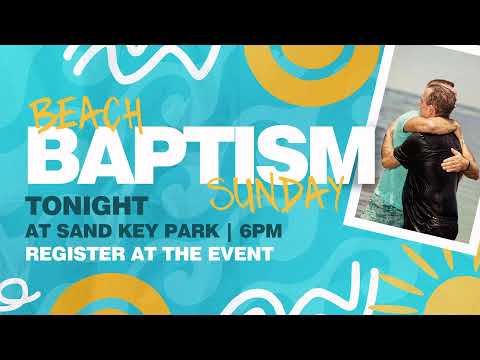
"I want to say to you what was said to Paul: don't delay. What are you waiting for? Get up and be baptized. Stop the chariots. Stop the chariots. You say, 'Well, we have dinner reservations tonight.' Change them. I mean, serious, change them. You can eat tomorrow. You'll be fine. It'll be all right. I'm watching the ball game. Somebody will win, somebody will lose. It's not going to matter. But obeying Jesus — you'll remember that the rest of your life and in all eternity. So if you're here today, stop the chariots, call somebody, change the plan, say, 'I got to be there tonight.' And be baptized."
Why this moment works: "Stop the chariots" is the kind of recurring phrase that becomes a sermon's signature. The pastor introduced it from the Acts 8 account of Philip and the Ethiopian eunuch and then weaponizes it as a call to action — and it works because the biblical image is already vivid in the listener's mind. The humor about dinner reservations and the ball game is perfectly calibrated: light enough to get a laugh, pointed enough to cut through every excuse a person might be rehearsing in their seat.
Rhetorically effective: The escalating specificity of the excuses — dinner reservations, the ball game — makes this moment feel like the pastor is reading the room. He's not speaking in abstractions; he's naming the actual mental negotiations people are having. And then the contrast lands hard: "Somebody will win, somebody will lose. It's not going to matter. But obeying Jesus — you'll remember that the rest of your life."
Why congregants will share it: "Stop the chariots" is a phrase that will follow people out of the building. It's already biblical, already visual, and now it's been personalized. People who were baptized that evening will use this phrase to describe their decision for years.
Golden Moment #6: The Building That Will Last Forever
"If you go to Barcelona, Spain, there is the Sagrada Família, which is a basilica that has been under construction for 144 years. Started in 1882 and they finished it this year, 2026. So you can go. It's about time, right? But there's one more beautiful than that. And when that one's dust, let me tell you, the one God's building is going to last forever. And you're in it. You're a part of it. He's been building it for 2,000 years now. And he's going to keep building it. It's being built today. He's putting more stones into the building today. More rocks in the building. He's building it. And you that are already in it, you're growing. You're growing. And one day in heaven, we're going to look back and say, 'Can you believe what God did?'"
Why this moment works: This illustration earns its place at the sermon's climax. The Sagrada Família is a universally recognizable symbol of human ambition and patience — 144 years of construction — and the pastor uses it to make the church's 2,000-year story feel not ancient and dusty, but ongoing and alive. The shift from "when that one's dust" to "the one God's building is going to last forever" is a genuinely beautiful rhetorical turn.
Theologically sound: The image of God as the active builder — "He's putting more stones in today" — keeps the congregation from feeling like passive recipients of a finished project. They are in the building, being built, right now. This reflects the present-tense, passive-voice grammar the pastor correctly identified earlier in the message: being built together is happening continuously.
Why congregants will share it: "One day in heaven, we're going to look back and say, 'Can you believe what God did?'" is the kind of closing image people carry home. It reframes the ordinary experience of attending church as participation in something eternal — and that reframe is the gift a great sermon gives.
A Final Word to the Pastor
The greatest overall strength of this sermon is its structural clarity married to pastoral warmth. The three-point framework (belong, become, bless) is simple enough to remember but never simplistic in execution. You consistently moved from the framework to the Scripture and back to the congregation's real lives — which is the essential motion of good expository preaching.
The thread that ties these six golden moments together is belonging. Every strong moment in this sermon — whether it's the loneliness statistics, the four metaphors, the ABC gospel, the baptism urgency, or the Sagrada Família — is ultimately answering the same question: Is there a place for me? You preached one sermon, not six points. That coherence is a gift, and it's not accidental.
The instinct you should continue leaning into is your ability to hold humor and weight in the same sentence. The dinner reservations line, the poem about living below with those we know, the third-grade explanation — these moments work because you trust the congregation enough to laugh with them before asking something serious of them. That trust is rare, and it makes the hard calls to obedience feel like invitations rather than demands.
You are building something in your congregation that mirrors exactly what you preached: a community being put together and built up, stone by stone. Keep preaching with this kind of clarity, this kind of warmth, and this kind of courage to call people to immediate obedience. The chariots are stopping. Keep preaching.