
This small group discussion guide draws directly from the sermon “Showcase - Calvary Church // New Community 11:00am Service 08/23/2026” so you can keep engaging with the message all week. Read, reflect, and share it with your small group or friends.
Small Group Discussion Guide
"Belong, Become, Bless: Finding Your Place in God's Family"
Based on Ephesians 2:19–22
A Note to Facilitators: Welcome! This guide is designed to help any leader — whether you've led groups for years or this is your first time — facilitate a meaningful conversation. You don't need to have all the answers. Your job is to create space for honest sharing and help your group connect Sunday's message to their real lives. Estimated total time: 75–90 minutes. Feel free to adjust based on your group's pace and needs.
OVERVIEW
This week's sermon explored what it truly means to belong to God's family — the church. Drawing from Ephesians 2:19–22, the message reminded us that God has gone to extraordinary lengths to bring us in from the outside and make us members of his household. Using four vivid metaphors (a nation, a body, a family, and a building), the sermon unpacked three invitations God extends to every person: to belong to his family, to become more like Jesus, and to bless others with our lives.
ICEBREAKER (5–10 minutes)
Before diving into the sermon content, start here to warm up the group and help everyone feel comfortable sharing.
Opening Question: "Describe a time in your life when you felt like you truly 'belonged' somewhere — a team, a neighborhood, a friendship group, a family gathering. What made that feeling of belonging so meaningful?"
[Leader Tip] This question is intentionally light and accessible — it invites everyone to share, regardless of their spiritual background. Let two or three people respond before moving on. If your group is quiet, share your own brief answer first to model vulnerability.
SCRIPTURE READING (5 minutes)
Ask a volunteer to read the passage aloud while others follow along. Encourage the group to listen for words or phrases that stand out to them.
Key Passage: Ephesians 2:19–22 (NIV)
"So then, you are no longer foreigners and strangers, but fellow citizens with God's people and also members of his household, built on the foundation of the apostles and prophets, with Christ Jesus himself as the chief cornerstone. In him the whole building is joined together and rises to become a holy temple in the Lord. And in him you too are being built together to become a dwelling in which God lives by his Spirit."
Supporting Passage: Ephesians 2:13 (NIV)
"But now in Christ Jesus you who once were far away have been brought near by the blood of Christ."
Supporting Passage: Acts 2:41 (NIV)
"Those who accepted his message were baptized, and about three thousand were added to their number that day."
Brief Context for Facilitators: Paul wrote Ephesians to a church made up of both Jewish and Gentile (non-Jewish) believers. In the ancient world, Gentiles were considered complete outsiders to God's covenant people. Paul's radical message was that in Christ, the dividing wall has been demolished — everyone who trusts in Jesus is now a full member of God's family, not a second-class citizen. This would have been stunning and countercultural to its original readers.
DISCUSSION QUESTIONS (30–45 minutes)
Work through these questions at a pace that fits your group. You don't need to cover every question — choose the ones that seem most relevant to your group's needs. Questions are organized from lighter/observational to deeper/applicational.
THEME 1: You Were Out — Now You're In
(Ephesians 2:19 | "Belonging")
1. The sermon opened with a striking statistic: loneliness has been declared a public health epidemic, with effects comparable to smoking a pack of cigarettes a day. Why do you think loneliness is so widespread today, even in a world more "connected" than ever before?
[Leader Tip] This question often opens up rich, honest conversation. Some group members may share personal experiences of loneliness — that's a gift to the group. Normalize the feeling rather than rushing to fix it. The goal here is empathy and connection, not quick answers.
Optional follow-up if discussion stalls: "Have you ever been surprised by loneliness — in a season of life when you expected to feel connected?"
2. The pastor used four metaphors Paul gives in Ephesians 2 to describe the church: a nation, a body, a family, and a building. Which of those four word pictures resonates most with you personally, and why?
3. The sermon made the point that every one of those four metaphors carries the same message: "You were out, but now you're in." What do you think it would have felt like to be one of the Gentile believers in Ephesus hearing Paul's letter read aloud for the first time — learning that you were no longer a foreigner or stranger, but a full member of God's household?
[Leader Tip] Help your group make the ancient text feel personal. You might ask: "Is there any part of your own spiritual journey that feels like moving from 'outsider' to 'family member'?"
THEME 2: Only Jesus Can Put You In
(Ephesians 2:20–21 | The Cornerstone)
4. The sermon emphasized that there is only one way into God's family: through a personal relationship with Jesus Christ. In your own words, how would you explain to someone who has never heard this before what it means to be "in Christ"?
[Leader Tip] This is a great question for groups with both new and mature believers. Newer believers may share fresh, unfiltered ways of explaining the gospel that can be encouraging to everyone. Mature believers, resist the urge to over-correct or theologize — celebrate simple, heartfelt explanations.
Optional follow-up: "The pastor used the ABC framework — Acknowledge, Believe, Confess. Is that a helpful way to think about it? What would you add or say differently?"
5. The sermon described Jesus as the "cornerstone" of the church — the stone that, in ancient construction, determined whether every wall would be straight or crooked. What are some things people today tend to build their lives on instead of Jesus? What happens when those foundations shift?
6. The pastor talked about why the church recites ancient creeds like the Nicene Creed — as a way of grounding the congregation in foundational truth, especially in a time of spiritual confusion. How do you personally stay grounded in what you believe about Jesus? What spiritual practices or habits help keep your "foundation" solid?
[Leader Tip] Some group members may not have a strong answer to this — and that's okay. This question is as much an invitation as it is a discussion prompt. Be ready to share a few simple, practical examples: regular Bible reading, a consistent prayer life, being in a group like this one, journaling, etc.
THEME 3: Being Built Together
(Ephesians 2:21–22 | "Becoming")
7. Ephesians 2:21–22 uses the phrase "being built together" — a present-tense, ongoing action. The sermon pointed out that spiritual growth is not a one-time event but a continuous process. Where do you sense God is currently "under construction" in your life? What is he working on in you right now?
Optional follow-up: "What has helped you grow the most spiritually in the past year? Was it a person, a practice, a season of difficulty, or something else?"
8. The sermon made a bold claim: "If you love Jesus, you're going to love his family. And if you don't love his family, something is wrong in your relationship with Jesus." That's a challenging statement. How do you respond to it? Is it possible to genuinely love Jesus while keeping the church at arm's length?
[Leader Tip] This question may surface real hurt. Some people in your group may have been genuinely wounded by a church or church leader. Create space for that without dismissing the pain. You can acknowledge: "The church is made up of imperfect people, and real harm has been done. And yet Paul still calls us to be built together — how do we hold both of those truths?"
THEME 4: Built to Bless
(Ephesians 2:21–22 | "Blessing")
9. The sermon closed with the idea that God works in us so he can work through us — that we are not just recipients of grace but channels of it. What does it look like practically for you to "bless others" with your life in this current season? Who are the people around you that God might be calling you to serve or reach?
10. The pastor referenced the Sagrada Família in Barcelona — a cathedral under construction for 144 years, finally completed in 2026. He then said God's building — the church — has been under construction for 2,000 years and will last forever. How does it change your perspective on your role in the church to think of yourself as a living stone in something God has been building for two millennia and will continue for eternity?
PERSONAL APPLICATION (10–15 minutes)
These questions are for quieter, more personal reflection. You may choose to have people journal individually for a few minutes before sharing, or simply invite anyone who wants to share to do so.
Reflect on the three invitations from Sunday's message:
1. BELONG: Have you fully embraced your place in God's family — not just attending church, but being genuinely connected to a community of believers? If not, what is one step you could take this week to move toward deeper belonging?
2. BECOME: The sermon reminded us that spiritual growth is ongoing — we are always "under construction." What is one area of your life where you sense God is calling you to grow or change? Who in your life could walk alongside you in that process?
3. BLESS: God works in you so he can work through you. Is there someone in your life — a neighbor, coworker, family member, or friend — who needs to experience the love of God's family? What would it look like to take one concrete step toward them this week?
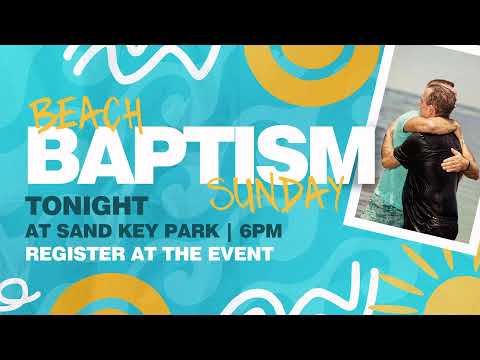
4. BAPTISM: The sermon placed a strong emphasis on baptism as the first public act of obedience after trusting Christ. If you have trusted Jesus but have never been baptized as a believer, what has held you back? Is God stirring something in your heart about that step?
5. CONNECTION: The church encouraged everyone to get connected in a small group and to serve on a team. If you're not yet in a group or serving somewhere, what feels like the right next step for you? How can this group help you take it?
THIS WEEK'S CHALLENGE
Choose one (or more) of the following to put Sunday's message into practice:
- 📖 Read Ephesians 2:1–22 in full — the entire chapter gives powerful context for the passage we studied. Notice how many times the phrase "in Christ" or "in him" appears.
- 🤝 Reach out to one person you know who seems lonely or disconnected and invite them to coffee, a meal, or to join your group.
- ✍️ Write down your own faith story in 3–5 sentences: Where were you before Christ? How did you come to trust him? How has your life changed? Be ready to share it with someone.
- 🙋 Take a step toward belonging, becoming, or blessing — sign up for a group, join a serve team, or stop by the Connection Hub if you haven't already.
- 🙏 Pray daily this week for one person in your life who doesn't yet know Jesus. Ask God to open a door for you to share your faith with them.
PRAYER FOCUS (5–10 minutes)
Close your time together in prayer. Here are suggested topics to guide your group:
Pray together for:
Those who are lonely — that God would lead them into genuine community, and that our church and this group would be a place where the lonely find family.
Those who are spiritually "under construction" — that God would do his work in each person in your group, and that you would have the courage to let him.
Those who have not yet trusted Christ — think of specific people by name. Ask God to open their hearts and to give you the right words at the right time.
Anyone in your group who is taking a step of obedience — whether that's baptism, joining a group, serving, or simply returning to church after a long absence. Ask God to encourage and strengthen them.
Your church community — that it would truly be a family: a place where foreigners become citizens, strangers become friends, and the lost find their way home.
Suggested closing prayer (for facilitators who want a guide):
"Father, thank you that you didn't leave us as strangers and foreigners. You went to extraordinary lengths — the cross, the resurrection, the gift of the Holy Spirit — to bring us into your family. Help us to receive that fully. Help us to belong, not just in attendance but in heart. Help us to become more like Jesus, trusting that you are at work in us even when we can't see it. And help us to bless others — to be the kind of people whose lives point others to you. We pray for the people around this circle, and for the people they love who don't yet know you. Do what only you can do. In Jesus' name, amen."
OPTIONAL DEEP DIVE (For groups wanting to go further)
These bonus questions are for groups with extra time or those who want to explore the text more deeply. They work well for groups with more biblical background.
Deep Dive 1: The Metaphors of the Church
Read Ephesians 2:14–22 together and identify all four metaphors Paul uses for the church (nation/citizens, body, family/household, building/temple). Then discuss:
- What does each metaphor emphasize about the church that the others don't?
- Which metaphor do you think is most neglected or misunderstood in how Christians typically think about church today?
- Paul was writing to a community where Jews and Gentiles — groups with deep historical hostility — were being called to be one family. Where do you see similar dividing walls in the church today? What would it look like to let Christ be the cornerstone that reconciles those divisions?
Deep Dive 2: Baptism in the Book of Acts
The sermon walked through five baptism accounts in Acts: Acts 2:38–41, Acts 8:12, Acts 8:36–38, Acts 16:30–33, and Acts 22:16.
Choose one or two of these passages to read together and discuss:
- What stands out to you about the timing of baptism in these stories? What does the immediacy suggest about how the early church understood it?
- The sermon said baptism is "your first step of obedience" and "a public confession of faith." How does understanding baptism as an act of obedience (rather than just a ritual or tradition) change how you think about it?
- Is there anything about the way the early church practiced baptism that you think the modern church has lost or should recover?
Deep Dive 3: The Cornerstone
The image of Jesus as the "cornerstone" comes from Psalm 118:22 — a passage Jesus himself quoted (Matthew 21:42) and that Peter referenced in 1 Peter 2:4–8. Read 1 Peter 2:4–10 together:
"As you come to him, the living Stone — rejected by humans but chosen by God and precious to him — you also, like living stones, are being built into a spiritual house to be a holy priesthood, offering spiritual sacrifices acceptable to God through Jesus Christ... But you are a chosen people, a royal priesthood, a holy nation, God's special possession, that you may declare the praises of him who called you out of darkness into his wonderful light." (1 Peter 2:4–5, 9)
Discuss:
- Peter calls believers "living stones." What does it mean to you that you are not just a passive observer of what God is building, but an active, living part of it?
- Peter also says we are "called out of darkness into his wonderful light." How does that description connect to Paul's language in Ephesians 2 about being brought from "far off" to "near"?
- What does it mean for your daily life to be part of "a royal priesthood" and "a holy nation"?
QUICK REFERENCE: SERMON OUTLINE
| Point | Theme | Key Verse |
|---|---|---|
| 1. Belong | God wants you in his family | Ephesians 2:19 |
| 2. Become | God is building you up | Ephesians 2:21–22 |
| 3. Bless | God works through you | Ephesians 2:21–22 |
The one-sentence summary of Ephesians 2:19–22: God has brought you from the outside in — from stranger to citizen, from orphan to family member, from a pile of rubble to a living stone in his eternal temple — and he did it all through Jesus.
ADDITIONAL SCRIPTURE FOR PERSONAL STUDY
For those who want to keep exploring during the week:
- Romans 8:15–17 — On being adopted into God's family
- 1 Corinthians 12:12–27 — The church as a body, each part needed
- 1 Peter 2:4–10 — Living stones, a holy nation
- Psalm 68:6 — "God sets the lonely in families"
- Hebrews 10:24–25 — Why gathering together matters
- John 1:12–13 — How we become children of God
This guide was prepared for small group use at Calvary Church, Clearwater. Permission granted to print and distribute within your group.
Questions? Contact your campus small groups pastor or stop by the Connection Hub.