
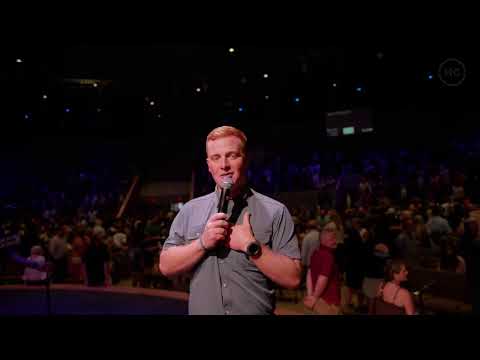
This small group deep study guide draws directly from the sermon “Showcase - Harris Creek Sunday Morning | 9a |” so you can keep engaging with the message all week. Read, reflect, and share it with your small group or friends.
DEEP-DIVE SMALL GROUP DISCUSSION GUIDE Based on: Dead, Disobedient, and Deserving — But God Primary Text: Ephesians 2:1–10 Time: 90–120 minutes
LEADER PREPARATION
Overview
This session explores one of the most theologically rich passages in the New Testament — Paul's declaration that we were spiritually dead before God, and that God, in his mercy and grace, made us alive in Christ. The sermon moved through three movements: who we were (dead, disobedient, following our desires, deserving wrath), what God did (made us alive by grace through faith), and how we should live in response (walking in the good works God prepared in advance for us). Your group will go deeper into each of these movements, exploring the original language, the cultural world of Ephesus, and the transforming implications for everyday life.
Big Idea
You were not just struggling or wandering — you were spiritually dead, and the only reason you are alive is because God, who is rich in mercy, found you and raised you.
Essential Background
- Paul wrote Ephesians around 62 AD while under house arrest in Rome. He is writing to a church he planted, people he deeply loves, explaining the theological foundations of their new life in Christ.
- Ephesus was a major cosmopolitan city — wealthy, religiously plural, and morally complex. The believers there came from diverse backgrounds, many from pagan religious practices. Paul's language about being "dead in transgressions" would have resonated with people who knew what it meant to be enslaved to spiritual forces and desires.
- The structure of Ephesians 2:1–10 is intentional: verses 1–3 describe the human condition in stark, layered terms; verses 4–9 pivot on the phrase "But God" to describe divine rescue; verse 10 lands on the purpose — good works prepared in advance. Understanding this flow is essential for the discussion.
Preparation Checklist
- Read Ephesians 2:1–10 in at least two translations (ESV and NIV recommended)
- Review the word studies below — read them aloud to yourself so they feel natural
- Think through your own honest answers to the discussion questions before the group meets
- Pray for each group member by name, asking God to bring conviction and gratitude
Facilitator Encouragement
You do not need to be a theologian to lead this discussion well. Your job is to ask good questions and create space for your group to think together. The Holy Spirit does the real work. Trust the text, trust your group, and trust that God wants them to encounter something real tonight.
OPENING (5–10 minutes)
Icebreaker Question: Think of a time you received something you clearly did not deserve — a second chance, unexpected kindness, or unearned generosity. What did that feel like, and how did it change the way you related to the person who gave it?
Allow 2–3 people to share briefly. This sets up the emotional and relational groundwork for the entire study.
TEACHING TIME (15–20 minutes)
Historical & Cultural Context (5–7 minutes)
Paul planted the church at Ephesus on his second and third missionary journeys (Acts 18–19). Ephesus was one of the largest cities in the Roman Empire — a hub of trade, religion, and culture. The city was home to the Temple of Artemis, one of the Seven Wonders of the Ancient World, and was deeply immersed in spiritual practices, mystery religions, and idol worship.
When Paul writes that they "followed the ways of this world and the ruler of the kingdom of the air," his readers would have immediately understood this as a reference to spiritual powers they had personally encountered and, in many cases, previously worshipped. This was not abstract theology — it was their autobiography.
Also worth noting: Paul is writing from prison. He's under house arrest in Rome, uncertain of his future, and yet he writes some of his most soaring theological prose from that place. The letter to the Ephesians contains no hint of bitterness or despair — only wonder at what God has done. That context makes the "But God" of verse 4 even more remarkable.
Key Word Studies (5–7 minutes)
"Dead" — nekros (Greek) The word Paul uses is the ordinary Greek word for a corpse — physical, biological death. He is not using a metaphor for weakness or sickness. He is saying: spiritually, you were a corpse. A corpse cannot respond, cannot reach out, cannot choose. This is why salvation must be entirely God's initiative — the dead cannot save themselves.
"Walked" — peripateō (Greek) This word appears twice in the passage (verses 2 and 10) and is the same Greek word both times. In verse 2, you walked in your transgressions. In verse 10, you are called to walk in the good works God prepared. Paul is making a deliberate contrast: you were walking one direction; now you walk another. The Christian life is not a static position — it is a direction of movement.
"Workmanship" (or "masterpiece") — poiēma (Greek) This is the root word from which we get the English word poem. It refers to something crafted with intention, skill, and care — a work of art. Paul is saying that you, as a believer, are God's creative work. Not a mass-produced item, but something God made with purpose. And the purpose is stated immediately: to walk in good works prepared in advance.
Important Cross-References (3–5 minutes)
- Romans 5:6–8 — "While we were still sinners, Christ died for us." Reinforces the timing: God did not wait for us to get better. He acted while we were dead and helpless.
- John 11:38–44 (Lazarus) — A vivid narrative picture of resurrection from death. Lazarus did not contribute to his own resurrection. Jesus called; Lazarus came. This is the imagery behind Paul's language in Ephesians 2.
- James 2:26 — "As the body without the spirit is dead, so faith without deeds is dead." James and Paul are not in contradiction — they are addressing different errors. Paul corrects those who think works save; James corrects those who think faith requires no response.
- Titus 3:4–7 — Nearly parallel to Ephesians 2, emphasizing that God saved us "not because of righteous things we had done, but because of his mercy."
SCRIPTURE READING & OBSERVATION (10–15 minutes)
Read Ephesians 2:1–10 aloud. Consider having one person read verses 1–3, a second person read verses 4–7, and a third read verses 8–10. Then read it again from a second translation.
Observation Questions (these are not discussion questions — just noticing together):
- What words or phrases are repeated in this passage?
- What does Paul say God is rich in? What does that word "rich" suggest about the quantity of what God offers?
- Count the verbs in verses 5–6 that describe what God has done. Who is doing the action in each one?
- What surprises you or raises a question as you read?
DEEP DIVE DISCUSSION (40–50 minutes)
Section A: Understanding the Text
1. Paul stacks four descriptions of the human condition in verses 1–3: dead, disobedient, following desires, and deserving wrath. Why do you think he layers these rather than just saying "you were sinners"? What does each layer add to the picture?
[Leader Tip: If the group focuses only on "dead," gently push them toward the other three. The sermon emphasized this layering intentionally. Ask: "What does 'deserving wrath' add that 'dead' alone doesn't say?" This question helps the group feel the weight of the human condition before the pivot of verse 4.]
2. The word peripateō ("walked") appears in both verse 2 and verse 10. What does it mean for the Christian life to be described as a walk rather than, say, a position or a status? What does that imply about how faith works day-to-day?
3. Verse 4 begins with "But God" — two of the most pivotal words in the Bible. What had to be true about God's character for him to respond to human deadness with mercy rather than judgment? What does this reveal about who God is?
[Leader Tip: This is a theological character question. Encourage the group to stay in the text — the passage itself says God is "rich in mercy" and acts "because of his great love." If discussion gets shallow, ask: "What would justice have looked like here? What did mercy cost?"]
4. Verses 8–9 say salvation is "not from yourselves" and "not by works." But verse 10 immediately calls us to good works. How do you hold those two things together without collapsing into either "works don't matter" or "I have to earn this"?
Section B: Theological Connections
5. The sermon drew a vivid contrast: a dead water buffalo cannot respond to anything — it cannot be directed, chased, or moved. How does this image reshape your understanding of your own conversion? What does it mean that God pursued you when you were unresponsive?
6. The word poiēma — translated "workmanship" or "masterpiece" — is where we get the English word "poem." A poem is crafted with intention; every word is placed deliberately. How does thinking of yourself as God's poem, rather than just his servant or follower, change the way you see your life and your purpose?
[Leader Tip: Some group members may struggle to see themselves as a "masterpiece" given their past or present failures. Create space for that tension. The beauty of the passage is that poiēma comes after the description of deadness — God made his masterpiece out of a corpse. That is the point.]
7. The sermon noted that grace is "not getting what you deserved" (mercy) plus "getting what you could never deserve" (grace). How does the distinction between mercy and grace deepen your understanding of the gospel? Where do you tend to experience one more than the other?
Section C: Contemporary Application
8. The sermon argued that if you don't understand you were dead, you'll look at non-believers with disgust rather than compassion — and you'll miss your purpose entirely. How does a genuine reckoning with your own spiritual deadness change the way you engage with people who don't yet follow Jesus?
9. The sermon described people who live successful but ultimately insignificant lives — full of achievement, empty of lasting impact. What is the difference between a successful life and a significant one as Ephesians 2:10 defines it? Where do those two things overlap, and where do they diverge?
[Leader Tip: This question can generate rich conversation or polite agreement. Push for specifics. Ask: "Can you think of a concrete example — in your own life or someone you know — where success and significance pointed in different directions?"]
10. The sermon mentioned that the good works of verse 10 were "prepared in advance" — like a spiritual to-do list already written before you were born. How does it change your approach to ordinary life — conversations, relationships, daily decisions — to believe that God has already prepared specific works for you to walk into?
PERSONAL APPLICATION (15–20 minutes)
Invite the group to take 2–3 minutes of quiet reflection before sharing. These questions are meant to move from group discussion to personal conviction.
Reflection Questions:
On a scale of 1–10, how deeply do you actually believe you were spiritually dead before God — not just struggling, not just imperfect, but dead? What would it look like to let that reality land more fully?
The sermon described the difference between playing church and actually walking in the good works God prepared. Honestly, which best describes your last month? What is one area where you sense God may be inviting you to stop going through the motions?
Is there someone in your life right now whom you have been tempted to write off — someone whose choices or lifestyle you find difficult to engage with? How does Ephesians 2 reframe how you see that person?
This Week Challenge: Identify one person in your life who does not yet follow Jesus — a neighbor, coworker, family member, or friend. This week, do one intentional thing to move toward them: a conversation, a meal, a text, an act of kindness. Come back next week ready to share what happened. The good works of Ephesians 2:10 are not reserved for missionaries — they are for every believer, in ordinary moments, with the people already in your life.
PRAYER & CLOSING (10 minutes)
Suggested Prayer Focus: Close by praying in pairs or triads. Each person shares one of the following with their prayer partner:
- One thing from tonight's study they want to hold onto
- One person they are committing to pray for and move toward this week
- One area where they need the Holy Spirit's power to walk in the works God prepared
Closing Prayer (Leader): Pray that the group would leave with a fresh sense of what God rescued them from, a renewed awe at the grace that saved them, and the courage to walk intentionally into the good works already prepared for them. Ask God to make each person's life a visible display of his mercy and kindness in the week ahead.
"For we are God's workmanship, created in Christ Jesus to do good works, which God prepared in advance for us to do." — Ephesians 2:10