
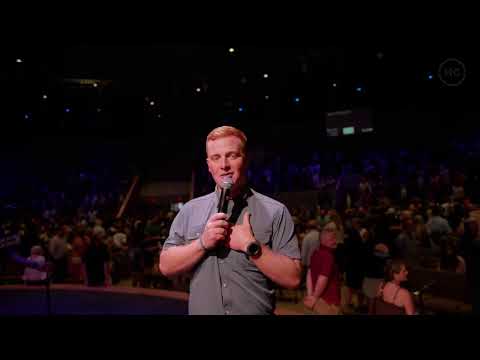
This individual study guide draws directly from the sermon “Showcase - Harris Creek Sunday Morning | 9a |” so you can keep engaging with the message all week. Read, reflect, and share it with your small group or friends.
In-Depth Bible Study Guide
From Death to Life: The Gospel in Ephesians 2
Primary Text: Ephesians 2:1–10
1. Introduction & Overview
This sermon delivered a powerful exposition of one of the most theologically dense and personally transformative passages in the New Testament. The central message: before Christ, every human being was spiritually dead — not merely struggling, not simply lost, but dead — disobedient, enslaved to fleshly desires, and deserving of God's righteous wrath. Yet God, rich in mercy and overflowing with grace, intervened. He made dead people alive. And those who have been raised to new life are called to walk in the good works God prepared for them before time began.
Primary Passage: Ephesians 2:1–10
Supporting Reference: James 2:26
Study Objectives: By the end of this study, you will be able to:
- Articulate the biblical doctrine of total spiritual death apart from Christ
- Distinguish between mercy and grace with precision
- Understand what it means to be "seated with Christ" in the heavenly realms
- Recognize good works as the evidence of salvation, not its cause
- Connect Ephesians 2 to the broader biblical narrative of death and resurrection
Estimated Study Time: 2.5–3 hours
Why This Passage Matters: Ephesians 2:1–10 is arguably the most compressed and complete presentation of the gospel in Paul's letters. It answers three foundational questions: Who were we? What did God do? How do we respond? Misunderstanding any of these three has profound consequences for how we live, how we relate to unbelievers, and whether we find genuine purpose.
How This Guide Builds on the Sermon: The pastor's exposition was theologically sharp and pastorally warm. This guide deepens the word studies he introduced, expands the historical context of Paul's letter, traces the passage's themes across the biblical canon, and engages interpretive questions that time constraints prevented him from addressing.
2. Exegetical Analysis
Genre and Literary Structure
Ephesians is a Pauline epistle, likely a circular letter intended for multiple churches in the region of Asia Minor, with Ephesus as the primary recipient. Chapters 1–3 are doctrinal (what God has done), while chapters 4–6 are ethical (how we should live in response). Ephesians 2:1–10 sits at the theological heart of the letter's first half.
The passage follows a tight three-part movement:
- Verses 1–3 — The Human Condition: Dead, Disobedient, Deserving Wrath
- Verses 4–7 — The Divine Intervention: But God, Rich in Mercy
- Verses 8–10 — The Doctrinal Summary and Response: Grace, Faith, and Good Works
This structure is deliberate. Paul builds the darkness before he introduces the light, making the contrast devastating and glorious.
Verse-by-Verse Analysis
Verses 1–2: Paul opens with the starkest possible diagnosis: "you were dead in your transgressions and sins." The past tense is crucial — this is who the Ephesian believers were, not who they are now. The phrase "followed the ways of this world" points to a systemic, cultural conformity to values opposed to God. "The ruler of the kingdom of the air" is a reference to Satan, a title that would have resonated with first-century readers steeped in Jewish apocalyptic thought, where demonic powers were understood to inhabit the atmospheric realm between earth and heaven.
Verse 3: Paul shifts from "you" (Gentiles) to "we" (including himself and Jewish believers), demolishing any ethnic or religious pride. All were dead. The phrase "by nature deserving of wrath" is one of the most theologically loaded in the letter, touching on the doctrine of original sin — a condition inherited, not merely chosen.
Verse 4: The pivot. "But God" (ho de theos in Greek) is one of the most dramatic reversals in all of Scripture. Two words that change everything. The entire weight of human depravity is interrupted by divine initiative.
Verses 5–6: Three compound verbs beginning with syn- (together with): synezōopoiēsen (made alive together), synēgeiren (raised together), synekathisen (seated together). God's action in Christ is applied to the believer. The aorist tense suggests these are accomplished realities, not future hopes.
Verse 7: The purpose clause — "in order that in the coming ages he might show the incomparable riches of his grace." Believers are trophies of grace on display for eternity.
Verses 8–9: The summary statement of the Protestant Reformation and evangelical faith: salvation by grace through faith, not works. The grammar of "this is not from yourselves, it is the gift of God" is debated (see Section 6), but the theological point is unambiguous.
Verse 10: The capstone. We are God's poiēma (masterpiece/workmanship), created for good works that God prepared pro-etoimasen — before the foundation of time. Works are not the ladder to salvation; they are the fruit of it.
3. Historical & Cultural Context
Paul's Imprisonment and the Letter's Setting
Paul wrote Ephesians approximately 60–62 AD while under house arrest in Rome (Acts 28:16–31), likely awaiting his appeal before Caesar. This is one of the four "Prison Epistles" (along with Philippians, Colossians, and Philemon). Writing from captivity to a church he had planted and deeply loved, Paul's tone is elevated, almost hymn-like. He is not combating a specific heresy as in Galatians; he is celebrating the cosmic dimensions of the gospel.
Ephesus: A City of Power and Pluralism
Ephesus was one of the most significant cities in the Roman Empire — a major port city on the Aegean coast of modern-day Turkey, home to perhaps 250,000 people. It was a center of commerce, Roman imperial cult worship, and most notably, the Temple of Artemis, one of the Seven Wonders of the Ancient World. The city was saturated with spiritual power claims, mystery religions, and magical practices (Acts 19:19 records a mass burning of magical texts worth 50,000 drachmas).
For Paul to declare that his readers had been "following the ruler of the kingdom of the air" would have carried immediate resonance in a city where spiritual powers were taken seriously and publicly worshiped. The gospel's claim that Christ had defeated these powers (Ephesians 1:21) was not abstract theology — it was a direct challenge to the reigning spiritual economy of Ephesus.
The Military Honor Culture
The sermon rightly noted that the image of being "seated with Christ" carried military connotations in ancient culture. In the Greco-Roman world, a victorious general or loyal soldier might be honored by being seated at the right hand of the king or emperor — a public display of favor, trust, and shared glory. For Paul's readers, hearing that God had "seated" them with Christ "in the heavenly realms" was not pious metaphor. It was a radical claim about their status before the cosmic King — a status utterly unearned and entirely given.
Jewish Understanding of Wrath and Mercy
Paul's Jewish readers would have understood "the wrath of God" (orgē tou theou) not as divine temper but as God's settled, righteous opposition to everything that destroys his creation. In Jewish thought, God's wrath and God's mercy were not contradictions — they were both expressions of his holiness. The Day of Atonement (Yom Kippur) was Israel's annual acknowledgment that the holy God must deal with sin, and that he had, in mercy, provided a way. Paul is saying the cross is the final, ultimate Yom Kippur.
4. Word Studies
"Dead" (Greek: nekros, transliteration: nek-ros)
- Meaning: Literally, a corpse. Used for both physical death and spiritual death. No partial death exists in Greek — nekros is absolute.
- Etymology: Related to the Proto-Indo-European root nek-, meaning "death" or "to perish." The same root appears in necromancy (communication with the dead).
- Biblical Usage: Romans 6:11 ("count yourselves dead to sin"); Colossians 2:13 ("when you were dead in your sins"); Revelation 3:1 ("you have a reputation of being alive, but you are dead"); Matthew 8:22 ("let the dead bury their own dead").
- Theological Significance: Paul does not say we were "sick" or "weakened" by sin — he says nekros. This is the theological foundation of total depravity — the recognition that human beings cannot contribute to their own spiritual resurrection any more than a corpse can contribute to its own physical resurrection. The sermon's water buffalo illustration captured this perfectly: a dead buffalo cannot respond to any stimulus.
- Translation Considerations: All major translations render this "dead" without softening. The ESV, NIV, NASB, and CSB are unanimous.
"Grace" (Greek: charis, transliteration: kha-ris)
- Meaning: Unmerited favor; a gift freely given with no expectation of return. In classical Greek, charis could refer to a pleasing quality or a favor done between social equals. Paul transforms the word to describe God's one-directional, unearned gift to those who deserve the opposite.
- Etymology: Related to chairō ("to rejoice") and charisma ("gift"). The word family implies delight — grace is not reluctant.
- Biblical Usage: John 1:14 ("full of grace and truth"); Romans 5:20 ("where sin increased, grace increased all the more"); 2 Corinthians 12:9 ("my grace is sufficient for you"); Titus 2:11 ("the grace of God has appeared that offers salvation to all people").
- Theological Significance: The sermon distinguished mercy (not getting what you deserve) from grace (getting what you could never deserve). This distinction is exegetically sound. Charis in Paul always carries the sense of lavish, excessive, overflowing gift — hence Paul's phrase "the incomparable riches of his grace" (v. 7). God is not a reluctant giver; grace is his delight.
"Workmanship / Masterpiece" (Greek: poiēma, transliteration: poy-ay-mah)
- Meaning: A work of art; something crafted with intentionality and skill. The English word "poem" derives directly from this Greek word.
- Etymology: From poieō ("to make, to create"). A poiēma is not an accidental product but a deliberate, crafted creation.
- Biblical Usage: Appears only twice in the New Testament — here in Ephesians 2:10 and in Romans 1:20, where it refers to the created world as God's "workmanship" visible to all people.
- Theological Significance: The word choice is stunning. Paul has just described human beings as spiritually dead, disobedient, enslaved to desires, and deserving of wrath. Then he calls them God's poiēma — his masterpiece. This is not a contradiction; it is the point. What we are now is entirely God's doing. The new creation is as much God's artistic achievement as the first creation. As the sermon noted, you cannot boast in a gift without crediting the giver.
"Prepared in Advance" (Greek: proetoimazō, transliteration: pro-et-oy-mad-zo)
- Meaning: To make ready beforehand; to prepare ahead of time. The prefix pro- (before) combined with hetoimazō (to prepare, make ready).
- Etymology: A compound verb emphasizing prior divine action — God's preparation precedes human existence.
- Biblical Usage: This exact verb appears only here in the New Testament, though the concept of divine foreordination appears throughout (Romans 8:29–30; Ephesians 1:4–5).
- Theological Significance: This word carries enormous weight for understanding the relationship between salvation and works. The good works are not improvised responses to grace — they were prepared by God before the foundation of time (connecting to Ephesians 1:4). The believer's task is not to invent a purpose but to discover and walk in the purpose God already designed. As the sermon put it: "It's like a spiritual to-do list... but it's an invitation."
5. Cross-References & Biblical Theology
The Scripture Web
Parallel Passages:
Colossians 2:13 — "When you were dead in your sins and in the uncircumcision of your flesh, God made you alive with Christ." Paul's closest parallel to Ephesians 2:1–5, confirming the theological consistency of his "dead/alive" framework across his letters.
Romans 5:6–8 — "When we were still powerless, Christ died for the ungodly... while we were still sinners, Christ died for us." Reinforces the divine initiative: God acted while we were incapable of response.
Thematic Connections:
Romans 3:23–24 — "All have sinned and fall short of the glory of God, and all are justified freely by his grace." The universality of death and the universality of grace's offer.
Romans 6:3–5 — "We were buried with him through baptism into death... just as Christ was raised from the dead... we too may live a new life." The baptismal imagery the sermon referenced finds its fullest exposition here — death, burial, resurrection as the believer's narrative.
James 2:26 — "As the body without the spirit is dead, so faith without deeds is dead." The sermon cited this to guard against antinomianism. James and Paul are not in contradiction — Paul says works don't produce salvation; James says works evidence salvation.
Old Testament Background:
Ezekiel 37:1–14 — The Valley of Dry Bones. God commands the prophet to speak to the dead bones, and they come to life by the Spirit of God. This is the most vivid Old Testament picture of what Paul describes in Ephesians 2 — spiritual resurrection by divine command, not human effort.
Psalm 51:10 — "Create in me a pure heart, O God." David's cry uses bara — the same Hebrew word used for creation in Genesis 1. New life requires a creative act of God, not moral self-improvement.
Progressive Revelation:
Genesis 2:17 — "You will certainly die." The original death sentence for disobedience — spiritual separation from God. Ephesians 2:1 is the New Testament diagnosis of this condition.
John 11:43–44 — Jesus commands Lazarus: "Come out!" Lazarus did not choose to respond; the command of Christ produced life in the dead. This is the most powerful visual parable of Ephesians 2 in the Gospels. The dead do not cooperate with their resurrection.
2 Corinthians 5:17 — "If anyone is in Christ, the new creation has come: the old has gone, the new is here!" The new creation language echoes Genesis 1 and points forward to Revelation 21 — God's creative work culminating in a fully redeemed cosmos.
Revelation 21:5 — "I am making everything new." The eschatological completion of what Ephesians 2:10 announces has already begun — God's masterpiece work continues until all things are made new.
6. Interpretive Considerations
The Grammar of Ephesians 2:8–9
One of the most discussed grammatical questions in Pauline studies involves the phrase "this is not from yourselves, it is the gift of God." In Greek, the demonstrative pronoun touto (this) is neuter, while both charis (grace) and pistis (faith) are feminine nouns. This means touto cannot grammatically refer to either grace or faith alone — it refers to the entire salvation event described in verses 8–9. This is actually a stronger statement than if it referred to faith alone: the whole package — grace, faith, salvation — is God's gift. Scholars like Harold Hoehner (Ephesians: An Exegetical Commentary) and F.F. Bruce (The Epistles to the Colossians, to Philemon, and to the Ephesians) confirm this reading.
"By Nature Deserving of Wrath" — Original Sin Debate
Verse 3's phrase "by nature children of wrath" (tekna physei orgēs) is a key text in debates about original sin. Reformed theologians (following Augustine and Calvin) read physei (by nature) as indicating an inherited sinful condition — we are born into spiritual death. Wesleyan-Arminian theologians affirm the reality of original sin but emphasize that prevenient grace begins to counteract this condition before conscious choice. Eastern Orthodox theology tends to emphasize inherited mortality and tendency toward sin rather than inherited guilt. The sermon's reading aligns with the Augustinian tradition, which represents the majority position in Western Christianity and has strong exegetical support in the text.
Works and Salvation — Avoiding Two Errors
The passage guards against two opposite errors. The first is moralism — believing that good behavior earns divine favor. Verses 8–9 demolish this. The second is antinomianism — believing that because we are saved by grace, our behavior is irrelevant. Verse 10 demolishes this. The proper reading holds both in tension: we are saved for good works, not by them. As the sermon noted, the same Greek verb (peripateō, "to walk") appears in verse 2 (walking in sin) and verse 10 (walking in good works) — a deliberate contrast showing that the direction of one's life reveals the reality of one's spiritual condition.
7. Theological Implications
Total Depravity and Human Dignity
Ephesians 2:1–3 is a foundational text for the Reformed doctrine of total depravity — not that humans are as evil as they could possibly be, but that every dimension of human existence has been corrupted by sin, leaving us incapable of spiritual self-rescue. Paradoxically, this doctrine upholds human dignity: our problem is not that we are insignificant but that we are significant beings in profound rebellion, requiring a significant rescue.
The Character of God: Mercy, Grace, and Love
The passage reveals a God who is simultaneously holy (his wrath is real and just) and overflowing with mercy and grace. These are not in tension — they are both expressions of his perfect character. As the sermon powerfully illustrated, God is "a trillionaire in mercy." The technical theological term for this is divine impassibility nuanced by divine love — God's response to sin is not emotional volatility but the settled, holy opposition of a perfectly good God, satisfied by the cross.
Realized Eschatology
The three syn- verbs of verses 5–6 (made alive together, raised together, seated together) are in the aorist tense — past action with present reality. This is what theologians call realized eschatology: the future resurrection life has broken into the present through union with Christ. Believers are already, in some meaningful sense, seated in the heavenly realms. This has profound implications for Christian identity — our ultimate reality is not our circumstances but our position in Christ.
Salvation and Vocation
Verse 10 connects soteriology (doctrine of salvation) with vocation (doctrine of calling). Being saved is not merely a transaction that secures heaven; it is an enlistment into a life of divinely prepared purpose. This challenges the privatized, individualistic version of Christianity that reduces the gospel to "getting right with God" while leaving the rest of life untouched.
8. Practical Application
Rethinking Your Starting Point
The sermon challenged listeners to examine whether they truly understand that they were dead before God found them. This is not merely theological information — it is the foundation of authentic gratitude. If you secretly believe God was fortunate to have you, your spiritual life will be marked by entitlement rather than wonder. Spend time this week meditating on your pre-Christ condition as Paul describes it in verses 1–3. Let the weight of it produce genuine amazement at what God has done.
Engaging the Dead with the Gospel
The sermon made the point that dead people don't need moral advice — they need resurrection. This reframes evangelism entirely. When you encounter someone far from God, the question is not "how do I get them to behave better?" but "how do I introduce them to the only One who can make the dead alive?" The pastor's account of sharing the gospel with his hunting guide through a translation app is a vivid model: the gospel crosses every barrier because it addresses the universal human condition.
Walking in Prepared Works
Ephesians 2:10 implies that the good works God prepared for you are specific and discoverable. They are not generic religious activity but a unique calling shaped by your gifts, relationships, and circumstances. Practical questions for reflection: Where in my community am I uniquely positioned? Who in my life is "dead" and needs someone to speak life? What acts of generosity, service, or witness has the Spirit been prompting me toward that I have been postponing?
Generosity as Gospel Embodiment
The sermon referenced "irresponsible generosity" — giving in ways that only make sense if this world is not your home. This is not a peripheral application but a direct implication of verse 7: God is in the business of displaying "the incomparable riches of his grace" through his people. When believers give sacrificially, they become living parables of a God who gives what cannot be earned.
9. Discussion Questions
Observational
In Ephesians 2:1–3, Paul uses several different descriptions to characterize humanity's condition apart from Christ. List each descriptor. What is the cumulative effect of all these descriptions taken together, rather than any one in isolation?
Look carefully at the verbs in Ephesians 2:4–6 (made alive, raised, seated). Who performs each action, and in what tense? What does the grammatical structure tell us about the relationship between God's action and human response?
In verse 10, Paul says the good works were "prepared in advance for us to do." What does the phrase "prepared in advance" suggest about the relationship between God's sovereignty and human activity?
Interpretive
The sermon distinguished between mercy (not getting what you deserve) and grace (getting what you could never deserve). How does the text of Ephesians 2:4–7 support this distinction? Where do you see each concept explicitly in the passage?
Paul says in verse 3 that we were "by nature deserving of wrath." How does this phrase shape our understanding of why the cross was necessary rather than merely one option among many for God?
The phrase "but God" in verse 4 is described as a dramatic pivot. What would the passage communicate if it ended at verse 3? What does the presence of verse 4 change about the entire meaning?
Theological
Ephesians 2:8–9 insists that salvation is "not by works, so that no one can boast." Yet verse 10 immediately introduces good works. How does this passage guard against both legalism (earning salvation) and antinomianism (dismissing obedience)? What does this reveal about how God designed the relationship between faith and works?
The passage describes God as "rich in mercy" and motivated by "great love." At the same time, verse 3 describes his "wrath." How do these attributes coexist in a single God without contradiction? What does this passage teach about the character of God that a one-sided emphasis on either love or wrath would miss?
Applicational
The sermon suggested that if we don't understand we were dead, we will look at unbelievers with disgust rather than compassion. How has your understanding (or misunderstanding) of your own pre-Christ condition shaped the way you relate to people far from God? What would change if you genuinely internalized that they are "dead" and need resurrection, not moral correction?
Ephesians 2:10 describes specific good works "prepared in advance" for you. What practices of prayer, community, and attentiveness might help you discover what those works are for your particular life and season? What prepared work might you currently be avoiding?
The sermon ended with the story of the hunting guide coming to faith through a translated gospel conversation. What "Jorges" are in your life — people God may have been preparing you to reach — and what barrier (language, fear, unfamiliarity) has prevented you from acting?
Investigative
- The image of being "seated with Christ in the heavenly realms" (v. 6) uses language drawn from ancient royal and military culture. Research the concept of sessio ad dextram (seated at the right hand) in both Old Testament and Greco-Roman contexts. How does understanding this cultural background change or deepen your reading of what Paul is claiming for believers?
10. Recommended Resources
Commentaries
Accessible:
Warren Wiersbe, Be Rich: Gaining the Things That Money Can't Buy (Ephesians) — A warm, pastorally rich exposition that is highly readable for motivated lay learners. An excellent companion for personal devotional study of Ephesians.
John Stott, The Message of Ephesians (The Bible Speaks Today series) — Widely regarded as one of the finest accessible commentaries on Ephesians. Stott combines exegetical precision with pastoral application. Ideal for serious lay readers.
Intermediate:
Peter O'Brien, The Letter to the Ephesians (Pillar New Testament Commentary) — Rigorous exegetical work that engages the Greek text while remaining accessible to those without formal seminary training. Excellent for word studies and theological depth.
Clinton Arnold, Ephesians (Zondervan Exegetical Commentary on the New Testament) — Particularly strong on the Greco-Roman and spiritual warfare background of Ephesus. Arnold's cultural expertise makes this commentary uniquely valuable for understanding the historical context.
Advanced:
- Harold Hoehner, Ephesians: An Exegetical Commentary — The most comprehensive technical commentary on Ephesians in English. Exhaustive treatment of Greek grammar, including the famous discussion of the neuter pronoun in 2:8. For those who want maximum depth.
Biblical Theology and Background
Accessible:
- Craig Keener, The IVP Bible Background Commentary: New Testament — An invaluable single-volume resource for understanding the Greco-Roman world behind every New Testament passage. Look up Ephesians 2 for excellent cultural context.
Intermediate:
- Thomas Schreiner, Paul, Apostle of God's Glory in Christ: A Pauline Theology — A comprehensive treatment of Paul's theology that places Ephesians 2 within the full sweep of Pauline thought on grace, faith, and works.
Theological Reference
Accessible to Intermediate:
Wayne Grudem, Systematic Theology: An Introduction to Biblical Doctrine — Chapters on total depravity, grace, and justification provide excellent doctrinal grounding for the themes in Ephesians 2. Grudem is clear, thorough, and accessible.
Gerhard Kittel and Gerhard Friedrich, eds., Theological Dictionary of the New Testament (abridged "Little Kittel") — The abridged one-volume edition makes this landmark Greek word study resource accessible to non-specialists. Look up charis, nekros, and poiēma for rich etymological and theological detail.
This guide was developed to accompany the sermon on Ephesians 2:1–10. The goal throughout has been to make scholarship serve discipleship — not to impress with information but to deepen the wonder that a God rich in mercy found us dead and made us alive. May your study of this passage produce not merely more knowledge about grace, but a life increasingly shaped by it.