
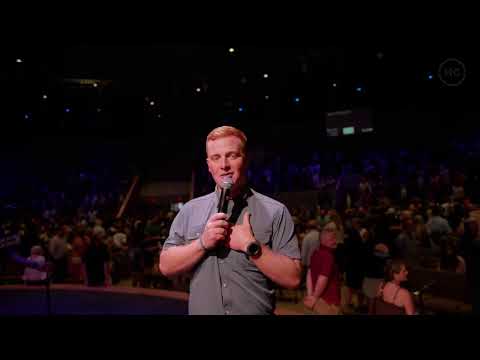
This small group discussion guide draws directly from the sermon “Showcase - Harris Creek Sunday Morning | 9a |” so you can keep engaging with the message all week. Read, reflect, and share it with your small group or friends.
Small Group Discussion Guide
From Death to Life: Understanding the Gospel
Based on Ephesians 2:1-10
A Note to Facilitators: Welcome, and thank you for leading your group this week! This guide is designed to help you facilitate meaningful conversation — not to cover every question. Read through the guide before your meeting, select the questions that feel right for your group, and trust the Holy Spirit to guide the conversation. You don't need to be a theological expert. Your job is to create a safe space for honest dialogue and to point people back to Scripture. Estimated total time: 60–90 minutes.
SERMON OVERVIEW
This week's message from Ephesians 2:1-10 explored one of the most important truths in all of Scripture: the gospel. Pastor JP walked us through three movements — you were dead, God made you alive, and live the life he prepared. Before we can fully appreciate what God has done for us, we must honestly reckon with where he found us: not struggling, not searching, but spiritually dead. It is only from that starting point that the grace and mercy of God become truly breathtaking — and that we find our real purpose for living.
ICEBREAKER
(5–10 minutes)
Choose one of the following to open your time together:
Option A (lighter, fun):
"If you could receive any unexpected, completely undeserved gift — something you'd never ask for and couldn't earn — what would it be, and how would you react?"
Option B (more reflective):
"Think about a moment in your life when someone showed you unexpected kindness or gave you a second chance you didn't deserve. What was that like?"
[Leader Tip]: Don't rush this section. Icebreakers help people relax and begin opening up. If your group is quiet, share your own answer first to model vulnerability. Keep it light — you'll go deeper soon.
SCRIPTURE READING
(5 minutes)
Ask a volunteer to read the passage aloud slowly and clearly. Invite the group to listen for a word or phrase that stands out to them.
Ephesians 2:1-10 (ESV)
"And you were dead in the trespasses and sins in which you once walked, following the course of this world, following the prince of the power of the air, the spirit that is now at work in the sons of disobedience — among whom we all once lived in the passions of our flesh, carrying out the desires of the body and the mind, and were by nature children of wrath, like the rest of mankind.
But God, being rich in mercy, because of the great love with which he loved us, even when we were dead in our trespasses, made us alive together with Christ — by grace you have been saved — and raised us up with him and seated us with him in the heavenly places in Christ Jesus, so that in the coming ages he might show the immeasurable riches of his grace in kindness toward us in Christ Jesus.
For by grace you have been saved through faith. And this is not your own doing; it is the gift of God, not a result of works, so that no one may boast. For we are his workmanship, created in Christ Jesus for good works, which God prepared beforehand, that we should walk in them."
After reading, ask:
"Without going into detail yet — what word or phrase jumped out at you as that was read?"
(Allow 2-3 people to briefly respond before moving into discussion.)
DISCUSSION QUESTIONS
(30–45 minutes)
Work through as many questions as time allows. Questions are organized by the three main movements of the sermon. You do not need to ask every question — choose the ones that feel most relevant to your group.
SECTION 1: "You Were Dead" — Honestly Reckoning with Our Condition
(Ephesians 2:1-3)
1. Observational — Getting into the Text
The passage uses some heavy language: dead, disobedient, following the ruler of the kingdom of the air, deserving of wrath. In your own words, how would you describe the condition Paul is painting here? Why do you think Paul uses such strong language rather than softer words like "struggling" or "lost"?
[Leader Tip]: This question helps the group engage with the text before getting personal. There are no wrong answers here — you're simply exploring what the passage actually says. If the group seems hesitant about the word "wrath," acknowledge that it's a difficult concept and let them sit with the discomfort. That tension is part of the point.
2. Reflective — Making It Personal
Pastor JP said, "If you do not understand the reality that God found you dead, you will not respond to the gospel with appropriate gratitude." What do you think he meant by that? Do you find it easy or difficult to see yourself in the description of verses 1-3? Why?
3. Community/Perspective
The sermon pointed out that understanding our own "deadness" changes the way we see people who are far from God. Instead of being disgusted by their choices, we're called to draw close to them and speak life. How does remembering where you came from change the way you think about someone in your life who doesn't know Jesus?
[Leader Tip]: This can be a tender question, especially if someone in the group has a family member or close friend who is not a believer. Create space for honest emotion. You might follow up with: "What's one thing that makes it hard to stay close to people who are far from God?"
SECTION 2: "But God Made You Alive" — The Grace That Changes Everything
(Ephesians 2:4-9)
4. Interpretive — Unpacking the Text
Two of the most powerful words in this entire passage are "But God" (verse 4). What shifts in the passage after those two words? Why do you think the contrast between verses 1-3 and verses 4-7 is so important to the meaning of the gospel?
5. Theological Exploration — Mercy vs. Grace
Pastor JP made a distinction between mercy and grace using the story of his daughter and the donut. Mercy, he said, is not getting the punishment you deserve. Grace is getting what you could never deserve. In your own experience, which of these is easier to accept — mercy or grace? Why do you think receiving grace can feel so hard for people?
[Leader Tip]: This is often a rich question for groups. Some people struggle to accept mercy because of guilt; others struggle with grace because it feels "too easy" or unearned. Both responses are worth exploring. If the group stalls, try: "What does it feel like when someone does something incredibly generous for you that you know you didn't earn?"
6. Personal Story — Connecting to Real Life
Pastor JP shared that he grew up going to church regularly, carrying a crucifix, going through all the motions — but he never understood that Jesus was paying for his sins. He said those dots just never connected. Can you relate to that experience in any way? What helped the gospel finally become real and personal for you — or is that still something you're working through?
[Leader Tip]: This is one of the most vulnerable questions in the guide. Model openness by being willing to share your own story briefly first. Be sensitive — some group members may still be in a "going through the motions" season and this question may be convicting. Create a grace-filled, non-judgmental environment.
7. Anchoring Truth
Verse 6 says that God has "raised us up with Christ and seated us with him in the heavenly places." Pastor JP pointed out this is past tense — it's already done. He said: "You are seated with Christ. When you're comparing yourself to every other mom... when you are so exasperated with your singleness... you're still seated with Christ." How does the truth of your identity in Christ — already secure, already seated — speak to something you're struggling with right now?
SECTION 3: "Live the Life He Prepared" — Purpose and Good Works
(Ephesians 2:10)
8. Interpretive — Understanding Works and Faith
Verse 10 says we are "God's workmanship, created in Christ Jesus to do good works, which God prepared beforehand." Pastor JP was clear: we don't do good works to be saved — we do good works because we are saved. Why does that distinction matter? What goes wrong when we flip those two around?
9. Application — Finding Your Purpose
The sermon described Ephesians 2:10 as a kind of "spiritual to-do list" — not a burden, but an invitation. Pastor JP shared how he led a hunting guide named Jorge to faith through a translated conversation on his phone — something he had no idea was "prepared in advance" for him. What might it look like for you to walk in the good works God has prepared? What's one relationship, situation, or opportunity in your life right now that might be a "Jorge moment"?
[Leader Tip]: This question often unlocks really practical and exciting conversation. Encourage specificity — names, places, situations. If the group is quiet, try: "What's one person in your life who needs someone to show up for them this week?"
10. Synthesis — Pulling It All Together
Looking back at the three movements of the sermon — you were dead, God made you alive, live the life he prepared — which of those three feels most alive in your heart right now, and which one feels like an area where you still need to grow? What would it look like to take a step forward in that area?
PERSONAL APPLICATION
(10–15 minutes)
Invite the group to spend a few minutes in quiet reflection before sharing. You can ask everyone to respond to one question, or let individuals choose the one that resonates most with them.
Choose one (or invite the group to choose):
A. Gratitude Check
On a scale of 1-10, how deeply does your daily life reflect gratitude for what God has done in bringing you from death to life? What's one thing that gets in the way of that gratitude? What's one thing you could do differently this week?
B. The Mirror Moment
Pastor JP said some of us came in today thinking we're spiritually alive, but we've actually been "playing church" — going through the motions without really walking in the life God has prepared. Is there any area of your life where that might be true? What would it look like to take one honest step toward change?
C. Your "Jorge" Moment
Is there someone in your life — a neighbor, coworker, family member, friend — who needs to hear the gospel? What's one specific, practical step you could take this week to move toward that person?
D. Resting in Your Identity
If you're carrying something heavy right now — shame, comparison, fear, exhaustion — how does the truth of being "seated with Christ" (Ephesians 2:6) speak directly into that? Write it down or say it out loud to the group: "Because of what Jesus has done, I am ___________."
THIS WEEK'S CHALLENGE
(Send home with your group)
Choose one of the following before your group meets again:
- 📖 Read Ephesians 2:1-10 every day this week. Each day, focus on one phrase and let it sink in. Journal what you notice.
- 🗣️ Share the gospel with one person this week — in a conversation, a text, or a note. It doesn't have to be perfect. It just has to be honest.
- 🙏 Pray daily for one person in your life who is far from God. Ask God to open a door and give you courage to walk through it.
- ✍️ Write a brief "before and after" story of your own faith — what your life looked like before you understood the gospel, and what changed. You don't have to share it with anyone, but writing it often clarifies it.
PRAYER FOCUS
(5–10 minutes)
Close your time together in prayer. You can pray as a group, in pairs, or have one person lead. Here are suggested prayer topics drawn from the sermon:
Suggested Prayer Topics:
Gratitude — Thank God specifically for his mercy and grace. Encourage people to name one thing they're grateful for that they didn't deserve.
Honest Confession — Ask the Holy Spirit to reveal any area where you've been "going through the motions" or living as though your spiritual life depends on your own effort.
The Lost — Pray by name for people in your group's lives who are far from God. Ask God to open doors and give courage.
Purpose — Ask God to reveal the "good works prepared in advance" for each person in the room. Pray for eyes to see the opportunities already around you.
The Church's Mission — Pray for the mission teams currently serving in Southeast Asia and the Dominican Republic. Ask God to use them to bring people from death to life.
A Simple Closing Prayer (for facilitators who want a guide):
"Father, thank you that you didn't find us struggling and give us a hand — you found us dead and gave us life. Help us never get over that. Give us hearts full of gratitude, eyes open to the people around us who need what we have, and the courage to walk in the good works you've already prepared for us. We trust you. Amen."
OPTIONAL DEEP DIVE
(For groups wanting to go further — or for a follow-up discussion)
Bonus Question 1 — Exploring the Text Further
Read Romans 5:6-8 alongside Ephesians 2:4-5:
"For while we were still weak, at the right time Christ died for the ungodly. For one will scarcely die for a righteous person — though perhaps for a good person one would dare even to die — but God shows his love for us in that while we were still sinners, Christ died for us."
Both passages emphasize that God acted while we were still dead/sinners/ungodly — not after we cleaned ourselves up. Why is the timing of God's love so significant? How does it change the way you understand what love actually is?
Bonus Question 2 — Faith and Works
Read James 2:14-17 alongside Ephesians 2:8-10:
"What good is it, my brothers, if someone says he has faith but does not have works? Can that faith save him? If a brother or sister is poorly clothed and lacking in daily food, and one of you says to them, 'Go in peace, be warmed and filled,' without giving them the things needed for the body, what good is that? So also faith by itself, if it does not have works, is dead."
Some people read Ephesians 2:8-9 ("not by works") and James 2:17 ("faith without works is dead") and think they contradict each other. How do they actually work together? What does a life look like that holds both truths in balance?
Bonus Question 3 — The Cemetery Reflection
Pastor JP described walking through a cemetery and thinking about the two kinds of people buried there — some more alive than they've ever been, some in a place where only God's wrath remains. He said, "It all comes down to what did they do with Jesus." That's a sobering thought. How does the reality of eternity — and the urgency it creates — shape the way you want to live the next week, month, or year of your life?
ADDITIONAL SCRIPTURE FOR FURTHER STUDY
| Passage | Theme |
|---|---|
| Romans 6:1-11 | Baptism as dying and rising with Christ |
| Romans 5:6-11 | God's love demonstrated while we were still sinners |
| Titus 3:3-7 | Saved not by works but by his mercy |
| James 2:14-26 | Faith and works working together |
| 2 Corinthians 5:17-21 | New creation and the ministry of reconciliation |
| Psalm 40:1-3 | Lifted from the pit and given a new song (referenced in worship) |
QUICK-REFERENCE GUIDE FOR FACILITATORS
| Section | Time | Key Goal |
|---|---|---|
| Icebreaker | 5-10 min | Build warmth and openness |
| Scripture Reading | 5 min | Ground the group in the text |
| Discussion Questions | 30-45 min | Explore, interpret, and apply |
| Personal Application | 10-15 min | Move from head to heart |
| Prayer | 5-10 min | Respond together to God |
| Total | 55-85 min |
If your group only has 45 minutes, prioritize:
- Icebreaker Option A (5 min)
- Scripture Reading (5 min)
- Questions 2, 5, and 9 (20 min)
- Application Question C (5 min)
- Prayer (10 min)
This guide was prepared for Harris Creek small groups based on the sermon "From Death to Life" from Ephesians 2:1-10. Questions or feedback? Contact your group coordinator or the church office at hello@harriscreek.org.