
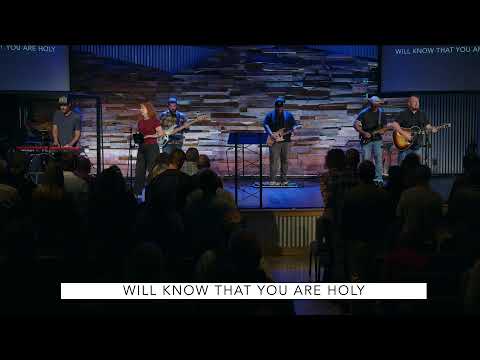
This small group deep study guide draws directly from the sermon “Showcase - One Harbor MHC | Sunday Service” so you can keep engaging with the message all week. Read, reflect, and share it with your small group or friends.
DEEP-DIVE SMALL GROUP DISCUSSION GUIDE Based on: Conduits, Not Containers: Blessed to Be a Blessing Primary Text: Genesis 12:1–3; Leviticus 19:9–10; Matthew 25:31–40; Acts 2:44–45; Acts 4:32–35 Series: Faithful Disciples in a Greedy World Time: 90–120 minutes
LEADER PREPARATION
Overview
This session traces a single thread woven from Genesis to Acts: God's people are not meant to accumulate blessing but to channel it. From Abraham's calling to the generosity of the early church, Scripture consistently portrays the people of God as conduits — vessels through which God's provision flows outward to others. This guide will help your group explore what that means theologically, historically, and practically.
Big Idea
Faithful disciples are blessed to be a blessing — and the antidote to a hoarding heart is not willpower but the gospel of Jesus Christ, the ultimate generous giver.
Essential Background
- The Abrahamic covenant is the backbone of the entire biblical story. God's promise to bless Abraham was never meant to stop with Abraham — the phrase "so that you will be a blessing" is the interpretive key to the whole passage.
- Old Testament gleaning laws were not charity in the modern sense — they preserved dignity. The poor were not given handouts; they were given access to work and provide for themselves.
- First-century Roman economic inequality was extreme. Approximately 2% of the population controlled roughly two-thirds of the empire's wealth, making Jesus' teaching on generosity genuinely countercultural and even dangerous.
- The early church's generosity was voluntary, not mandated. This distinction matters enormously for understanding what authentic Christian generosity looks like versus legalistic obligation.
Preparation Checklist
- Read Genesis 12:1–3, Leviticus 19:9–10, Matthew 25:31–40, and Acts 2:44–45; 4:32–35
- Review the word studies below and practice saying the transliterations aloud
- Think through your own honest answers to the personal application questions
- Pray for each group member by name before you meet
Facilitator Encouragement
You don't need to be an expert — you need to be curious and honest. Your job is to ask good questions and create space for your group to discover together. The questions in this guide are designed to do the heavy lifting. Trust the process and trust the Spirit.
OPENING (5–10 minutes)
Icebreaker Question: Think of the most generous person you've ever known personally — not a famous philanthropist, but someone from your own life. What made their generosity stand out? What did it cost them?
[Let several people share. This opens the heart before you open the Bible.]
TEACHING TIME (15–20 minutes)
[Leader: Share these points conversationally — you're not reading a lecture, you're sharing interesting things you discovered. Feel free to use your own words.]
Historical & Cultural Context (5–7 minutes)
The Abrahamic Covenant in Context When God called Abram in Genesis 12, Abram was leaving everything — family, land, security, identity. In the ancient Near East, your land was your life. God's promise of blessing, therefore, was not a prosperity guarantee; it was a radical reorientation of identity. Abram's security would come from God alone, not from accumulated land or wealth. Crucially, the blessing was always outward-facing: "in you all the families of the earth shall be blessed." From the very beginning, God's chosen people were chosen for others, not just for themselves.
Gleaning Laws and the Dignity of the Poor The gleaning laws in Leviticus weren't simply about leaving food behind — they were about preserving human dignity. The poor were not given a handout; they were given the right to work. They could enter fields and vineyards and gather for themselves. This required physical effort and preserved a sense of agency. The Sabbath year and Year of Jubilee went even further — every 50 years, land returned to original families, debts were cancelled, and slaves were freed. This was a built-in structural reset to prevent permanent economic stratification.
The World Jesus Entered First-century Roman Palestine was marked by severe economic inequality. The Roman tax system, combined with Temple taxes and local landlords, created crushing poverty for most people. In this context, Jesus' Beatitudes — "Blessed are you who are poor" — were not just spiritual poetry. They were a direct challenge to the prevailing assumption that wealth signaled divine favor and poverty signaled divine rejection. Jesus was turning the entire economic theology of his day upside down.
Key Word Studies (5–7 minutes)
"Blessing" / "Bless" — Hebrew: barak (בָּרַךְ) In Genesis 12, the word barak appears five times in three verses — this repetition is intentional and emphatic. Barak literally means to kneel or to bestow favor, and it carries the sense of empowering someone for flourishing. Notice the direction: God blesses Abram so that Abram becomes a blessing. The blessing is never meant to terminate with the recipient. It is inherently forward-moving.
"Gleaning" — Hebrew: laqat (לָקַט) This word means to gather or pick up what is left behind. In Leviticus 19, laqat describes both what the harvesters are forbidden to do (gather every last bit) and what the poor are permitted to do (come behind and gather). The law creates a deliberate gap — a space of provision for those without land. It's a structural generosity built into the agricultural economy itself.
"Cheerful" — Greek: hilaros (ἱλαρός) This is the word Paul uses in 2 Corinthians 9:7 — "God loves a cheerful giver." Hilaros is the root of our English word hilarious. It doesn't mean giddy or silly; it means freely glad, giving from a place of genuine joy rather than compulsion or duty. Paul is describing a heart so transformed by the gospel that generosity becomes a delight, not a burden. This is the goal — not reluctant compliance, but joyful overflow.
Important Cross-References (3–5 minutes)
- Deuteronomy 15:7–11 — "You shall open wide your hand to your brother." God commands open-handedness toward the poor as a direct expression of covenant faithfulness. Connects the gleaning laws to a broader posture of generosity.
- Proverbs 11:24–25 — "One person gives freely, yet gains even more; another withholds unduly, but comes to poverty." Wisdom literature confirms the paradox of generosity — the open hand is blessed, the closed fist is impoverished.
- Luke 12:15–21 — The Parable of the Rich Fool. Jesus warns that life does not consist in the abundance of possessions. The man's error was not that he was prosperous; it was that he trusted his barns more than his God.
- 2 Corinthians 8:9 — "For you know the grace of our Lord Jesus Christ, that though he was rich, yet for your sake he became poor, so that you by his poverty might become rich." The ultimate theological foundation for generosity: Jesus himself is the supreme conduit.
- Psalm 1:1–3 — The righteous person is like a tree planted by streams of water, bearing fruit in season. The image is of a life that receives nourishment and produces abundance for others — a living conduit.
SCRIPTURE READING & OBSERVATION (10–15 minutes)
Read aloud together:
- Genesis 12:1–3
- Leviticus 19:9–10
- Matthew 25:35–40
- Acts 4:32–35
[Consider reading from two different translations — ESV and NIV work well together for these passages.]
Observation Questions:
- What words or phrases are repeated across these passages? What patterns do you notice?
- What surprises you or challenges an assumption you held?
- Who are the people mentioned or implied in these texts? Who benefits from the generosity described?
- What questions do these passages raise for you that you'd like to explore?
DEEP DIVE DISCUSSION (40–50 minutes)
Section A: Understanding the Text
1. In Genesis 12:2, God says he will bless Abram "so that you will be a blessing." How does that single phrase reframe the entire idea of divine blessing? What does it suggest about the purpose of prosperity — financial, relational, or otherwise?
2. The gleaning laws in Leviticus 19 weren't optional charity — they were law. What does it tell us about God's character that he built structural provision for the poor directly into Israel's agricultural economy? Why do you think he did it this way rather than simply commanding individual acts of charity?
[Leader Tip: If the group gets stuck here, ask: "What's the difference between a system that creates access and an act of charity? Which preserves more dignity?" This often opens up rich conversation about how we think about poverty and generosity today.]
3. In Matthew 25:37–39, the righteous are genuinely surprised — they didn't realize they were serving Jesus. What does this tell us about the motivation behind their generosity? How is that different from giving in order to be seen or to feel good about yourself?
4. The sermon made a sharp distinction: the early church's generosity in Acts 4 was voluntary, not mandated. Why does that distinction matter? What would be lost if the same actions were required rather than freely chosen?
Section B: Theological Connections
5. The sermon described the kingdom of God as "upside down" — where the poor are blessed, where giving produces more than hoarding, where a king serves rather than demands service. How does this "upside down" logic connect to the gospel itself? Where else in Scripture do you see this pattern?
[Leader Tip: Point the group toward 2 Corinthians 8:9 if they haven't already landed there. The incarnation — God becoming poor so we might become rich — is the ultimate upside-down move. Let the group sit with the weight of that before moving on.]
6. The sermon argued that the problem with the Rich Fool wasn't that he had wealth — it was that he trusted his wealth. How does misplaced trust corrupt generosity? Where does the line fall between wise saving and hoarding?
7. From Abraham to the gleaning laws to the prophets to Jesus to the early church, the call to care for the poor and vulnerable is remarkably consistent. What does this sustained, cross-testament emphasis tell us about what God considers central to faithful discipleship? Why do you think this theme gets minimized in some Christian communities today?
Section C: Contemporary Application
8. The sermon offered a "generosity journey" with four stages: self-contained container, reluctant conduit, intentional steward, and overflowing conduit. Where do you honestly find yourself on that spectrum right now — and what's one thing that keeps you from moving further along?
[Leader Tip: Give the group 30–45 seconds of quiet before anyone answers. This question requires honest self-reflection, not quick responses. Model vulnerability by being willing to answer it yourself first.]
9. The sermon used the image of the Sea of Galilee versus the Dead Sea — one has inflow and outflow and teems with life; the other receives but never releases and is lifeless. Where do you see this dynamic playing out in your own life — not just financially, but with your time, your relationships, your skills, or your influence?
10. The prophets condemned Israel not just for personal greed but for structural exploitation of the poor — building wealth at the expense of the vulnerable. How do we as followers of Christ engage with systemic economic questions today without either ignoring them or reducing the gospel to mere social activism?
[Leader Tip: This question can become politically charged. Redirect if needed: "We're not asking what political policy is right — we're asking what Scripture expects of God's people individually and communally. What does faithfulness look like here?"]
11. The sermon noted that generosity isn't only about money — it includes water, food, clothing, time, presence. For someone who is genuinely financially stretched right now, what does it look like to be a conduit rather than a container? What do you have that could flow outward?
PERSONAL APPLICATION (15–20 minutes)
[Invite 2–3 minutes of quiet individual reflection before group sharing.]
Reflective Questions:
The sermon asked: "Are you a conduit or a container?" After today's discussion, how would you answer that question — and what would need to change for your answer to be different six months from now?
The sermon suggested that the only way to move from container to conduit is through the gospel — recognizing that Jesus himself became poor so we could become rich. How does meditating on Christ's generosity change your relationship to your own possessions?
Is there a specific area of your life — finances, time, skills, influence, hospitality — where you sense God inviting you to open your hand more fully? What's the fear or resistance underneath the closed fist?
This Week Challenge: Choose one concrete, specific act of generosity this week that costs you something — not just the spare change or the easy extra. It might be financial, or it might be time, presence, or skill. Tell one person in this group what you're going to do and ask them to check in with you next week. Practice "assuming the position" — open hands receiving from God and releasing to others.
PRAYER & CLOSING (10 minutes)
Suggested Prayer Focus: Close by praying in pairs or triads. Invite each person to share one honest response from the personal application time — where they sense God calling them to open their hands — and then pray specifically for each other around those things.
Closing Prayer Prompts (for the leader to offer if the group needs direction):
- Thank God for his extravagant generosity in Christ
- Confess the specific ways we tend toward being containers
- Ask for the Spirit's work to make generosity feel like joy rather than duty
- Pray for courage to take the "This Week Challenge" seriously
Closing Words for the Leader: "What we've explored today isn't just a sermon topic — it's the shape of the entire biblical story. From Abraham to the early church, God has always been calling his people to be channels of his blessing to the world. That's not a burden; it's an invitation into the most satisfying way to live. Go be a conduit this week."
This guide was developed for small groups wanting to go deeper into Scripture. It is designed to complement the sermon, not replace it — the sermon was the beginning of the conversation, not the end.