
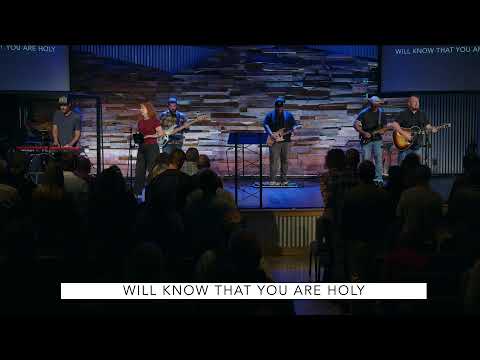
This individual study guide draws directly from the sermon “Showcase - One Harbor MHC | Sunday Service” so you can keep engaging with the message all week. Read, reflect, and share it with your small group or friends.
In-Depth Bible Study Guide
Conduits, Not Containers: Faithful Disciples and the Call to Generosity
Primary Texts: Genesis 12:1-3; Leviticus 19:9-10; Matthew 25:31-46; Acts 2:44-45; 4:32-35
1. Introduction & Overview
This sermon traces a single, golden thread woven through the entire biblical narrative: God's people are not meant to be reservoirs of blessing but rivers of it. Using the memorable image of a conduit versus a container, the message argues that faithful discipleship is fundamentally marked by open-handed generosity — not merely with money, but with every resource God entrusts to us. The sermon's central claim is direct and memorable: faithful disciples are blessed to be a blessing.
The study covers an unusually wide sweep of Scripture, moving from the Abrahamic covenant in Genesis 12, through the economic legislation of Exodus and Leviticus, the social critique of the prophets, the radical ethics of Jesus in Matthew 25, and the communal generosity of the early church in Acts 2 and 4. This breadth is intentional — the sermon argues that generosity is not a peripheral New Testament virtue but a defining characteristic of God's people across all of redemptive history.
Study Objectives: By the end of this guide, you will be able to (1) trace the biblical-theological development of generosity from Abraham through the early church, (2) understand the economic and social institutions God embedded in Israel's law to protect the vulnerable, (3) engage the Greek and Hebrew vocabulary of blessing and giving, and (4) honestly assess your own place on the generosity journey the sermon describes.
Estimated Study Time: 2.5–3 hours
Why This Matters: In a culture of accumulation, the Bible's vision of open-handed stewardship is countercultural in the most radical sense. Serious engagement with these texts reveals that generosity is not a spiritual extra — it is a theological statement about who owns everything and who we trust.
2. Exegetical Analysis
Genesis 12:1-3 — The Abrahamic Foundation
These three verses are arguably among the most consequential in all of Scripture. The passage is a divine speech-act — a covenant promise — that establishes the theological architecture for everything that follows in the biblical story. Structurally, God's words to Abram contain two movements: what God will do (vv. 2a–3a) and why God will do it (vv. 2b, 3b). The repeated verb "bless" (bārak) appears five times in just three verses, signaling that blessing is the dominant theological category.
Crucially, verse 2 contains a purpose clause: "so that you will be a blessing." In Hebrew, this is a waw consecutive with an imperative force — "be a blessing!" The blessing God bestows on Abram is not a terminal gift but a commissioning. The climax arrives in verse 3b: "in you all the families of the earth shall be blessed." The Hebrew word translated "families" (mishpāḥôt) means clans or people-groups, emphasizing the universal scope of a promise made to one man. This is the first hint in Scripture that Israel's election is not exclusionary but missionary in purpose.
Leviticus 19:9-10 — The Gleaning Laws
These verses appear within what scholars call the "Holiness Code" (Leviticus 17–26), a collection of laws designed to make Israel visibly distinct. The command not to reap "right up to the edge" (pē'â, literally "corner") of the field, and not to gather the "gleanings" (leqeṭ, fallen stalks), embedded an economic safety net directly into agricultural practice. This was not charity in the modern sense — it preserved the dignity of the poor by giving them the opportunity to work for their food rather than receive a handout.
Matthew 25:31-46 — The Sheep and the Goats
This passage belongs to the Olivet Discourse, Jesus' extended teaching about the end times and the nature of the kingdom. The parable is a judgment scene — eschatological in scope — and its shock value is deliberate. The righteous are surprised ("Lord, when did we see you?"), suggesting that genuine generosity flows from character, not calculation. The phrase "the least of these my brothers" (hoi elachistoi, "the smallest/most insignificant ones") identifies the recipients of care with Jesus himself, a staggering theological claim that redefines the value of the marginalized.
Acts 2:44-45 and 4:32-35 — The Early Church
Luke's description of the early church employs summary statements (summaries of the church's life) that function rhetorically to show the Spirit's transforming power made visible in community. The phrase "one heart and soul" (4:32) echoes the Shema's call for wholehearted devotion — their unity was not merely social but theological. The voluntary selling of property is presented not as a mandate but as a Spirit-prompted response to the resurrection proclamation (4:33), which is the theological engine driving the generosity.
3. Historical & Cultural Context
The Abrahamic World (c. 2000–1800 BC)
Abram lived in a world shaped by patron-client relationships and tribal loyalty. Blessing (bārak) in the Ancient Near East was understood as the conferral of power, prosperity, and protection from a superior to an inferior. What makes God's covenant with Abram remarkable is its reversal of normal social logic — the blessing flows not to consolidate power in one place but to radiate outward to "all the families of the earth." This universalism was alien to the surrounding cultures, where divine favor was typically tribal and exclusive.
Israel's Economic Laws in Context
The gleaning laws of Leviticus and the Sabbath/Jubilee legislation (Leviticus 25) existed within a subsistence agricultural economy where a bad harvest could mean starvation. The tithe system the sermon describes — a sacred tithe (Numbers 18), a festival tithe (Deuteronomy 14:22-27), and a welfare tithe every third year (Deuteronomy 14:28-29) — amounted to roughly 20-23% of agricultural income redistributed through religious institutions. This was not socialism, as the sermon rightly notes, but a theologically grounded system of wealth distribution that acknowledged God as the ultimate landowner (Leviticus 25:23: "the land is mine").
The Year of Jubilee (Leviticus 25:8-55), occurring every 50 years, reset land ownership to its original tribal distribution. Scholars such as Christopher Wright (Old Testament Ethics for the People of God) argue this legislation was designed to prevent the permanent concentration of wealth that inevitably destabilizes agrarian societies — precisely what the prophets later condemned.
First-Century Roman Economic Reality
The sermon accurately describes the staggering economic inequality of the Roman Empire. Historians estimate that the top 1-3% of the population controlled approximately 50-65% of the wealth. The vast majority of people lived at or near subsistence level. Into this context, Jesus' beatitude "Blessed are you who are poor" (Luke 6:20) was not merely spiritual comfort — it was a direct challenge to the dominant theology that equated wealth with divine favor (prosperity theology was a first-century problem too). The early church's communal generosity described in Acts was therefore a visible, embodied challenge to Roman economic values.
The Prophetic Critique
The eighth-century prophets — Amos, Isaiah, Micah, and Ezekiel — issued their harshest condemnations not against idolatry alone but against economic exploitation of the poor. Amos 2:6-7 condemns those who "sell the righteous for silver and the needy for a pair of sandals." This was not abstract moralizing — it described real practices of debt slavery and corrupt courts that systematically transferred wealth from the poor to the wealthy.
4. Word Studies
"Bless / Blessing" (Hebrew, bārak / berākhāh)
- Meaning: The verb bārak means to endow with power for success, prosperity, fertility, and longevity. As a noun, berākhāh refers to the gift, benefit, or endowment itself.
- Etymology: Possibly related to the word for "knee" (berekh), suggesting the posture of kneeling in homage — the one who blesses confers status and benefit.
- Biblical Usage: Genesis 1:22 (God blesses the creatures); Genesis 12:2-3 (Abram's covenant); Numbers 6:24-26 (the Aaronic blessing); Psalm 67:1-7 (blessing flowing to the nations); Galatians 3:14 (the blessing of Abraham coming to the Gentiles in Christ).
- Theological Significance: The five-fold repetition of bārak in Genesis 12:2-3 is not accidental. It establishes that blessing is God's fundamental posture toward his creation — and that his chosen people are to be transmission points, not terminal points, of that blessing.
- Translation Considerations: The ESV and NIV render verse 2 as "so that you will be a blessing," which captures the purpose clause well. The NRSV's "so that you will be a blessing" is nearly identical. Some older translations obscure the missional force of the purpose clause.
"Gleaning" (Hebrew, leqeṭ)
- Meaning: Literally "that which is picked up" — the stalks or grapes that fall during harvesting and are left behind.
- Etymology: From the root lāqaṭ, "to gather, pick up."
- Biblical Usage: Leviticus 19:9; 23:22; Ruth 2:2-3 (Ruth gleaning in Boaz's field — the most famous narrative illustration of this law); Isaiah 17:6 (used metaphorically of a remnant).
- Theological Significance: The gleaning law institutionalized generosity at the structural level. It did not merely exhort landowners to be kind — it built provision for the poor into the harvest system itself. This is a model of what some theologians call "structural justice" — designing social and economic systems so that the vulnerable are protected by default.
"Poor / Needy" (Greek, ptōchos, transliteration: ptō-khos)
- Meaning: Ptōchos refers to one who crouches or cowers — a beggar, one who is completely destitute, not merely of modest means. This is stronger than penēs (a poor person who works for daily wages). Ptōchos describes the utterly dependent.
- Etymology: From ptōssō, "to crouch, cower," evoking the posture of a beggar.
- Biblical Usage: Matthew 5:3 ("poor in spirit"); Luke 4:18 (Jesus' inaugural sermon: "good news to the poor"); Luke 6:20 (the Beatitude addressed to the literally poor); 2 Corinthians 8:9 ("though he was rich, yet for your sake he became poor [ptōchos]").
- Theological Significance: Paul's use of ptōchos in 2 Corinthians 8:9 — the verse the sermon cited as the theological climax — is stunning. The eternal Son of God, by taking on human flesh, descended into the condition of the utterly destitute ptōchos so that we might be spiritually enriched. The incarnation is the ultimate act of conduit generosity.
"Cheerful" (Greek, hilaros, transliteration: hil-ar-os)
- Meaning: Joyful, prompt, willing, without reluctance. Our English word "hilarious" derives from this term, though in Greek it carries the sense of radiant, eager willingness.
- Etymology: Related to hilaros, meaning bright, cheerful.
- Biblical Usage: 2 Corinthians 9:7 is its only New Testament occurrence, but the concept pervades Proverbs 22:9 ("a generous man will himself be blessed") and Sirach 35:9 in the Apocrypha.
- Theological Significance: The sermon's contrast between the "reluctant conduit" and the "overflowing conduit" maps directly onto this word. Paul is not describing a forced smile while writing a check — he is describing the disposition of someone whose heart has been so transformed by the gospel that giving flows naturally, even joyfully. As Gordon Fee observes in his commentary on 2 Corinthians, hilaros giving is the fruit of the Spirit's work in the heart, not a technique to be manufactured.
"Steward" (Greek, oikonomos, transliteration: oi-kon-o-mos)
- Meaning: A household manager, one entrusted with another's property and resources. Our word "economy" derives from this term (oikos = house; nomos = law/management).
- Etymology: Compound of oikos (house) and nemō (to manage/distribute).
- Biblical Usage: Luke 12:42 (the faithful manager); Luke 16:1-8 (the parable of the shrewd manager); 1 Corinthians 4:1-2 ("stewards of the mysteries of God"); 1 Peter 4:10 ("stewards of God's varied grace").
- Theological Significance: The oikonomos never owned the household's assets — he managed them on behalf of the master. This is the foundational metaphor for Christian stewardship: we are managers, not owners. The sermon's distinction between an "owner's heart" (closed fist) and a "steward's heart" (open hand) is exegetically grounded in this word.
5. Cross-References & Biblical Theology
The sermon's "stitches through Scripture" approach reflects sound biblical theology. Here is an expanded Scripture web:
Old Testament Foundation
Deuteronomy 15:10-11 — "You shall give to him freely, and your heart shall not be grudging when you give to him... For there will never cease to be poor in the land. Therefore I command you, 'You shall open wide your hand to your brother.'"
Connection: The open hand (pāṯaḥ yāḏekā, "open your hand") is the same posture the sermon describes as the "assume the position" image. Deuteronomy frames generosity as a command rooted in God's own character.
Psalm 24:1 — "The earth is the Lord's and the fullness thereof, the world and those who dwell in it."
Connection: The theological foundation for all stewardship. If God owns everything, we are by definition managers, not proprietors.
Proverbs 19:17 — "Whoever is generous to the poor lends to the Lord, and he will repay him for his deed."
Connection: A startling inversion — lending to the poor is lending to God. This anticipates Jesus' identification of himself with "the least of these" in Matthew 25.
Prophetic Critique and Promise
Isaiah 58:6-7 — "Is not this the fast that I choose: to loose the bonds of wickedness... Is it not to share your bread with the hungry and bring the homeless poor into your house?"
Connection: God rejects religious performance divorced from economic justice — the same critique the sermon traces through Ezekiel and Amos.
Micah 6:8 — "He has told you, O man, what is good; and what does the Lord require of you but to do justice, and to love kindness, and to walk humbly with your God?"
Connection: The prophetic summary of covenant faithfulness includes structural justice (mishpāṭ) as a non-negotiable.
Jesus and the Kingdom
Luke 4:18 — "The Spirit of the Lord is upon me, because he has anointed me to proclaim good news to the poor."
Connection: Jesus' inaugural sermon in Nazareth explicitly fulfills Isaiah 61 and defines his mission in terms of the economically marginalized. This is not incidental.
Luke 12:15-21 — The Parable of the Rich Fool (cited in the sermon).
Connection: The fool's error was not having wealth but trusting in it and failing to be "rich toward God" — a phrase that implies generosity toward others as the definition of true wealth.
Luke 16:13 — "You cannot serve God and money."
Connection: Jesus frames the issue as a matter of lordship, not merely lifestyle. The sermon's point about a "misaligned heart" is grounded here.
Pauline Theology of Giving
2 Corinthians 8:9 — "For you know the grace of our Lord Jesus Christ, that though he was rich, yet for your sake he became poor, so that you by his poverty might become rich."
Connection: The theological climax the sermon builds toward. The incarnation is the paradigm for all Christian generosity.
2 Corinthians 9:6 — "Whoever sows sparingly will also reap sparingly, and whoever sows bountifully will also reap bountifully."
Connection: Paul uses agricultural imagery — the same imagery embedded in Israel's gleaning laws — to describe the spiritual dynamics of generosity.
Galatians 3:14 — "So that in Christ Jesus the blessing of Abraham might come to the Gentiles."
Connection: Paul explicitly connects the Abrahamic covenant to the gospel, confirming that Genesis 12:3 ("all the families of the earth shall be blessed") is fulfilled in Christ and extended through his church.
6. Interpretive Considerations
Does Acts 2 and 4 Teach Communism?
This is perhaps the most common misinterpretation of the early church passages. Several observations clarify the picture. First, Luke explicitly notes that the selling of property was voluntary — no one was compelled (Acts 5:4, where Peter tells Ananias, "While it remained unsold, did it not remain your own?"). Second, the Greek phrase in 4:32 — "no one said that any of the things that belonged to him was his own" — describes an attitude, not a legal abolition of private property. Third, this was a localized, Spirit-prompted response to a specific historical moment (the explosive growth of the Jerusalem church), not a universal economic mandate for all churches in all times.
The sermon rightly identifies Ananias and Sapphira's sin not as keeping some money but as lying about it — the sin was hypocrisy and pride, not the retention of assets.
Are the Matthew 25 "Least of These" All Poor People?
Some scholars (notably those in the Reformed tradition) argue that "the least of these my brothers" refers specifically to Christian missionaries and church workers, not to the poor in general. This reading emphasizes the word "brothers" (adelphoi), which Jesus uses elsewhere for his disciples. On this reading, the passage is primarily about how people treat the church's messengers, not a general statement about care for the poor.
However, the broader context of Matthew's Gospel — with its consistent emphasis on care for the poor and vulnerable (Matthew 5:3-12; 6:2-4; 19:21) — supports the more expansive reading the sermon adopts. Most contemporary commentators, including R.T. France in his NICNT commentary, argue that while "brothers" may have a primary reference to disciples, the practical effect is identical: genuine faith produces care for the vulnerable.
The Tithe and the New Covenant
The sermon notes that Israel gave over 20% of income through various tithes. Some readers will wonder: are Christians obligated to tithe 10%? The New Testament never specifies a percentage for Christian giving. Paul's instructions in 2 Corinthians 9:7 — "each one must give as he has decided in his heart, not reluctantly or under compulsion" — suggest that the Spirit-led, grace-motivated giving of the new covenant exceeds the law's requirements rather than being defined by them. The tithe functions as a helpful floor, not a ceiling, for New Testament generosity.
7. Theological Implications
God as the Ultimate Owner
The sermon's conduit metaphor rests on a foundational theological claim: God owns everything. This doctrine — sometimes called divine proprietorship — runs from Psalm 24:1 through Jesus' parables of stewardship to Paul's declaration that we are oikonomoi (stewards). Systematic theologians connect this to the doctrine of creation: because God made all things from nothing (creatio ex nihilo), he retains ultimate ownership of all things. Human "ownership" is always derivative and temporary.
The Missional Nature of Election
The sermon's reading of Genesis 12 reflects what biblical theologians call the missional interpretation of election. God did not choose Abraham to privilege Israel at the expense of the nations, but to bless the nations through Israel. Christopher Wright's influential work The Mission of God argues that this missional purpose is the spine of the entire Old Testament. The church inherits this calling — we are chosen not for our own sake but to be conduits of God's blessing to the world.
Incarnation as the Pattern of Generosity
The theological high point of the sermon is 2 Corinthians 8:9: the incarnation as the model for Christian giving. This is not merely an inspiring illustration — it is a doctrinal claim. The eternal Son, who possessed the fullness of divine glory and wealth, voluntarily emptied himself (Philippians 2:7, ekenōsen — "he emptied himself") to enter human poverty so that we might receive spiritual riches. Every act of Christian generosity participates in and reflects this divine movement. Giving is not merely ethical behavior — it is theological worship.
Generosity and Eschatology
The sermon's reference to Matthew 25 introduces an eschatological dimension often missing from conversations about giving. The judgment scene reveals that how we treat the vulnerable is a metric of authentic faith. This does not mean generosity earns salvation — the righteous in the parable are surprised by their commendation, suggesting their giving was not calculated toward reward. Rather, genuine faith produces genuine love, and genuine love is expressed in concrete care for those in need.
8. Practical Application
The sermon's "generosity journey" — from self-contained container, to reluctant conduit, to intentional steward, to overflowing conduit — is more than a motivational framework. It maps onto real patterns of spiritual formation that deeper biblical study illuminates.
Examine your theology before your checkbook. The sermon's insight that "the only way to change from a container to a conduit is by the gospel" is exegetically sound. Paul grounds his entire appeal for Corinthian generosity (2 Corinthians 8-9) in the gospel of 8:9 before issuing a single practical instruction. Miserly hearts are not primarily budget problems — they are gospel problems. Begin here: meditate on 2 Corinthians 8:9 until the logic of Christ's generosity becomes the logic of your own.
Practice structural generosity. Israel's gleaning laws built giving into the structure of economic life — it was not an afterthought but a design feature. Consider: where in your financial life can you build generosity in structurally? Automatic giving, percentage-based budgeting, and pre-committed charitable allocations all reflect this principle.
Expand your definition of generosity. The sermon wisely notes that Matthew 25 describes water, food, clothing, presence, and welcome — not primarily money. Time, attention, hospitality, and advocacy are all forms of conduit living. Where are you withholding these?
Assess your stage honestly. The four-stage framework the sermon offered invites personal inventory. Which stage describes your current posture? What specific next step would move you one stage forward? Name it, pray over it, and share it with someone who will hold you accountable.
Connect giving to worship. The sermon's closing communion reflection was theologically precise: the Lord's Table is a regular reminder that we live entirely by another's generosity. Allowing this truth to sink deep is the spiritual formation practice that produces hilaros (cheerful, eager) giving over time.
9. Discussion Questions
Observational
The sermon traces generosity through five "stitches" in Scripture: Abraham, the Law, the Prophets, the Gospels, and the early church. Looking at each of these sections, what is the common thread in how God describes the purpose of blessing? What specific language or images recur?
In Leviticus 19:9-10 and the surrounding gleaning laws, what specific groups of people does God identify as the intended beneficiaries? What does the specificity of these categories tell us about how God thinks about social vulnerability?
In Acts 4:32-35, Luke describes the early church as being of "one heart and soul." How does the immediate context connect this spiritual unity to their economic generosity? What does Luke seem to be arguing about the relationship between the two?
Interpretive
The sermon argues that the Abrahamic covenant in Genesis 12 establishes that God's people are "conduits, not containers" of blessing. How does Galatians 3:14 ("so that in Christ Jesus the blessing of Abraham might come to the Gentiles") extend and fulfill this principle? What are the implications for how the church understands its mission today?
In Matthew 25:31-46, the righteous are surprised by Jesus' identification of himself with those they served. Why is this surprise theologically significant? What does it suggest about the nature of genuine generosity versus performative charity?
The sermon distinguishes between the Ananias and Sapphira episode (Acts 5) and the voluntary generosity of Barnabas (Acts 4). Peter says, "While it remained unsold, did it not remain your own?" (Acts 5:4). What does this tell us about the relationship between freedom and generosity in the New Testament?
Theological
The sermon describes the incarnation (2 Corinthians 8:9) as the theological foundation and ultimate model of generosity. How does understanding the incarnation as an act of generosity change the way you think about giving? What does it mean that the eternal Son became ptōchos (utterly destitute) for our sake?
The gleaning laws, Jubilee legislation, and welfare tithe all built care for the poor into the structure of Israelite society. What does this suggest about God's character — not just his commands, but his design instincts? How does this shape a theology of justice versus charity?
Applicational
The sermon offered four stages on a generosity journey: self-contained container, reluctant conduit, intentional steward, and overflowing conduit. Where do you honestly find yourself — and what is the specific heart issue (not circumstantial issue) that keeps you from moving to the next stage?
Isaac described the "assume the position" image — one hand receiving from God, one hand giving to others, with the heart as the potential blockage point. What specific narratives does your heart tell you to justify keeping your hand closed? (Examples: "I'll give more when I have more," "I've worked hard for this," "Others will take care of it.") How does the gospel challenge each of those narratives?
The sermon notes that generosity in Matthew 25 includes water, food, clothing, presence, and welcome — not only money. For someone currently in financial difficulty, what forms of non-monetary generosity might the Spirit be inviting you into right now?
Investigative
- The sermon briefly mentions the Dead Sea versus the Sea of Galilee as an illustration of conduit versus container. Research the actual geography and hydrology of the Jordan River system. In what ways does the physical reality deepen or complicate the illustration? Are there limits to the analogy that are worth acknowledging?
10. Recommended Resources
Accessible (For Motivated Lay Readers)
Randy Alcorn, The Treasure Principle (Multnomah, 2001) A short, accessible book that makes the biblical case for radical generosity with pastoral warmth. Alcorn's central metaphor — "You can't take it with you, but you can send it ahead" — complements the sermon's conduit imagery directly. Excellent starting point for personal or group study.
Timothy Keller, Generous Justice (Dutton, 2010) Keller traces the biblical theme of justice and care for the poor from Amos through the New Testament, arguing that genuine faith inevitably produces concern for the vulnerable. Deeply accessible with strong exegetical grounding. Directly addresses the prophetic critique section of the sermon.
Craig Blomberg, Neither Poverty Nor Riches: A Biblical Theology of Material Possessions (IVP Academic, 1999) Blomberg surveys the entire biblical witness on wealth and poverty in a readable but substantive way. Particularly strong on the Old Testament economic legislation and the early church passages in Acts.
Intermediate (For Those Comfortable with Theological Terms)
Christopher J.H. Wright, Old Testament Ethics for the People of God (IVP Academic, 2004) Wright's magisterial treatment of Old Testament ethics includes substantial chapters on land, economics, and the Jubilee legislation. Essential background for understanding the Leviticus and Deuteronomy passages the sermon addresses. Chapter 4 on "The Economic Agenda" is particularly relevant.
Craig Keener, IVP Bible Background Commentary: New Testament (IVP Academic, 1993) An indispensable reference for understanding the first-century Roman economic context the sermon describes. Keener's notes on Luke 6:20-26, Matthew 25:31-46, and Acts 2-4 provide rich historical background unavailable in most popular commentaries.
Gordon Fee, The Second Epistle to the Corinthians (NICNT, Eerdmans, 2014) Fee's commentary on 2 Corinthians 8-9 — Paul's most sustained treatment of Christian giving — is thorough and theologically rich. His treatment of hilaros (cheerful) giving and the incarnational foundation of 8:9 is especially valuable.
Advanced (For Seminary-Level Engagement)
Christopher J.H. Wright, The Mission of God: Unlocking the Bible's Grand Narrative (IVP Academic, 2006) Wright's landmark work argues that the missional purpose embedded in the Abrahamic covenant (Genesis 12:1-3) is the organizing principle of the entire biblical narrative. This is the scholarly foundation for the sermon's opening move — the most rigorous treatment of Genesis 12 in a biblical-theological framework available.
Justo L. González, Faith and Wealth: A History of Early Christian Ideas on the Origin, Significance, and Use of Money (Harper & Row, 1990) A scholarly survey of how the early church fathers understood wealth and generosity, with strong engagement with the Acts 2 and 4 passages. González demonstrates that the early church's economic practices were seen as direct embodiments of the gospel, not merely social programs.
Online Resources
The Bible Project — "Money and Possessions" video series (bibleproject.com) Tim Mackie and Jon Collins trace the biblical theme of wealth and generosity with excellent visual aids and scholarly grounding. Free and highly recommended as a companion to this study.
"Gleaning Laws and Social Justice in the Old Testament" — The Gospel Coalition (thegospelcoalition.org) contains several accessible articles on Old Testament economic legislation that expand on the Leviticus passages the sermon addressed.
This study guide is designed to deepen, not replace, your engagement with the biblical text itself. The best next step after completing this guide is to read each primary passage in its full context — Genesis 12, Leviticus 19, Matthew 25, and Acts 2 and 4 — slowly and prayerfully, asking the Spirit to move the insights from your mind to your open hands.