
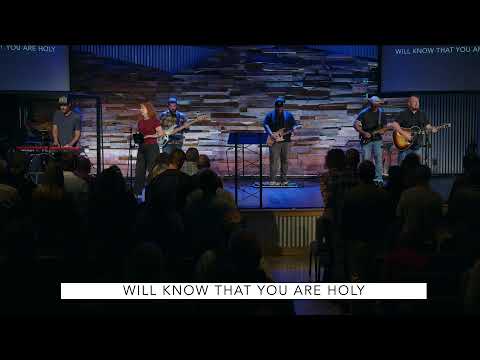
This small group discussion guide draws directly from the sermon “Showcase - One Harbor MHC | Sunday Service” so you can keep engaging with the message all week. Read, reflect, and share it with your small group or friends.
Small Group Discussion Guide
"Conduits, Not Containers: Blessed to Be a Blessing"
Series: Faithful Disciples in a Greedy World — Week 3
A Note to Facilitators: Welcome, and thank you for leading your group this week! This guide is designed to help you facilitate meaningful conversation — not to cover every question. Feel free to pick the questions that best fit your group, skip sections if time is short, and follow the Spirit's lead. The goal is genuine connection and growth, not completing a checklist. You've got this!
OVERVIEW
This week, Pastor Isaac walked us through the entire sweep of Scripture — from Abraham to the early church — to show us one consistent thread: God's people are blessed to be a blessing. Using the image of a conduit versus a container, Isaac challenged us to examine whether we are allowing God's blessings to flow through us to others, or whether we are hoarding them for ourselves. True generosity, rooted in the gospel of Jesus Christ, is not just about money — it's about how we hold everything God has given us: our time, talents, relationships, and resources.
ICEBREAKER
(5–10 minutes)
Choose one of the following to open your time together:
Option A (lighter/fun)
"What's the best gift you've ever given someone — and what made it feel meaningful to give?"
Option B (more reflective)
"Think of someone in your life who is naturally generous — not necessarily with money, but in the way they live. What do you notice about them?"
[Leader Tip]: Icebreakers work best when you answer first! Your vulnerability sets the tone and gives others permission to share openly. Keep this section light and fun — save the deeper sharing for later.
SCRIPTURE READING
(5 minutes)
Ask a volunteer to read each passage aloud. You don't need to read all of them — choose 1–2 that best fit your group's focus for the evening.
The Call of Abraham (Genesis 12:2–3)
"I will make of you a great nation, and I will bless you and make your name great, so that you will be a blessing. I will bless those who bless you, and him who dishonors you I will curse, and in you all the families of the earth shall be blessed."
Jesus on Generosity (Matthew 25:34–40)
"Then the King will say to those on his right, 'Come, you who are blessed by my Father, inherit the kingdom prepared for you from the foundation of the world. For I was hungry and you gave me food, I was thirsty and you gave me drink, I was a stranger and you welcomed me, I was naked and you clothed me, I was sick and you visited me, I was in prison and you came to me.' Then the righteous will answer him, saying, 'Lord, when did we see you hungry and feed you, or thirsty and give you drink? And when did we see you a stranger and welcome you, or naked and clothe you? And when did we see you sick or in prison and visit you?' And the King will answer them, 'Truly, I say to you, as you did it to one of the least of these my brothers, you did it to me.'"
The Early Church (Acts 2:44–47)
"And all who believed were together and had all things in common. And they were selling their possessions and belongings and distributing the proceeds to all, as any had need. And day by day, attending the temple together and breaking bread in their homes, they received their food with glad and generous hearts, praising God and having favor with all the people. And the Lord added to their number day by day those who were being saved."
The Generous Christ (2 Corinthians 8:9)
"For you know the grace of our Lord Jesus Christ, that though he was rich, yet for your sake he became poor, so that you by his poverty might become rich."
DISCUSSION QUESTIONS
(30–45 minutes)
Work through as many of these as time allows. Questions are organized from lighter to deeper — feel free to skip around based on where your group's energy is.
SECTION 1: WHAT WE HEARD
Opening questions to help everyone engage with the sermon content
1. What was one thing from Sunday's message that stuck with you — something that surprised you, challenged you, or that you're still thinking about?
[Leader Tip]: This is a great opening question because there's no wrong answer. It also helps you quickly gauge what resonated most with your group and which direction to take the conversation. If your group is quiet, share your own answer first.
2. Isaac used the image of a conduit versus a container to describe two different ways of relating to what God has given us. In your own words, how would you describe the difference between those two things? Which image do you find more helpful, and why?
3. Isaac also showed us a picture of the Sea of Galilee and the Dead Sea — both fed by the same river, but one is full of life and the other is lifeless. What does that image tell us about what happens when we stop being generous?
SECTION 2: WHAT THE BIBLE SAYS
Digging deeper into the scriptural foundation
4. Isaac traced this "blessed to be a blessing" theme all the way from Abraham through the early church. Looking at the passages we read together, what does God seem to be saying consistently about why he blesses his people?
[Leader Tip]: If your group needs a prompt, try: "Notice that in Genesis 12, God doesn't just say 'I will bless you' — he immediately adds 'so that you will be a blessing.' What does that little word 'so that' tell us about God's purpose for blessing?"
5. In the Old Testament law, God gave Israel very specific instructions about lending money, leaving crops at the edges of fields, and the Year of Jubilee. These might feel like ancient rules that don't apply to us. What principles or values do you see underneath those laws that might still speak to how we live today?
6. In Matthew 25, Jesus says that caring for "the least of these" is the same as caring for him personally. What does that do to the way you think about generosity — whether that's giving money, time, or something else?
[Leader Tip]: This passage can feel convicting, and some people may feel guilt. Gently redirect any shame toward grace-filled action: "Jesus isn't saying this to condemn us — he's inviting us into something. What might it look like to see Jesus in the people around us this week?"
7. The early church in Acts 2 and 4 was described as having "glad and generous hearts." One result of their generosity was that they had "favor with all the people." Why do you think generosity creates that kind of impact on a community — inside and outside the church?
SECTION 3: GETTING HONEST
Questions that invite personal reflection and authentic sharing
8. Isaac described four stages on a "generosity journey":
- Stage 1 — The Self-Contained Container: "What's mine is mine." Hoarding out of fear.
- Stage 2 — The Reluctant Conduit: "I give because I feel obligated." Giving out of duty or pressure.
- Stage 3 — The Intentional Steward: "I manage God's assets with purpose." Planned, grateful giving.
- Stage 4 — The Overflowing Conduit: "Everything I have belongs to God." Living loosely, giving eagerly.
Without pressure to share your answer publicly, where do you honestly find yourself on this journey right now? What does it feel like to be in that stage?
[Leader Tip]: Give people a moment of quiet reflection before opening this up. You might say: "Take 30 seconds to think about this honestly — you don't have to share unless you want to." This respects introverts and creates space for genuine reflection rather than quick, surface-level answers. Sharing your own honest answer here can open the door for others.
9. Isaac made an important point: generosity isn't only about money. He mentioned food, water, clothing, time, presence, and even wisdom as things we can give. What are some ways you've experienced or practiced generosity that had nothing to do with finances?
10. Isaac said, "The only way to change from a container to a conduit is by the gospel of Jesus Christ." What do you think he meant by that? How does understanding what Jesus gave for us actually change our relationship with what we have?
PERSONAL APPLICATION
(10–15 minutes)
These questions are more personal and reflective. You might invite people to journal, share with a partner, or share with the whole group — whatever fits your group's comfort level.
1. "Assume the Position" — Isaac described a posture of open hands: one receiving from God, one giving to others, with our hearts in the middle. Honestly, what tends to close your hand? What fears, habits, or beliefs make it hard for you to be a conduit?
2. Think about the blessings in your life right now — your time, your skills, your relationships, your finances, your home, your health. If you truly believed these were entrusted to you by God, for others, what might you do differently with one of them this week?
3. Isaac mentioned that Donnie, even being wheeled into emergency surgery after the hardest year of his life, found himself repeating the words: "All my life you've been faithful. All my life you've been good." What does it look like to hold onto God's faithfulness when life is squeezing you? How does that kind of trust connect to generosity?
4. The parable of the Rich Fool (Luke 12) is about a man who wasn't evil — he just made his security about what he had rather than who God is. In what areas of your life are you most tempted to put your security in what you own or control rather than in God?
✅ THIS WEEK'S CHALLENGE
Choose one that feels like a stretch — not a comfort zone:
- For everyone: Practice "assuming the position" this week. Each morning, physically open your hands and pray: "Lord, what comes from you, let it flow through me."
- For the financially comfortable: Identify one specific, concrete way to be a conduit with your finances this month — whether through the church, a neighbor, or a local need.
- For those in a tight season: Generosity isn't only about money. Identify one non-financial gift you have — time, a skill, a meal, a listening ear — and offer it to someone this week.
- For the whole group: Consider doing something generous together as a small group — whether that's supporting One Harbor's Angel Tree, volunteering somewhere, or meeting a specific need you know about in your community.
PRAYER FOCUS
(5–10 minutes)
Close your time by praying together. Here are some suggested focus areas — feel free to adapt based on what came up in your group's conversation:
1. For Open Hands Pray that God would reveal any areas where group members are holding too tightly to what they have, and that the Holy Spirit would produce genuine, joyful generosity in each person.
2. For Donnie and Ricky The church is walking through a season of real grief and uncertainty with two of its pastors. Pray specifically for Donnie's continued recovery, for Ricky's upcoming surgery (and healing), and for their families — Jill, Lisa, and their children — who are carrying so much right now.
3. For Those in Hard Seasons Many in the congregation are walking through loss, illness, and grief — especially during the holiday season. Pray for those who are hurting, that they would experience the nearness of God and the care of their church community.
4. For Your Group Ask God to make your small group itself a conduit of blessing — to each other and to your surrounding neighborhood and community.
[Leader Tip]: If your group is comfortable with it, invite people to share one specific prayer request related to today's topic — something personal about their own generosity journey or a need they're aware of. Then pray for those together. Even a few minutes of honest, specific prayer can be more powerful than a longer, more general prayer time.
OPTIONAL DEEP DIVE
For groups with extra time or who want to go further
Bonus Question 1: Isaac briefly addressed the concern that some people raised: "Doesn't wealth redistribution sound like socialism?" He argued it wasn't — that these biblical laws were about protecting dignity and preventing exploitation, not about a government holding all the cards. How do you think about the relationship between biblical generosity and the political and economic systems we live in? What does it mean for the church to care for the poor in ways that governments can't?
Bonus Question 2: In Acts 5, Ananias and Sapphira give to the church but secretly hold some back — and are struck dead. That's a jarring story. Isaac pointed out that the problem wasn't that they kept some money; it was that they lied and performed generosity for status rather than giving it from the heart. What does this story reveal about the difference between genuine generosity and performative generosity? Where do you see that tension in church culture today — or in your own heart?
Bonus Question 3: 2 Corinthians 8:9 says Jesus became poor so that we might become rich — but Isaac clarified this is about spiritual richness, not financial prosperity. Some Christians teach that God's blessing always includes material wealth (sometimes called the "prosperity gospel"). How would you respond to that view based on what we've seen in Scripture this week? What does it mean to be "rich toward God" (Luke 12:21)?
RELATED SCRIPTURES FOR FURTHER STUDY
If your group wants to explore this theme further during the week, here are additional passages that connect to Sunday's message:
| Passage | Theme |
|---|---|
| Proverbs 11:24–25 | The paradox of generous giving |
| Luke 12:13–21 | The Parable of the Rich Fool |
| Luke 6:20–23 | The Beatitudes and God's heart for the poor |
| 2 Corinthians 9:6–11 | Cheerful, sacrificial giving |
| Jeremiah 29:4–7 | Seeking the welfare of the city |
| Ruth 2:1–12 | Gleaning and practical generosity in action |
| Psalm 1:1–3 | The righteous person as a tree by living water |
SERMON SERIES CONTEXT
This is Week 3 of Faithful Disciples in a Greedy World, a series exploring three threads of biblical stewardship:
- Week 1 (Nathan): The Story You're Living In — God owns it all; we are stewards, not owners.
- Week 2 (Brian): Who Will You Serve? — Faithful disciples trust their heavenly Father and refuse to let money rule their hearts.
- Week 3 (Isaac): Conduits, Not Containers — Faithful disciples are blessed to be a blessing.
- Week 4 (Luke): Coming up — tying all three threads together into a three-strand cord.
This guide was prepared for small group use at One Harbor Church. Feel free to adapt it for your group's needs. Questions? Contact your small group coordinator or pastoral team.
"Faithful disciples are blessed to be a blessing. Don't be a container that hoards — be a conduit that overflows." — Isaac Hopkins